
Why commercial solar pays back in South Wales
South Wales receives 940 to 985 kWh/kWp per year according to PVGIS irradiation data, with Pembrokeshire among the highest-yielding counties in the UK. Paired with commercial grid electricity at 28 to 32 p/kWh in 2025-26, the economic case is clear.
Worked example: 100 kWp commercial system
- Installed cost: approximately £85,000
- Annual generation: 95,000 kWh
- Self-consumption at 70% at 30p/kWh: £19,950 saving
- Export at 30% at 12p SEG: £3,420
- Year-one benefit: £23,370
- Simple payback: 3.6 years
- Post-tax payback with 100% Annual Investment Allowance relief: 2.6 years
Proven at scale: 637 kW for Irvin-GQ
The economics above are not theoretical. FLD designed and delivered a 637 kW rooftop array for Irvin-GQ, the defence and aerospace manufacturer at Llangeinor, Bridgend — a £525,000 project across two roof elevations on a Valk flat-roof ballast system, five Solis 110 kW Pro three-phase inverters, and an NGED G99 connection coordinated in parallel with procurement so the programme never slipped. Against site consumption of 1,076,078 kWh a year the building now runs fully off-grid at peak generation, with payback in 3 years, a lifetime ROI of £3 million and 441.6 tonnes of CO2 saved annually. Installation was phased so production never stopped, under a single NICEIC Approved Contractor sign-off. Read the full Irvin-GQ case study — including why their MoD supply-chain Scope 3 reporting drove the deadline.
No other commercial solar installer in South Wales publishes a delivered project at this scale with the figures attached. If your board needs proof before capital sign-off, this is it.
How to choose a commercial solar PV installer in South Wales
Most commercial solar pages explain payback. Almost none tell you how to tell one contractor from another, which is the actual decision in front of you. Five questions separate them:
- Have they delivered at your scale, and will they name the project? Ask for a system size, a site and a figure. Ours is Irvin-GQ at Llangeinor, Bridgend — 637 kW across two roof elevations, £525,000, five Solis 110 kW Pro inverters on a Valk flat-roof ballast system, 3-year payback and 441.6 tonnes of CO2 saved a year.
- Who holds the electrical sign-off? Many solar firms subcontract the electrical work and the DNO application. We are an NICEIC Approved Contractor, so the array, the switchgear and the connection are certified under one registration — which is why we are trusted on live acute sites like the 236.5 kWp SolarEdge installation at Princess of Wales Hospital, delivered under Cwm Taf Morgannwg permit-to-work without interrupting the ward.
- Do they run the G99 themselves? The NGED Type A approval is the critical path on almost every commercial job — 3 to 6 months in South Wales. We lodge it in parallel with procurement rather than after it.
- Can they work around your operation? Phased installation so production never stops is a scheduling commitment, not a slogan. Ask how they did it last time.
- Are they set up for your procurement? ConstructionLine and SSIP registration is what gets a contractor through a framework or tender gate. If you are a public body or a tier-1 supply chain, this one is not optional.
Where we work. We install commercially across South Wales — Swansea, Neath, Port Talbot, Llanelli, Bridgend, Carmarthen, Cardiff, Newport and the wider M4 corridor. We are Swansea-based, so if your site is outside that region we will say so rather than quote it.
What we install
Our standard specification is SolarEdge string optimiser inverters paired with Trina Vertex or JA Solar DeepBlue tier-1 panels. SolarEdge delivers panel-level monitoring and isolates shading losses at the module rather than the string, typically recovering 5 to 15% of annual yield on complex rooftops.
We cover ballasted flat-roof systems, trapezoidal-clad pitched-roof industrial installations, standing-seam fixings, slate and tile domestic-commercial conversions, and ground-mount arrays on marginal land.
Regulatory context
- BS 7671 18th Edition governs every electrical aspect of the install
- G99 Type A connection agreement with National Grid Electricity Distribution (formerly Western Power) for systems above 16 A per phase, currently 3 to 6 months in South Wales
- MCS 017 product listing for all panels and inverters used on sub-50 kW systems
- ESOS compliance for businesses over 250 staff or £44 m turnover
- SECR reporting for quoted and large unquoted UK companies
- MEES B-by-2030 for non-domestic landlords, rising from E today
Finance options
Three structures, chosen in the proposal stage:
- Self-finance with 100% Annual Investment Allowance
- Commercial Solar PPA with zero upfront cost, RPI-indexed unit rate below grid
- Asset finance over 3 to 7 years, hire purchase or lease
Every structure is modelled side-by-side so you can pick on cashflow and balance-sheet treatment, not on sales pressure.
Sector experience
FLD delivers to the factory, warehouse, farm, school, hotel and office verticals across South Wales. Reference delivered projects include Cardiff Crown Courts (electrical) and premium residential new-builds in Bridgend. The commercial solar portfolio is growing fast with the Port Talbot supply-chain Scope 3 pressure and the Celtic Freeport activation.
Our process
- 1Site survey
A named FLD engineer visits your site, measures the roof or installation zone, inspects the incoming supply and verifies load, structural integrity and orientation. For commercial sites we run a full discovery including half-hourly consumption data where available.
- 2Design and proposal
We produce a scaled layout, generation model using PVGIS data, financial model with simple and post-tax payback, DNO G99 or G98 notification pack where relevant, and a fixed-price quotation. Every proposal names the exact panels, inverters and mounting system.
- 3DNO and planning
We handle NGED G99 Type A applications for commercial systems, G98 notifications for domestic, and any permitted development confirmation or full planning submissions required for listed buildings or conservation areas.
- 4Install and commission
FLD directly-employed engineers install under a single NICEIC Approved Contractor sign-off. Commissioning includes BS 7671 testing, SolarEdge monitoring portal setup, MCS certification where applicable, and handover of all documentation.
- 5Aftercare
Insurance-backed NICEIC warranty, 25-to-30-year panel performance warranty from the tier-1 manufacturer, 12-year SolarEdge inverter warranty, and ongoing O and M support including remote performance monitoring.
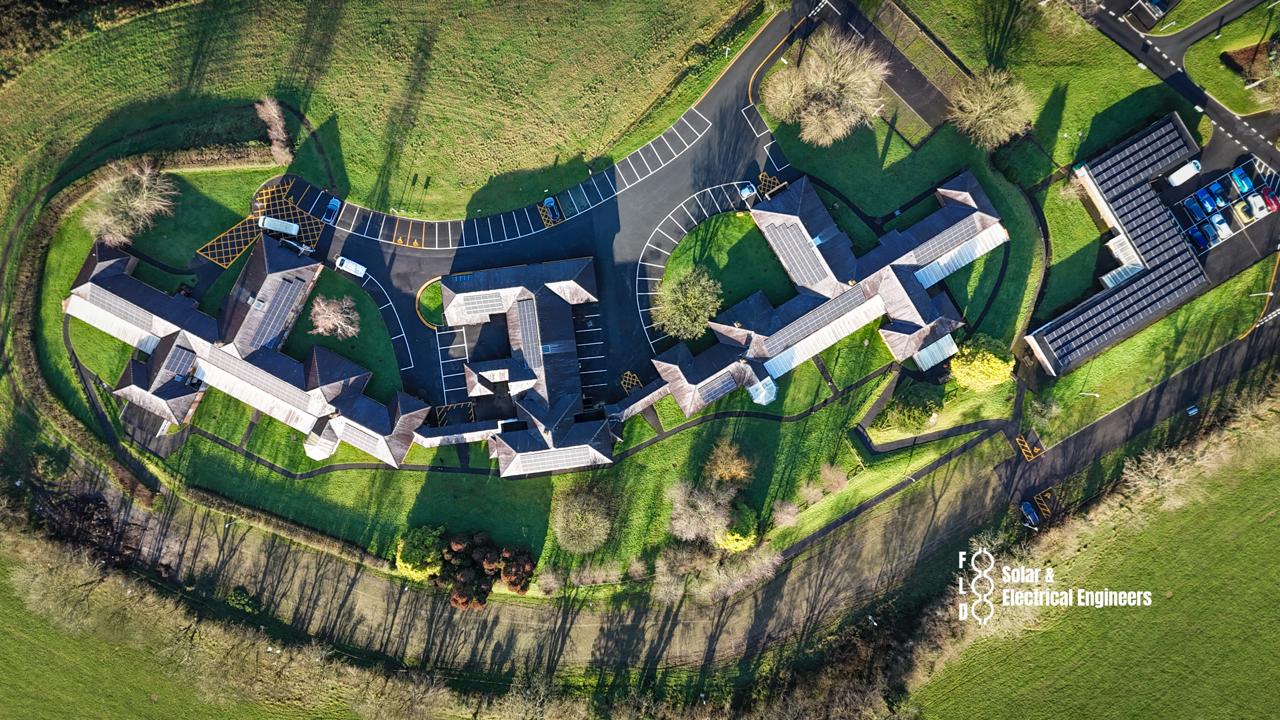
152 kW Parc Dewi Sant NHS, Carmarthen — FLD installation
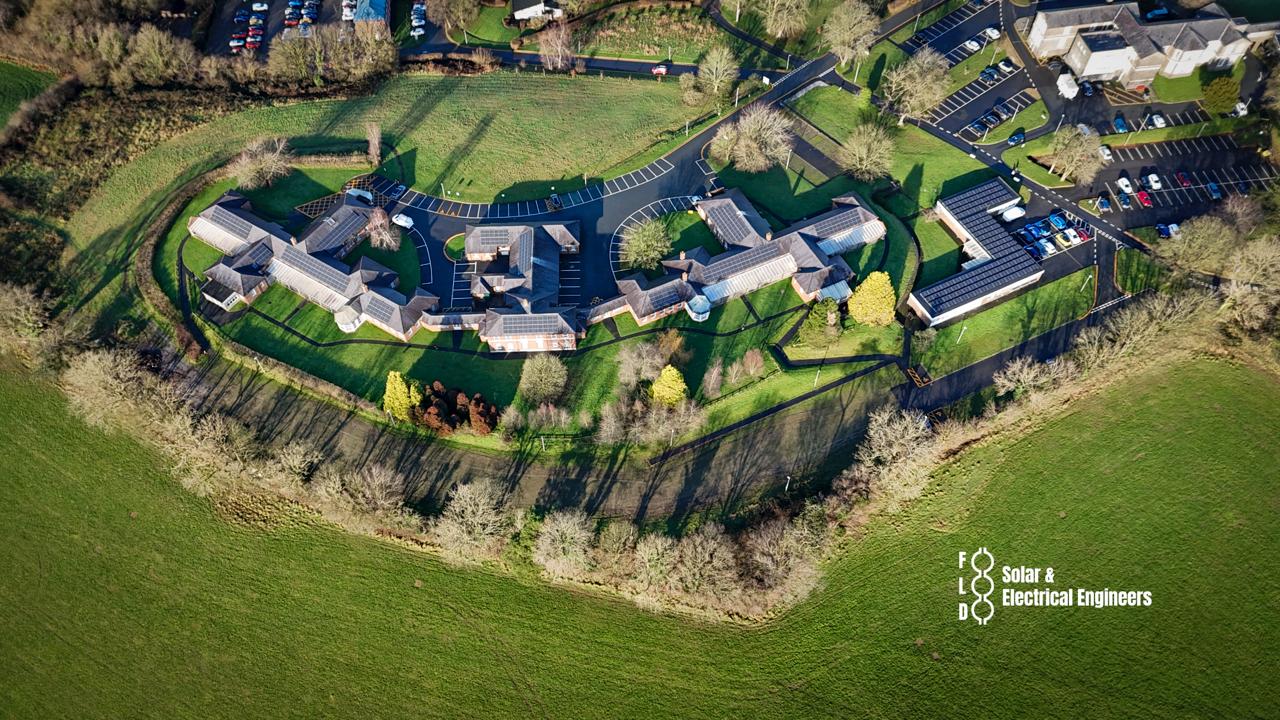
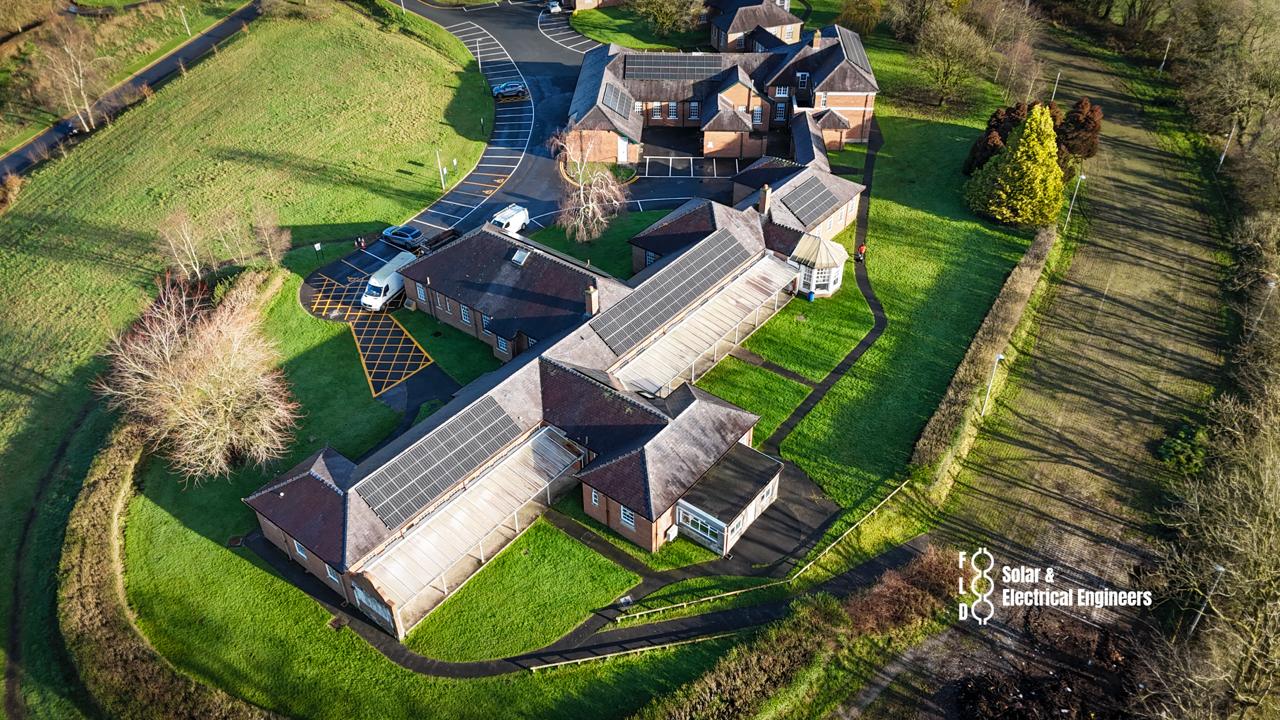
Recent FLD installation — view all project photos
Standards we work to
- BS 7671
- G99 Type A
- MCS 017
- MCS 3002:2025
- IEC 61215
- IEC 61730
Equipment and components
- SolarEdge
- Trina Vertex
- JA Solar DeepBlue