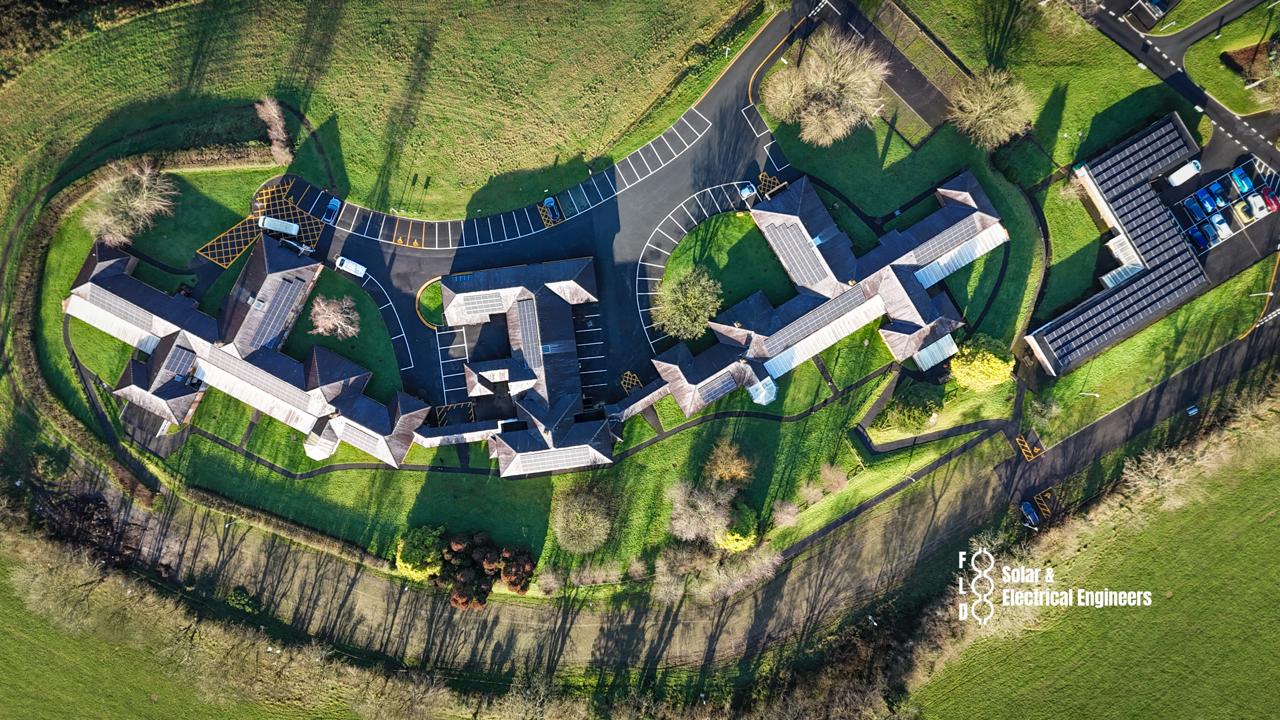
A solar array is a 25-to-30-year asset with no moving parts - which is exactly why it gets forgotten. Panels sit on the roof quietly losing a few percent here to soiling and a few percent there to a failing connection, and because a basic monitoring app only shows a single site total, the drop is easy to miss until a bill or an inspection makes it obvious. Planned maintenance is how you protect the generation, the warranty and the return the system was bought to deliver.
As an NICEIC Approved Contractor that installs solar, we maintain it too - commercial rooftops, farms, landlord and public-sector estates, and domestic systems - across Swansea and the whole of South Wales.
What solar maintenance covers
- Purified-water panel cleaning by reach-and-wash pole or MEWP
- Thermographic (infrared) survey of the live array to find hot-spots
- Insulation-resistance, continuity and polarity testing to BS 7671 and BS EN 62446
- Inverter inspection, firmware and fault-code checks
- Mounting, clamp, cable-management and roof-penetration inspection
- Isolator, fuse and DC-connector inspection and replacement
- Monitoring review and a written report with before-and-after photography
- Remedial works and re-certification under one NICEIC registration
How often solar maintenance should be done
There is no single interval that fits every array, and anyone quoting one has not looked at your roof. What follows is the schedule we work to, and why each step sits where it does.
Annually, on commercial and landlord arrays. A full planned preventative visit: clean, thermographic survey of the live array, electrical testing to BS 7671 and BS EN 62446, inverter and isolator inspection, and a written report. Annual is the sensible default anywhere the system is an income-producing or compliance-bearing asset, and it is what most O&M schedules and insurers expect to see.
Every one to two years, on domestic systems. A house array in a clean suburban location can go two years between visits without losing much. One in a coastal, agricultural, or heavily-trafficked location cannot - salt, dust and bird fouling build far faster, and the same roof may need a clean twice a year.
Continuously, through monitoring. Most losses do not announce themselves. A string that has dropped out or a panel running hot shows up as a percentage the owner never sees, because a basic monitoring app reports a single site total. We review monitoring data as part of the contract rather than waiting for the annual visit to find it.
Once, at handover, and then on change. Every array should have an initial verification record to BS EN 62446 - the document set the installer should have handed over. If yours is missing, that is the first thing to rebuild, because without it there is no baseline to test against.
The inverter is the component that dictates whole-life cost. Panels routinely outlast their performance warranty; the inverter is the part most likely to need replacing well inside the system's life. Knowing where yours is in that cycle is the difference between a planned replacement and an unplanned outage.
How solar maintenance is priced
We price maintenance in four ways, and which one applies depends on the array rather than on a rate card:
- Per visit - a single clean, inspection or thermographic survey, priced on array size, roof height and access.
- Per panel - for cleaning-only work, where the count and the reach method are what drive the cost.
- Per kWp, annually - for planned preventative maintenance on commercial arrays, where the scope is fixed and the visit is scheduled.
- Per site, on a contract - for multi-site estates, where the value is a single certificate trail and one point of contact rather than the individual visit price.
The cost drivers are consistent: access (a ground-mount or a low industrial roof is a different job from a four-storey elevation needing a MEWP or a mansafe system), array size, soiling level, whether electrical testing and certification are included, and whether remedials are done on the same visit or quoted separately. Doing remedials on the visit is almost always cheaper than a second mobilisation.
What we will not do is publish a headline per-panel price and then rebuild it on survey. Send us the array size, the roof type and a postcode and you will get a fixed price for the actual scope.
Why cleaning matters more than people think
Modules generate from the light that reaches the cells, so anything on the glass - dust, pollen, moss, lichen, bird fouling, salt or the greasy film near a busy road - is lost generation. On an exposed or agricultural roof the loss builds steadily, and heavy local soiling can also create hot-spots where shaded cells run warm.
We clean with a telescopic reach-and-wash system using purified, deionised water. That matters for two reasons: there are no detergents or abrasive pads to scratch the anti-reflective coating or void the manufacturer warranty, and purified water dries without leaving the mineral streaks ordinary tap water leaves behind. On fragile older roof sheets, cleaning from the ground or a MEWP also means no one has to walk unsupported cladding.
Thermographic inspection - the faults you cannot see
Most solar faults are invisible from the ground and silent on a monitoring portal. A loose or degraded DC connection can run hot for months, slowly cooking the surrounding cable and creating a genuine fire risk, while the site total barely moves. The only reliable way to catch it early is to look at the live array through a thermal-imaging camera, where a high-resistance joint shows up as a bright hot-spot against the cooler conductors around it.
On a recent annual visit our thermographic survey found exactly that - an overheating DC connection on a client's array - which we isolated and replaced on the spot, removing the fire risk before it could cause damage. It is the clearest possible argument for putting infrared inspection on a schedule rather than waiting for something to fail. See the thermographic fire-risk case study and a 257 kW commercial clean and inspection.
Maintenance protects your warranty and insurance
Tier-1 panel and inverter warranties, and most commercial property and PV insurance, are written on the assumption that the system is maintained and inspected - and a missing maintenance record is a reason a claim can be questioned. Our written reports, test certificates and photographs give you the documented evidence that the array has been looked after to BS 7671 and BS EN 62446, which is as much about protecting the asset on paper as on the roof.
Who we maintain solar for
Commercial rooftops and factories, farms and rural businesses, landlords and managing agents, schools and public-sector estates, and domestic homeowners who want their system checked. Whether we installed the array or you inherited it with a building, we can put it on a maintenance footing.
What it costs
There is no off-the-shelf price - cost is driven by array size, roof access, how much cleaning is needed, and whether you want a one-off visit or an ongoing schedule. The survey is free, and you get a fixed quotation covering the clean, the inspection and the report before any work starts.
Our process
- 1Access & visual survey
A directly-employed FLD engineer surveys the array and its roof access, checks the mounting, cabling and inverters, and records the condition of every string before any work starts. On fragile roof sheets we plan safe access - reach-and-wash from the ground or a MEWP - so no one has to walk unsupported cladding.
- 2Panel clean
Modules are cleaned with a reach-and-wash telescopic pole using purified, deionised water - no detergents and no abrasive pads, which protects the anti-reflective coating and the manufacturer warranty. Purified water dries without leaving the mineral film that ordinary tap water leaves behind.
- 3Thermographic & electrical inspection
We survey the live array with a thermal-imaging camera to find hot-spots - loose DC connections, failing bypass diodes, shaded or cracked cells - that a monitoring portal never shows. Insulation-resistance and continuity checks to BS 7671 and BS EN 62446 confirm the array and its isolators are safe.
- 4Report & remediate
You get a written maintenance report with before-and-after photography, thermal images and test results. Anything urgent - such as an overheating connection - is made safe or replaced on the visit; larger remedial works are quoted separately with no obligation.
- 5Ongoing schedule
We agree a maintenance interval that suits the site and its warranty and insurance conditions - typically annual for commercial arrays, more frequent cleaning on dusty, agricultural or coastal roofs - and hold the record so the asset stays compliant and performing.
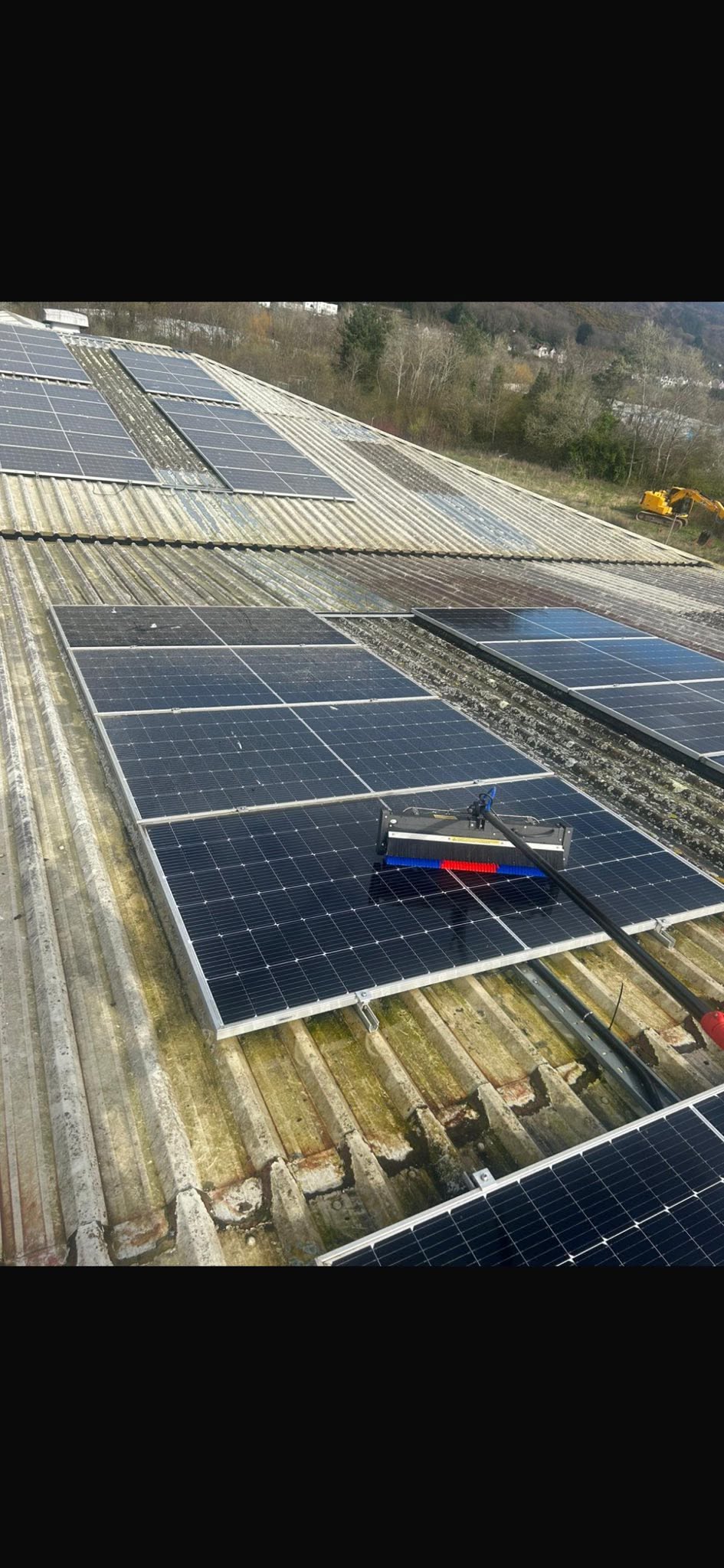
Reach-and-wash panel cleaning on a 257 kW commercial array
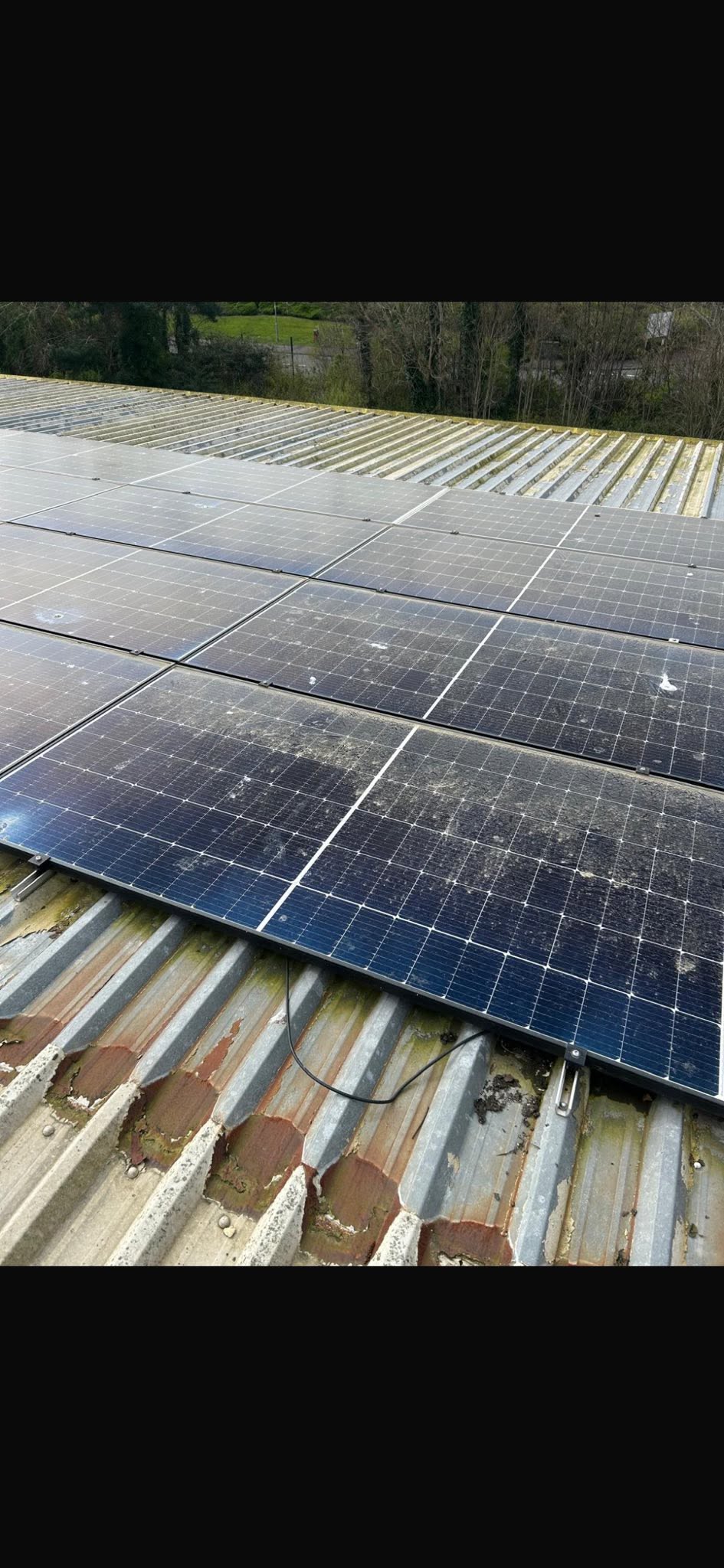
Before: heavy soiling
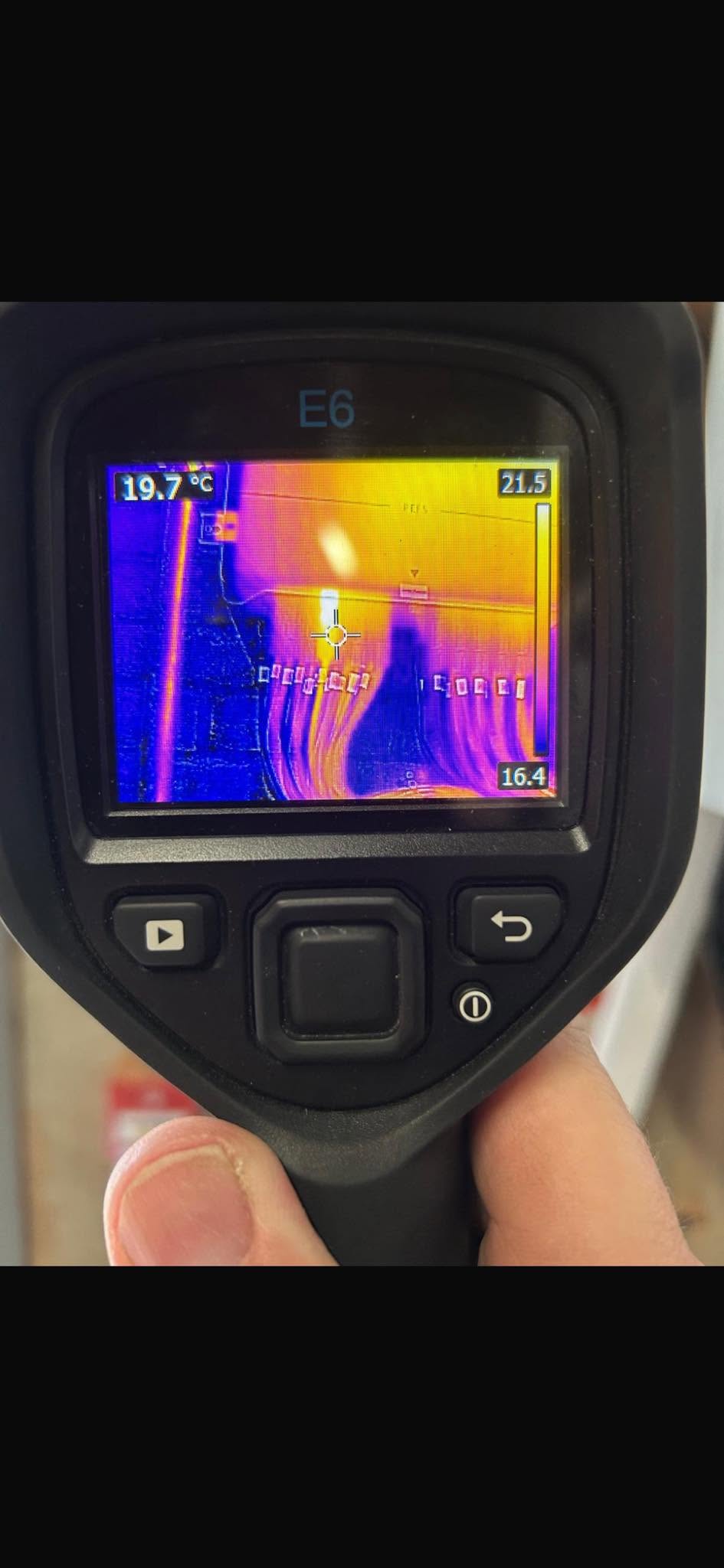
Thermographic fault-finding
Recent FLD maintenance work — view all case studies
Standards we work to
- BS 7671
- BS EN 62446-1 (PV inspection & testing)
- IEC 62446
- MCS / manufacturer O&M requirements
Equipment and components
- Reach-and-wash purified-water pole system
- Thermal-imaging (infrared) camera
- Insulation-resistance & continuity test equipment