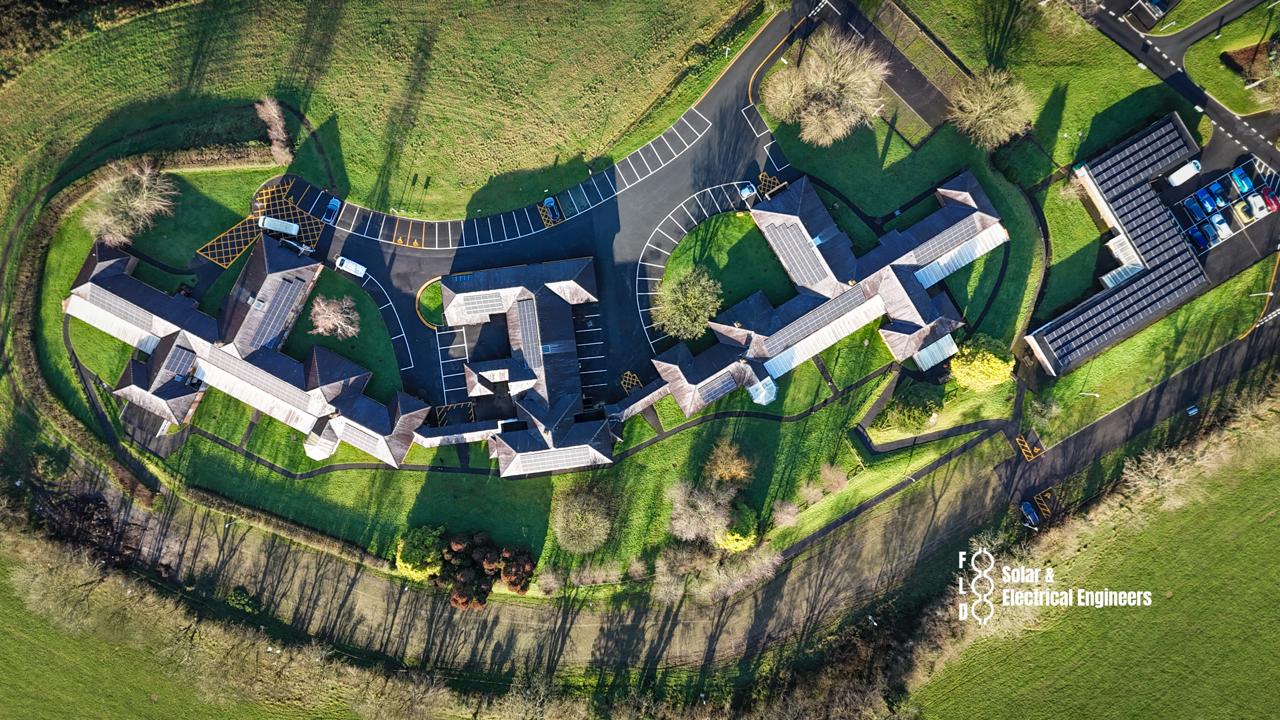
Serving Tywyn
Tywyn is a small coastal town on the southern Meirionnydd coast in Gwynedd, population approximately 3,200, sitting on the flat coastal plain between the Cardigan Bay beach and the Dysynni valley. At 970 kWh/kWp yield, Tywyn matches Harlech as the highest-generating location in FLD's Gwynedd coverage, benefiting from unobstructed south-west Atlantic exposure across Cardigan Bay.
Unlike Harlech and Barmouth, Tywyn is not entirely within the Eryri National Park. The Park boundary runs approximately a mile inland from the town, and the coastal strip where Tywyn itself sits is outside the Park boundary. This distinction has a significant practical consequence for solar permitting: standard Welsh permitted development rules apply to Tywyn town properties without the additional ENPA pre-application layer that applies at Harlech and Barmouth.
The Talyllyn Railway terminus is Tywyn Wharf station -- the Talyllyn was the world's first preserved railway, restored by volunteers in 1951 after the death of its last private owner. The railway runs 7.25 miles inland to Nant Gwernol and is a major Gwynedd heritage tourism attraction. The railway estate carries multiple buildings at Tywyn Wharf and at intermediate stations that could represent a heritage-sector commercial solar opportunity assessed through the Talyllyn's own estate management.
The wider economy combines coastal tourism (a long sandy beach, surf school, water sports), the Talyllyn Railway visitor operation, and service provision for the surrounding agricultural community. Several caravan and holiday parks north and south of the town on the Cardigan Bay shore add to the hospitality commercial base.
Tywyn's housing mix is more varied than the hillside resort towns of Barmouth and Harlech. The town centre carries Victorian terraces and inter-war semis. The newer residential estate development to the east provides modern cavity-wall stock with standard roof orientations. The coastal fringe has larger detacheds and bungalows, many used as holiday accommodation.
At 970 kWh/kWp, a 6 kWp domestic system on a south-facing Tywyn semi-detached generates 5,820 kWh annually. With battery storage and time-of-use tariff, annual saving reaches approximately £1,650. For a holiday caravan park on the coastal fringe, a 100 kWp installation on shower blocks and amenity buildings generates 97,000 kWh annually -- self-consumption above 80% in the June to August peak, with a payback of approximately 3.5 years.
FLD reaches Tywyn in approximately 120 minutes via the A487 and A493. Coverage combines with Machynlleth and Barmouth on a southern Cambrian Coast circuit.
100 kWp reference system at 970 kWh/kWp
Modelled at 27p/kWh blended import, 12p/kWh SEG export, 65% self-consumption for medium energy intensity site.
Housing stock in Tywyn
Victorian town-centre terraces, inter-war semis, modern eastern estates, coastal bungalows and holiday lets
A typical 4 kWp domestic install here generates 3,880 kWh/yr. With 40% self-consumption at 30p/kWh and 60% SEG export at 12p/kWh, first-year saving is approximately £745.
Local landmarks and context
- Talyllyn Railway (world's first preserved railway, 1951)
- Tywyn beach and Cardigan Bay
- Dysynni valley
- Bird Rock (Craig yr Aderyn)
Major employers we work with
- Talyllyn Railway
- Holiday and caravan park operators
- Gwynedd CC local services
Looking after solar and electrical systems in Tywyn
Installing the system is the short part. Most of what we do in Tywyn is what comes after it.
Existing arrays around Tywyn lose output quietly — soiling on the glass, a string that has dropped out, an inverter throwing a fault code nobody reads — so solar PV maintenance and panel cleaning is usually the first thing worth booking on a system that is a few years old.
Where a Tywyn system exports more than it uses, retrofitting battery storage is what turns that export back into self-consumption, which is worth roughly double what the export tariff pays.
EV charge points is the other upgrade that pairs with an existing array in Tywyn — charging off your own generation rather than off the grid changes the arithmetic completely.
On commercial premises in Tywyn, LED and emergency lighting upgrades normally pays back faster than anything else on the building, and it cuts the load the solar has to cover in the first place.
We are 120 minutes from Tywyn in normal traffic, which is why we can put an engineer on a fault the same week rather than the same month.
Recent local developments
- Talyllyn Railway restoration programme
- Tywyn beach accessibility works
- Coastal holiday-park expansion