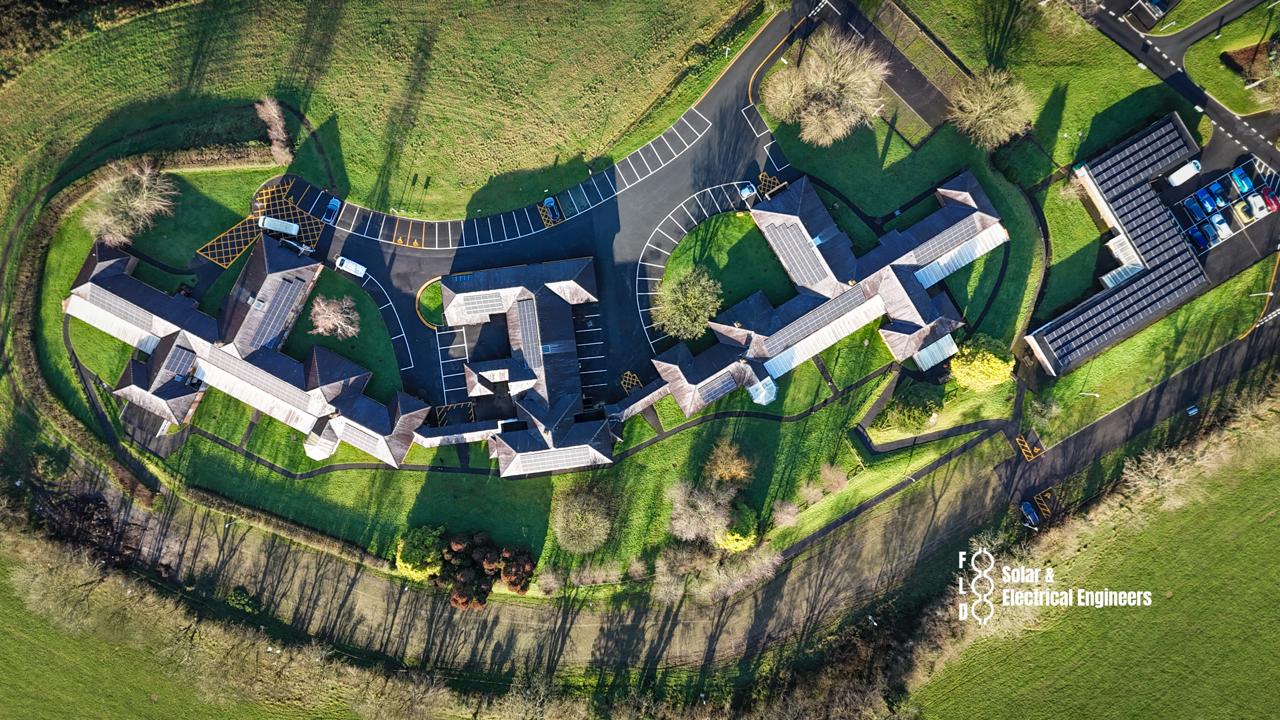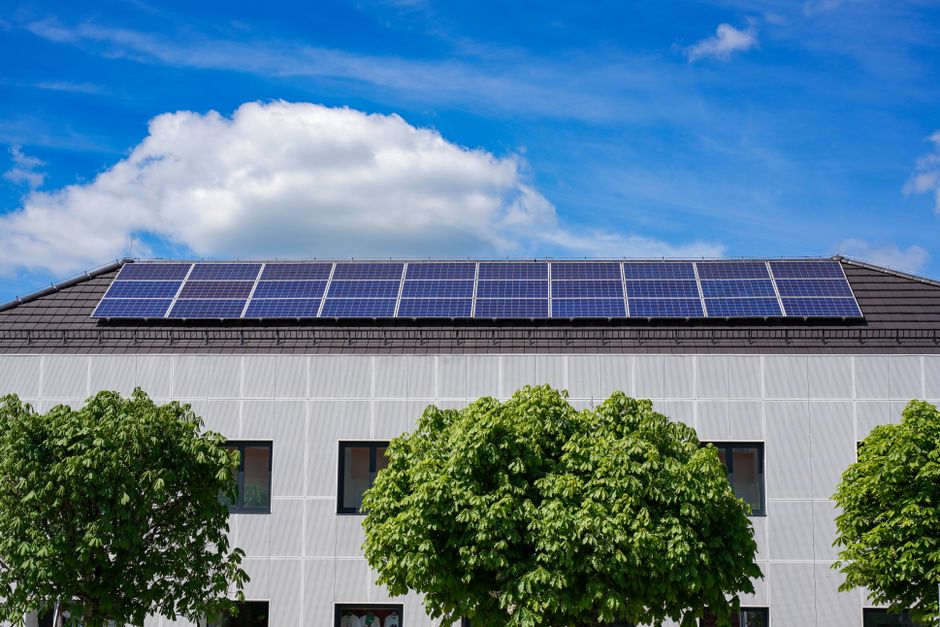
Welsh agriculture operates under some of the highest rural electricity tariffs in Great Britain. Farms on single-phase or limited three-phase rural connections pay 28p to 34p/kWh on standard business tariffs — significantly above urban commercial rates. Dairy and pig units running 24-hour milking, ventilation and refrigeration equipment are particularly exposed. Agricultural buildings across Wales carry roof areas well-suited to solar installation, and the combination of Farming Connect capital grant funding and Annual Investment Allowance makes the post-grant payback case compelling for qualifying businesses.
The Welsh farm solar opportunity
The reference farm types in FLD’s agricultural coverage include:
- Dairy farms in the SA31 to SA34 Carmarthenshire catchment — continuous milking and refrigeration loads producing 65% to 80% self-consumption rates year-round
- Pig and poultry units in Pembrokeshire SA61 to SA67 — intensive ventilation systems creating all-hours electricity demand
- Arable and mixed farms in the Vale of Glamorgan CF71 to CF72 — seasonal peaks around grain drying equipment and cold store
- Farm diversification businesses — holiday lets, farm shops and processing facilities co-located with agricultural buildings
Payback models: 50 kWp and 150 kWp
50 kWp, 72% self-consumption (Carmarthenshire dairy unit, SA31):
| Metric | Value |
|---|---|
| Annual generation | 49,000 kWh |
| Self-consumed (72%) | 35,280 kWh |
| Electricity cost saving | £10,585 |
| SEG export income (28%) | £1,646 |
| Year-one benefit | £12,231 |
| Installed cost | £43,500 |
| Farming Connect grant (40%) | £17,400 |
| Net capex after grant | £26,100 |
| Post-grant payback | 2.1 years |
150 kWp, 78% self-consumption (Pembrokeshire pig unit with grain store, SA61):
| Metric | Value |
|---|---|
| Annual generation | 150,000 kWh |
| Self-consumed (78%) | 117,000 kWh |
| Electricity cost saving | £35,100 |
| SEG export income (22%) | £3,960 |
| Year-one benefit | £39,060 |
| Installed cost | £127,500 |
| Farming Connect grant (40%) | £51,000 |
| Net capex after grant | £76,500 |
| Post-grant payback | 2.0 years |
AIA allows the remaining capex after Farming Connect grant to be deducted against taxable profit in year one. For a 150 kWp system at £76,500 net post-grant, the AIA Corporation Tax credit at 25% is approximately £19,125 — producing an effective capex of approximately £57,375 and a post-grant, post-tax payback of approximately 1.5 years.
Farming Connect: the grant mechanism
Farming Connect is the Welsh Government’s agricultural business development programme. Solar panels on agricultural buildings are eligible for Farming Connect capital grants of up to 40% of eligible costs. Key eligibility conditions:
- Business must be a registered agricultural holding in Wales
- The installation must be on an agricultural building used in the farm business
- A business development plan and pre-application consultation with Farming Connect is required before FLD can submit any survey or quotation
- Installation must be completed within the grant approval window (typically 12 months)
FLD works with the Farming Connect process, including coordinating feasibility reports and specification documents for the grant application. Welsh-medium applications are available.
Planning on agricultural land
Solar panels on existing agricultural buildings benefit from simplified planning provisions under Class B of Schedule 2 to the Town and Country Planning (General Permitted Development) Order 1995 (as amended for Wales). Full planning permission is required for ground-mounted arrays, and Barn conversions or holiday let roofs in National Park areas — Pembrokeshire Coast, Bannau Brycheiniog — require careful pre-application consultation.
FLD confirms planning position for all agricultural proposals before survey commitment, including properties in the two Welsh National Parks within the coverage area.
DNO connections for farm-scale solar
Agricultural solar installations above 3.68 kW per phase require G98 or G99 DNO notification and approval. Rural farm connections in Pembrokeshire and Carmarthenshire are served by SP Manweb. NGED serves the eastern Vale of Glamorgan and Gwent catchments. Rural connection timelines can run longer than urban — SP Manweb G98 approvals are running at 8 to 12 weeks in 2026 for installations below 50 kWp, rising to 14 to 20 weeks for G99 Type A submissions on larger barn arrays.
FLD submits DNO pre-application feasibility checks before committing to programme dates for all agricultural proposals, particularly where limited grid export headroom exists on rural spurs.
Battery storage for farm resilience
Rural Welsh farms on single-phase distribution spurs experience above-average power interruptions in winter storms. For dairy farms dependent on milking equipment or pig units reliant on continuous ventilation, a blackout-rated battery system provides resilience as well as energy arbitrage value. FLD specifies blackout-rated battery storage as standard for all isolated rural farm proposals.
Getting a farm solar survey
FLD surveys agricultural buildings across Carmarthenshire, Pembrokeshire, Ceredigion, the Vale of Glamorgan and the Powys border. Call Paul on 07913 117746 or use the contact page for a no-cost preliminary feasibility assessment.