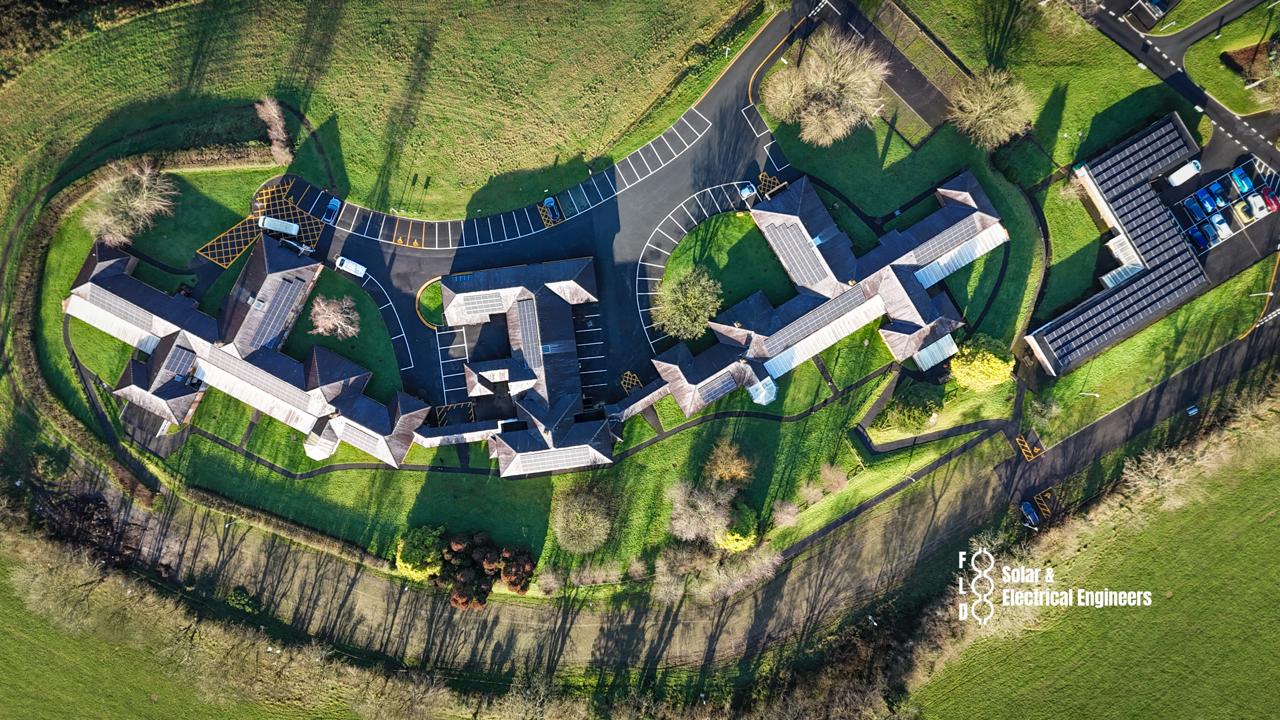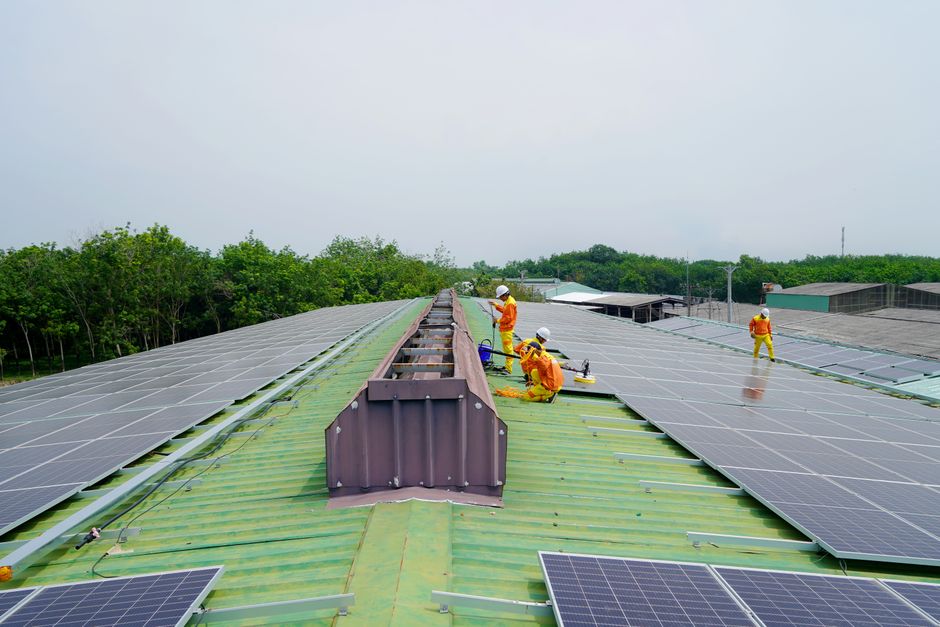
Office solar economics differ from factories and warehouses in two key respects: the self-consumption window is narrower (09:00 to 17:00 weekdays only) and the procurement decision typically involves either a landlord-tenant green lease negotiation or a Power Purchase Agreement structure rather than outright capital purchase. Both complicate the commercial case relative to manufacturing, but neither undermines it — the payback on outright purchase remains under 6 years for most South Wales office buildings at current tariffs.
The South Wales office solar market
The primary office solar markets in FLD’s coverage area are:
- Cardiff Bay CF10 to CF24 — mixed public sector and professional services occupiers, many in landlord-owned multi-tenanted buildings
- Newport NP20 — public sector and financial services in the M4 corridor catchment
- Swansea City Centre SA1 — mixed commercial and public sector, with several new-build buildings to current energy standards
- Business parks at Bridgend CF31, Llantrisant CF72 and Swansea Vale SA6 — single-occupier and owner-occupied buildings best suited to outright purchase
Self-consumption reality for office buildings
A typical South Wales office building operates at 75% to 85% occupancy Monday to Friday, 08:30 to 18:00, with minimal weekend demand. This profile produces self-consumption of 62% to 70% of annual generation — lower than factories or schools, because weekend and evening generation is largely exported.
Boosting office self-consumption requires either co-located loads (EV charging in the car park is the most common enhancement) or battery storage to shift the afternoon generation peak into the evening cleaning and security window. EV charging in office car parks is particularly effective — directing surplus midday generation to car park chargers eliminates 28p/kWh import cost on employee charging and creates a tenant amenity argument for landlords.
Payback models: 50 kWp and 150 kWp
50 kWp, 65% self-consumption (Newport single-occupier office, NP20):
| Metric | Value |
|---|---|
| Annual generation | 47,500 kWh |
| Self-consumed (65%) | 30,875 kWh |
| Electricity cost saving | £8,336 |
| SEG export income (35%) | £1,995 |
| Year-one benefit | £10,331 |
| Installed cost | £44,000 |
| Simple payback | 4.3 years |
| AIA post-tax payback | 3.2 years |
150 kWp, 68% self-consumption (Cardiff Bay multi-occupier office with EV charging):
| Metric | Value |
|---|---|
| Annual generation | 142,500 kWh |
| Self-consumed (68%) | 96,900 kWh |
| Electricity cost saving | £26,163 |
| SEG export income (32%) | £5,472 |
| Year-one benefit | £31,635 |
| Installed cost | £127,500 |
| Simple payback | 4.0 years |
| AIA post-tax payback | 3.0 years |
PPA structures for multi-tenanted offices
Where a landlord occupies a multi-tenanted office building, direct capital investment complicates the landlord-tenant energy charging relationship. Power Purchase Agreement structures allow a third-party funder to own and operate the rooftop solar system, selling the generated electricity to the building occupiers at a discount to grid tariff. The landlord provides the roof under a 20 to 25 year licence. Occupiers benefit from below-market electricity rates. The PPA funder takes the revenue and investment risk.
FLD works with PPA funding partners for qualifying South Wales office buildings above 100 kWp. The minimum viable building for a PPA arrangement is typically 5 years remaining on the landlord’s freehold title and a minimum 3-year forward occupancy commitment from the primary tenant.
Green lease obligations
Institutional landlords and major occupiers in the Cardiff Bay and Newport commercial market are increasingly subject to green lease clauses requiring co-operation on energy efficiency investments. For office buildings where the tenant cannot unilaterally install solar, the green lease framework provides a mechanism for landlord investment with tenant co-operation on access and smart metering. FLD’s commercial team has experience structuring solar proposals for green lease contexts, including landlord-only capital purchase with tenant benefit-sharing.
ESOS Phase 4 and office compliance
Office-based businesses qualifying under ESOS Phase 4 (250+ staff or £44m+ turnover, deadline 5 December 2027) will find solar rooftop PV appearing as a material opportunity in their ESOS assessment if the building roof is owned or accessible to the qualifying business. FLD provides feasibility reports formatted for inclusion in ESOS Phase 4 submissions for qualifying office occupiers.
Ynni Cymru for office-based businesses
Welsh-registered businesses operating from owned or long-leasehold office premises can apply to Ynni Cymru for capital grants of £25,000 to £1,000,000. Professional services firms, financial sector businesses and public sector bodies in owner-occupied premises are eligible where the building is in Wales. FLD assists with pre-application feasibility documentation.
Getting an office solar survey
FLD surveys owner-occupied office buildings across Cardiff, Newport, Swansea and the M4 corridor business parks. Call Paul on 07913 117746 or use the contact page for a no-cost preliminary feasibility assessment.