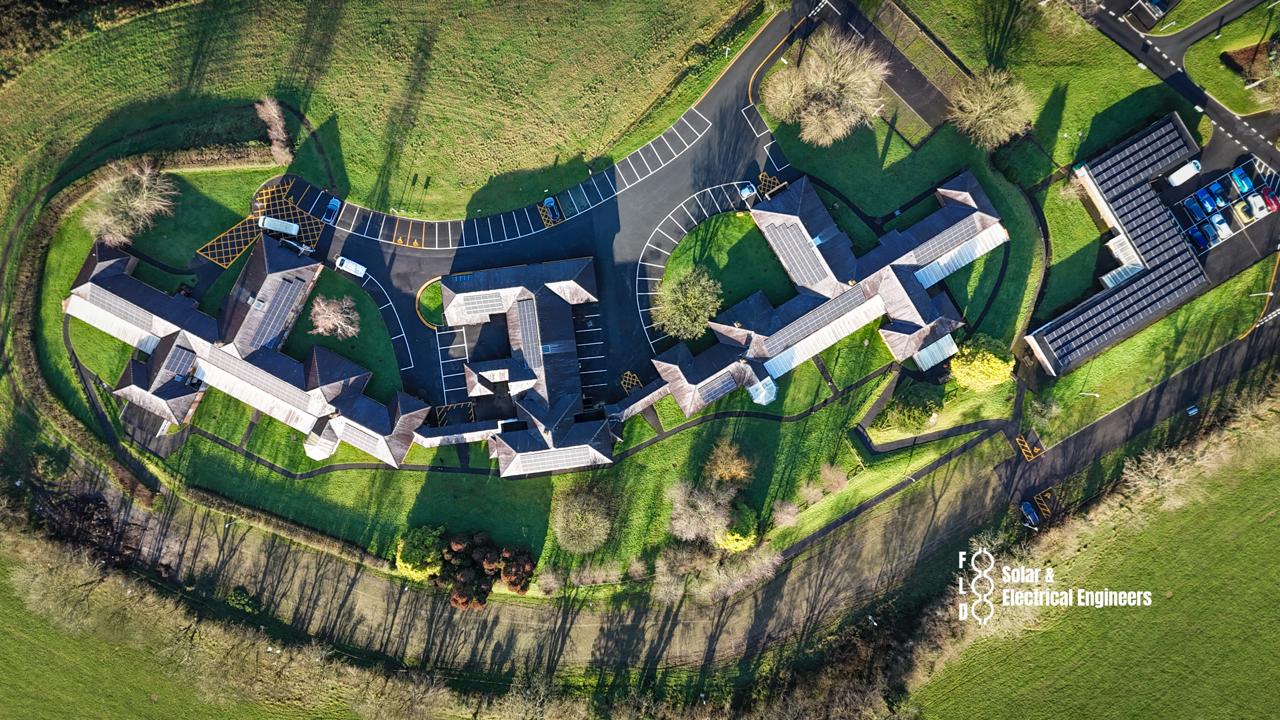
The Cardiff central business district hosts the densest commercial office-roof stock in Wales, including Capital Tower (Admiral Group), Callaghan Square and Capital Waterside. Tenant-landlord PPAs allow occupier electricity to be cut without tenant capex or landlord balance-sheet commitment. MEES B-by-2030 obligation drives demand for visible decarbonisation assets on non-domestic landlord portfolios.
Typical systems and economics
| System size | Annual generation | Annual saving | Simple payback | Post-tax payback |
|---|---|---|---|---|
| 40 kWp | 37,500 kWh | £9,800 | 4.5 yrs | 3.3 yrs |
| 120 kWp | 113,000 kWh | £29,000 | 4.1 yrs | 3 yrs |
- 40 kWp: Single-tenant office
- 120 kWp: Multi-tenant block with PPA
Grants and finance
MEES 2030 Band B obligation is the primary regulatory driver for landlords. Welsh Government Commercial Property Decarbonisation schemes may be available. SECR reporting pressure on tenant occupiers brings solar to procurement scoring in major office leases.
Further reading
Green leases and solar PV: structuring landlord-tenant arrangements for South Wales commercial property
How South Wales commercial landlords and tenants are structuring green lease arrangements to fund rooftop solar -- covering cost-sharing models, lease term requirements, DNO metering and the BBP Green Lease Toolkit.
Commercial solar for South Wales offices: PPA structures, green lease obligations and 9am--5pm self-consumption
How South Wales office occupiers and landlords are using commercial solar to reduce energy costs and meet green lease obligations -- with PPA vs outright purchase analysis, 65% daytime self-consumption models and EPC compliance context.
Structured cabling for South Wales offices and factories: Cat6a, fibre and TIA-568 certification
A technical guide to structured cabling for South Wales commercial and industrial premises -- Cat6a versus fibre backbone selection, TIA-568 certification, PoE for IP cameras and access control, and data room design.