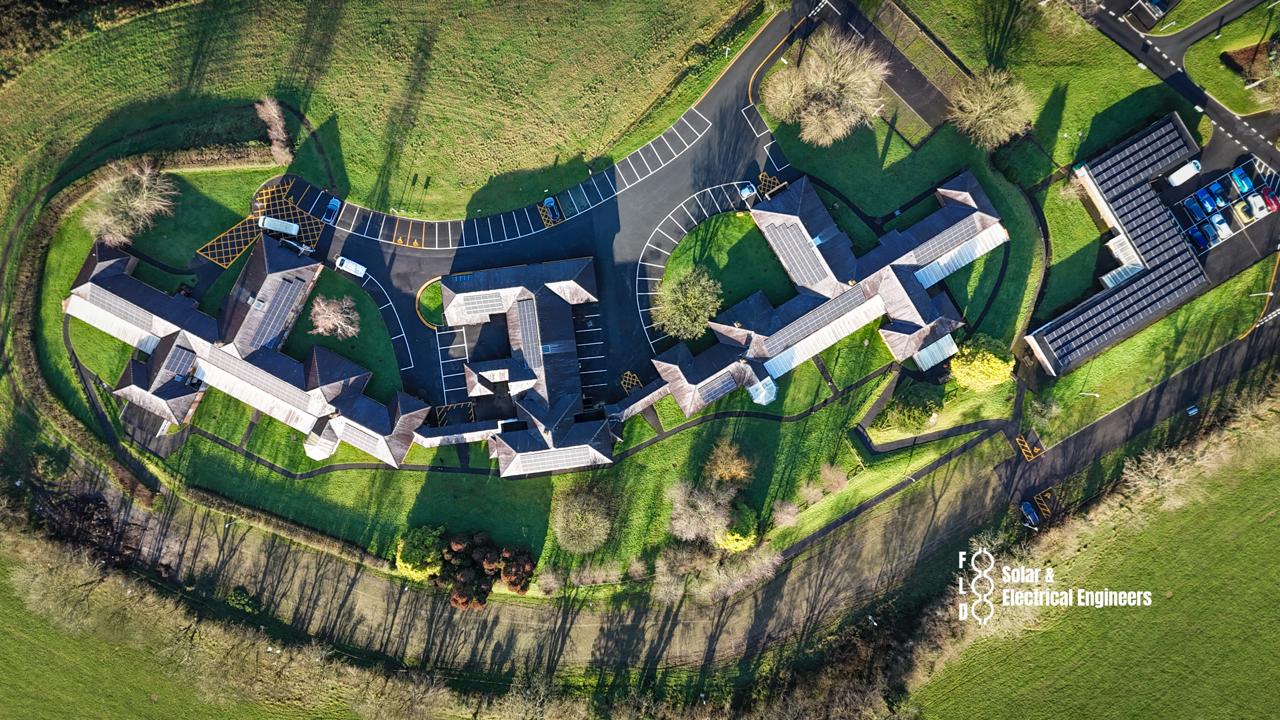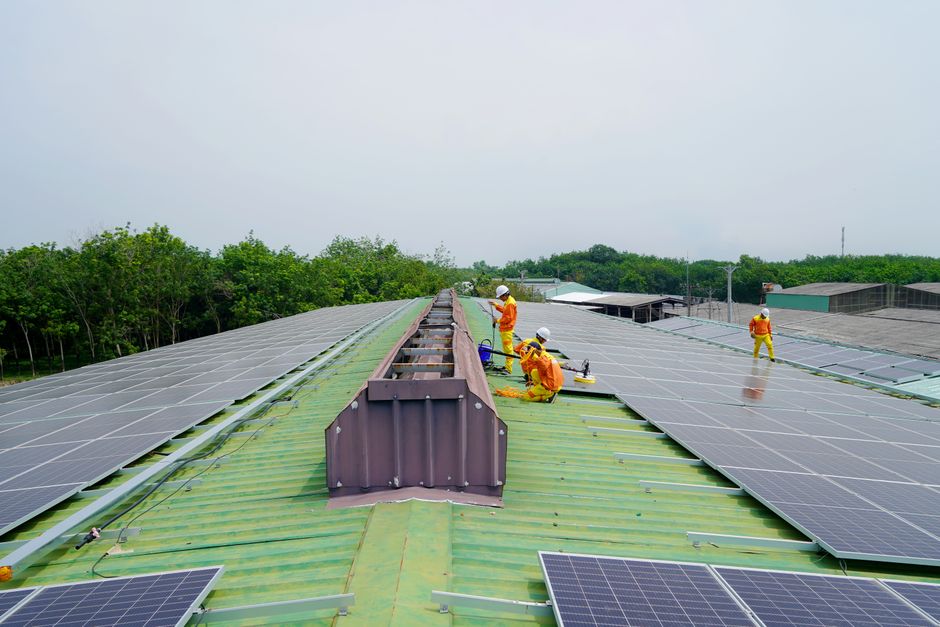
Welsh schools occupy a distinctive position in the commercial solar market. They are publicly funded, so capital budgets are constrained — but they benefit from Salix Wales interest-free loan financing that commercial operators cannot access. They operate predominantly during daylight hours, producing self-consumption rates of 75% to 90% during term time — among the highest of any building type. And they have a legitimate curriculum justification for visible solar monitoring displays that reinforces the case for installation beyond pure financial return.
Why schools are ideal solar buildings
A primary school running 08:30 to 15:30 across 38 term weeks consumes the majority of its electricity during solar generation hours. Secondary schools and colleges with extended day operations and IT-heavy timetables achieve even higher absolute consumption during the school day. Unlike offices or retail premises where weekend and evening demand is significant, school buildings are largely unoccupied outside term time during winter months — meaning battery storage is less critical than at residential or 24-hour commercial sites.
Term-time self-consumption rates of 80% to 88% are typical for primary and secondary schools. Even accounting for the 14 weeks of school holidays, annual average self-consumption across a full year runs at 65% to 72% — still among the highest in the commercial sector.
Payback models: 30 kWp and 100 kWp
30 kWp, 82% term-time self-consumption (Swansea primary school, SA):
| Metric | Value |
|---|---|
| Annual generation | 28,500 kWh |
| Effective self-consumption (70% annualised) | 19,950 kWh |
| Electricity cost saving | £5,386 |
| SEG export income (30%) | £1,026 |
| Year-one benefit | £6,412 |
| Installed cost | £27,000 |
| Salix Wales loan (interest-free) | £27,000 |
| Annual Salix repayment over 5 years | £5,400 |
| Net annual cash benefit after repayment | £1,012 |
| Post-repayment annual saving | £6,412 |
Under the Salix Wales mechanism, the school pays no capital upfront. The interest-free loan is repaid from energy savings over the loan term. After repayment, the school retains the full annual saving. For a 30 kWp system, the payback on the effective cost of capital is measured in avoided loan interest — the Salix mechanism eliminates conventional payback analysis entirely.
100 kWp, 85% term-time self-consumption (South Wales secondary school or FE college):
| Metric | Value |
|---|---|
| Annual generation | 95,000 kWh |
| Effective self-consumption (72% annualised) | 68,400 kWh |
| Electricity cost saving | £18,468 |
| SEG export income (28%) | £3,192 |
| Year-one benefit | £21,660 |
| Installed cost | £88,000 |
| Salix Wales loan | £88,000 |
| Annual Salix repayment over 5 years | £17,600 |
| Net annual cash benefit after repayment | £4,060 |
| Post-repayment annual saving | £21,660 |
For secondary schools and FE colleges with higher installed capacity, the Salix Wales loan term can be extended to reflect the payback period. Salix accepts repayment terms of up to 10 years for larger projects where the energy savings alone would not comfortably service a 5-year repayment.
Salix Wales: the application process
Salix Finance operates the Welsh Government’s interest-free energy efficiency loan scheme for the Welsh public sector. Schools in maintained local authority control apply through their local authority energy officer. Grant-aided schools and academies apply directly. Key points:
- Applications require a qualifying energy audit and a minimum energy saving of 5% from the proposed measure
- FLD provides ESOS-formatted feasibility reports suitable for Salix Wales applications at no cost to qualifying schools
- Welsh-medium documentation is available for Welsh-medium and dual-stream schools
Local authorities with large estate portfolios — Cardiff, Swansea, RCT, Caerphilly — can aggregate school applications into a single Salix programme submission, reducing application overhead and improving economies of scale on installation contracts.
Curriculum integration
FLD installs SolarEdge monitoring with publicly accessible dashboard output on all school installations. The monitoring interface shows real-time generation, self-consumption and carbon offset data suitable for display in school reception areas and curriculum use in science and geography. FLD provides a basic curriculum resource pack aligned with the Curriculum for Wales for all school clients.
DNO and metering considerations
Schools with existing half-hourly metering and smart meter infrastructure can access export payments under the Smart Export Guarantee from day one. Schools still on legacy credit meters require meter upgrades — coordinated with the relevant DNO and energy supplier as part of FLD’s installation programme.
G98 applications are suitable for the majority of primary school installations below 50 kWp. Secondary schools and colleges requiring 100 kWp or above require G99 Type A submission to NGED or SP Manweb depending on location.
Getting a school solar survey
FLD has surveyed and installed at maintained schools across Cardiff, Swansea, RCT, Neath Port Talbot and Carmarthenshire local authority estates. Contact Paul on 07913 117746 or use the contact page to discuss Salix Wales eligibility and programme timelines.