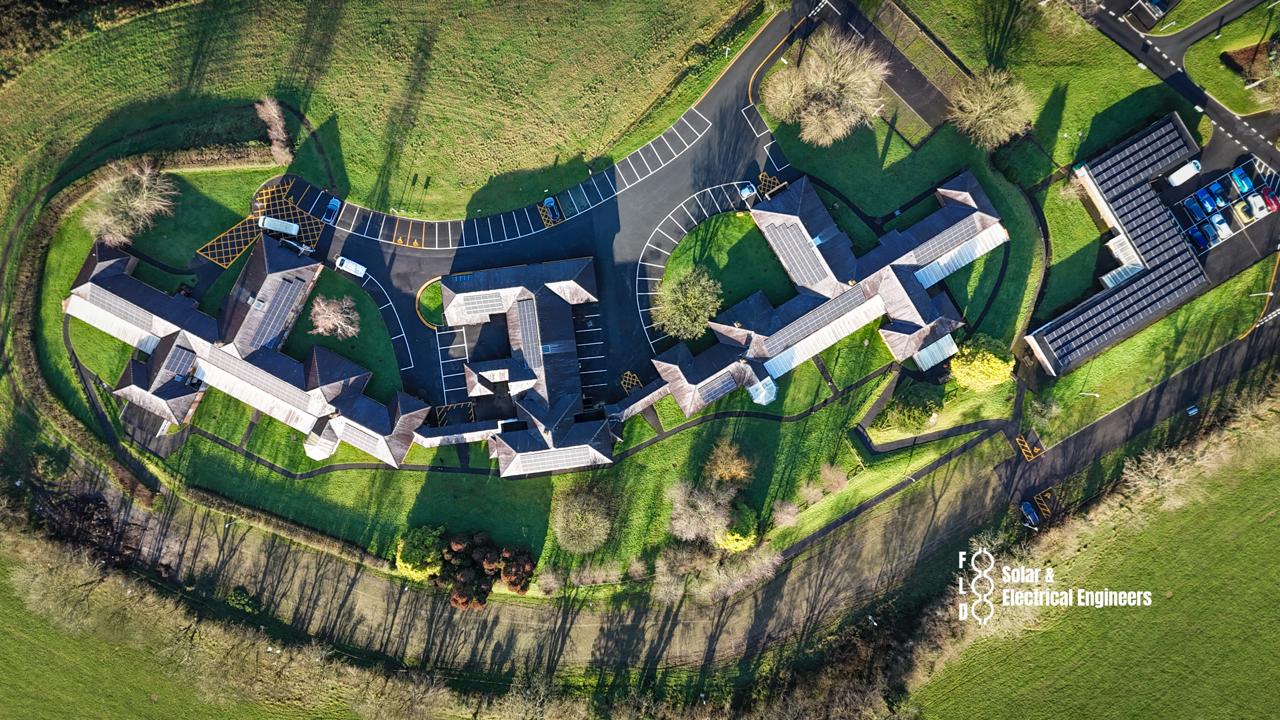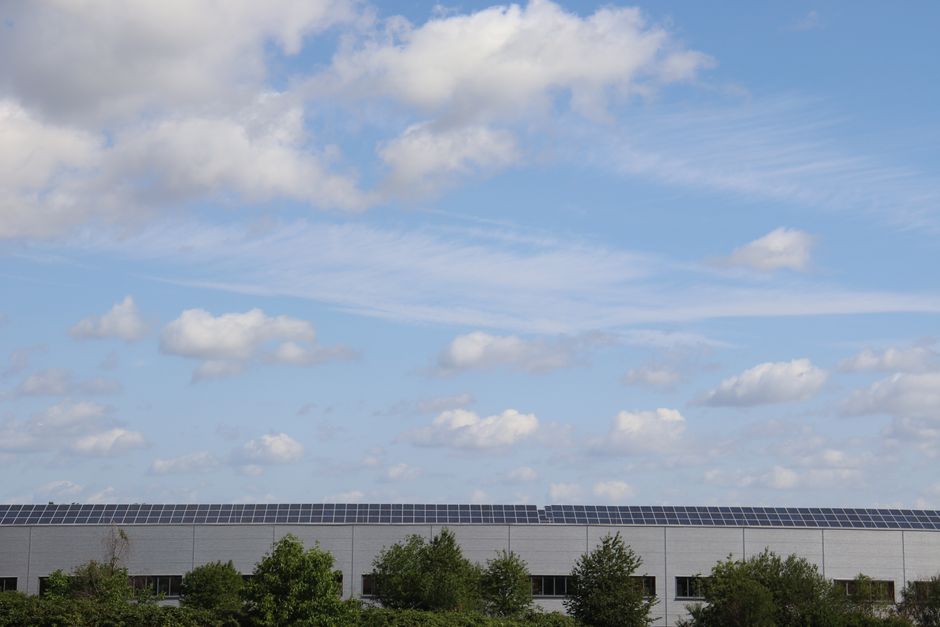
Industrial solar PV in South Wales operates at a different scale and complexity level from commercial rooftop systems. Installations above 500 kWp on process plant, refinery support buildings, large chemical facilities and port estate structures enter G99 Type B and C connection territory — requiring DNO infrastructure assessment, potential grid reinforcement and engineering resource beyond standard commercial installations.
FLD operates in the industrial solar segment for projects requiring specialist design engineering, DNO interface management and battery integration for demand management purposes. The economics for qualifying industrial sites remain compelling: at 29p to 33p/kWh industrial electricity tariffs, the simple payback on a 1 MWp rooftop system typically runs at 3.0 to 4.0 years before AIA tax credit.
Industrial sites in FLD’s direct coverage
The South Wales industrial solar pipeline includes:
- Baglan Energy Park SA12 — chemical and energy services cluster on former BP site, multiple process and support buildings with large roof areas
- Swansea Enterprise Park SA6 and SA7 — advanced manufacturing and light industrial with significant roof stock
- Celtic Freeport Port Talbot SA12 to SA13 — new-build and refurbished industrial with enhanced capital allowances
- Clydach Mond nickel refinery SA6 — process buildings with significant roof area in a constrained DNO environment
- Neath Abbey industrial cluster SA10 — mixed manufacturing and storage with ageing DNO infrastructure requiring pre-application assessment
- Pembroke Dock Marine SA72 — port and marine engineering with exposed south-facing roof areas and offshore wind supply chain context
G99 connection process at industrial scale
Industrial solar systems above 200 kWp require G99 Type A approval. Systems above 1 MWp require G99 Type B. Systems requiring dedicated DNO infrastructure upgrades move to G99 Type C — the most complex category, requiring DNO distribution planning involvement.
In NGED territory (Swansea, Port Talbot, Newport), G99 Type A timelines in 2026 run at 10 to 14 weeks. Type B at NGED runs at 20 to 30 weeks, with distribution planning involvement from week 8. In SP Manweb territory (Carmarthenshire, Pembrokeshire, Powys), Type A runs at 14 to 20 weeks and Type B at 25 to 35 weeks.
FLD manages the complete DNO interface for industrial projects, including pre-application enquiry submission, technical single-line diagram preparation, protection relay specification and site protection settings coordination with the relevant DNO protection engineer.
Battery integration for demand peak shaving
Industrial electricity consumers on maximum demand tariffs — Half-Hourly metered sites paying triad or capacity market charges — can combine rooftop solar with battery storage to flatten demand peaks and reduce capacity charges. The economics of peak shaving depend on the site’s maximum demand profile and contracted import capacity.
A site with a 500 kW import capacity and a 400 kWp rooftop solar system plus 500 kWh of battery storage can reduce maximum demand peaks by 200 to 350 kW during generation hours — producing demand charge savings of £15,000 to £40,000 annually depending on the tariff structure, in addition to the standard electricity cost saving from self-consumed solar generation.
FLD designs battery systems for demand management using SolarEdge StorEdge or compatible BESS platforms, with export limiting and demand setpoint control to avoid DNO export constraint violations and maximise demand charge reduction.
Payback models: 500 kWp and 1 MWp
500 kWp, 78% self-consumption (Baglan Energy Park process building):
| Metric | Value |
|---|---|
| Annual generation | 475,000 kWh |
| Self-consumed (78%) | 370,500 kWh |
| Electricity cost saving (31p/kWh) | £114,855 |
| SEG export income (22%) | £12,540 |
| Year-one benefit | £127,395 |
| Installed cost | £420,000 |
| Simple payback | 3.3 years |
| AIA post-tax payback | 2.5 years |
1,000 kWp, 82% self-consumption (Celtic Freeport large industrial unit):
| Metric | Value |
|---|---|
| Annual generation | 950,000 kWh |
| Self-consumed (82%) | 779,000 kWh |
| Electricity cost saving (32p/kWh) | £249,280 |
| SEG export income (18%) | £20,520 |
| Year-one benefit | £269,800 |
| Installed cost | £820,000 |
| Simple payback | 3.0 years |
| AIA post-tax payback | 2.3 years |
Celtic Freeport designated businesses benefit from enhanced capital allowances including a 100% enhanced capital allowance (ECA) on qualifying plant and machinery used in the designated tax site — a separate relief from the standard AIA — which can improve effective payback further for Freeport-registered entities.
Structural and fire safety at industrial scale
Industrial roofs — concrete planks, portal steel with composite cladding, or flat bituminous systems — require structural engineering sign-off for distributed panel loads. FLD commissions a structural roof survey as part of every feasibility report for systems above 200 kWp, confirming available dead load capacity and identifying any sections requiring propping or exclusion.
Fire safety at industrial scale requires consideration of PV fire risk management under BS 8519, including array segmentation, rapid shutdown device specification and site fire risk assessment update. FLD coordinates with the site’s fire risk assessor as part of the installation programme.
Ynni Cymru and Celtic Freeport incentives
Qualifying Welsh industrial businesses can apply to Ynni Cymru for capital grants of £25,000 to £1,000,000. Celtic Freeport-registered businesses may access additional Welsh Government and UK Government freeport incentives. FLD’s project team provides pre-application feasibility documentation for both programmes.
Getting an industrial solar feasibility assessment
FLD provides industrial solar feasibility assessments covering roof structural capacity, DNO headroom, battery integration economics and grant programme eligibility. Call Paul on 07913 117746 or use the contact page.