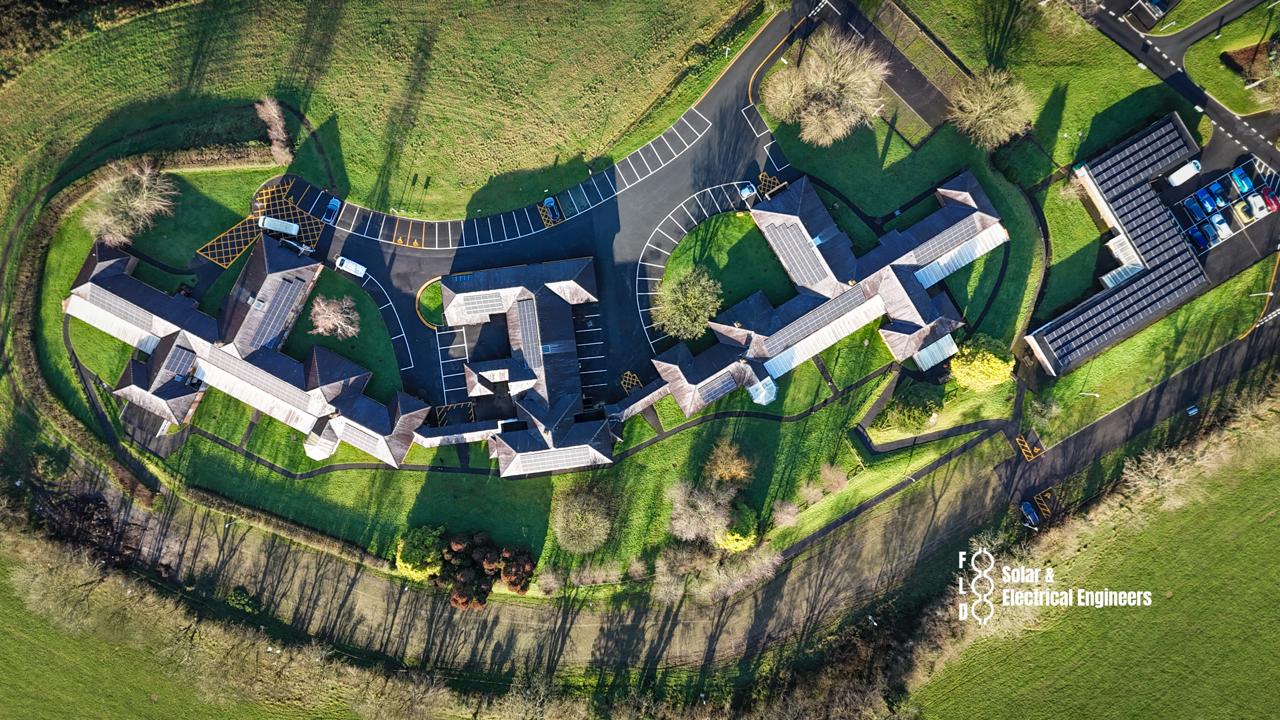
Coastal Welsh hospitality has a demand profile dominated by a July-September summer peak that aligns almost perfectly with the solar generation curve. Occupancy-driven refrigeration, air conditioning, kitchen load and hot water all scale with the tourist season. Hotels in Tenby, Porthcawl, Mumbles and across Pembrokeshire typically sit inside conservation areas, national parks or AONBs, which makes in-roof integrated solar the compliant install method.
Typical systems and economics
| System size | Annual generation | Annual saving | Simple payback | Post-tax payback |
|---|---|---|---|---|
| 40 kWp | 38,000 kWh | £9,500 | 4.2 yrs | 3.1 yrs |
| 80 kWp | 78,000 kWh | £19,000 | 4 yrs | 2.9 yrs |
- 40 kWp: Small boutique hotel
- 80 kWp: Coastal hotel with in-roof integration
Grants and finance
Visit Wales Sustainable Tourism support schemes, Welsh Government Energy Service feasibility funding, and Development Bank of Wales Green Business Loans are the relevant routes for hospitality capex. Celtic Freeport tax advantages apply to the Milford Haven and Port Talbot hospitality estate.
Further reading
Commercial solar for Welsh hotels: hot water pre-heat, EPC compliance and year-round self-consumption
How Welsh hotels, guest houses and holiday parks are using commercial solar to cut energy bills -- with payback models for 50 kWp to 200 kWp installations, solar thermal hot water pre-heat and EPC band C compliance.
Solar for holiday lets in Barmouth and the Meirionnydd coast: payback, planning and the summer demand peak
A guide to solar installation for holiday-let and guesthouse properties in Barmouth, Harlech and Tywyn -- summer occupancy demand alignment, Eryri National Park planning, in-roof integrated specification, and payback examples for Cardigan Bay coastal properties.
Solar in St Davids: 995 kWh/kWp and why the smallest city has the biggest solar yield
A guide to solar installation in St Davids, SA62 -- why the Pembrokeshire peninsula achieves the highest solar yield in Wales, in-roof integrated design for the National Park, and payback examples for coastal hospitality.