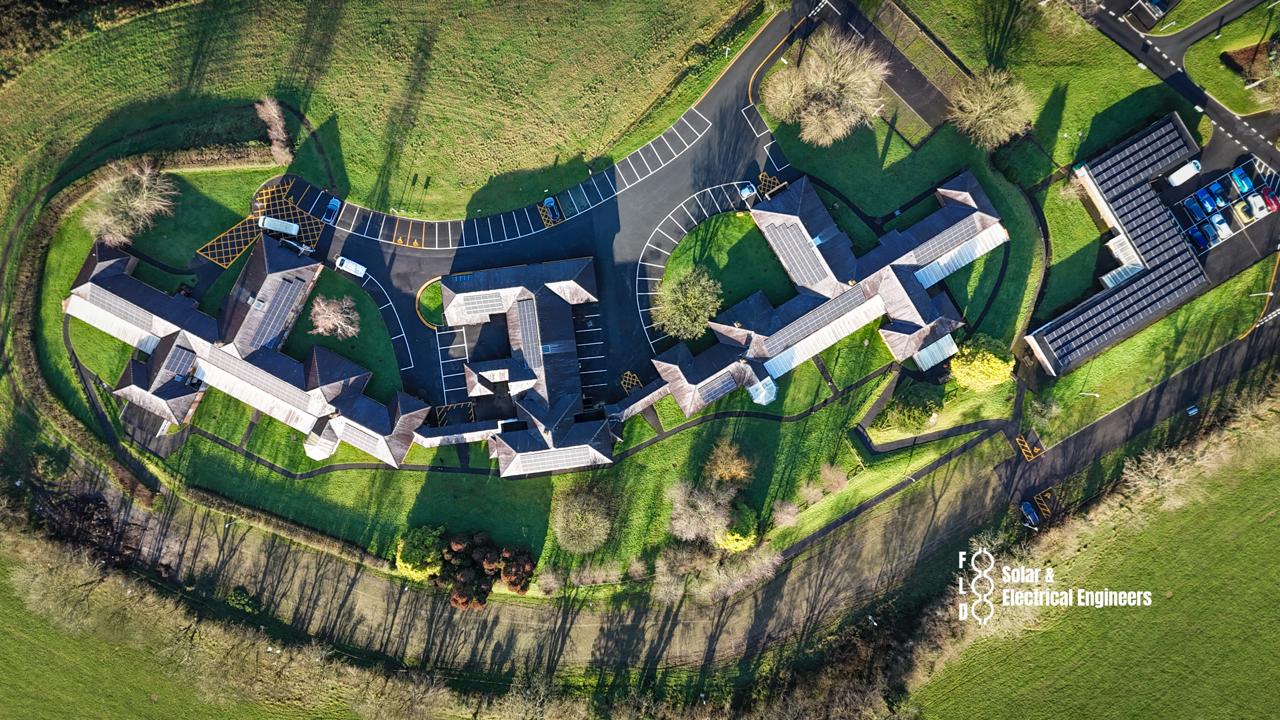
Serving Dolgellau
Dolgellau is the county town of historic Meirionnydd, now within Gwynedd County Council, sitting beneath the southern face of Cadair Idris at the head of the Mawddach Estuary. Population is approximately 2,700. The town is entirely within the Eryri (Snowdonia) National Park, and that National Park designation is the defining planning context for every solar installation in the LL40 postcode.
Eryri National Park Authority (ENPA) applies design guidance for solar that is generally consistent with the Pembrokeshire Coast National Park approach: in-roof integrated systems for any elevation visible from public viewpoints, pre-application consultation for listed buildings, and a presumption in favour of rooftop solar on non-sensitive elevations. ENPA planning officers have processed numerous solar applications across the Park and the pre-application process is well-established.
Dolgellau's stone-built character -- the town is constructed almost entirely from local dark grey dolerite, giving it one of the most distinctive townscapes in Wales -- means in-roof integrated solar using dark-framed, black-cell panels is the standard aesthetic specification here. Standard aluminium-framed panels with white backsheet read visually as intrusive on Dolgellau's dark stone roofscapes; black monocrystalline panels in dark frames sit far more sympathetically.
The economy is based on outdoor tourism (the Mawddach Trail cycling route, the Precipice Walk, Cadair Idris mountaineering), agricultural supply for the Mawddach valley farms, and Welsh-language community services. Eldon Square carries the independent retail and cafe base. The town's accommodation sector -- guesthouses, small hotels, holiday lets -- is the primary commercial solar client base.
Welsh-language is the first language of the majority of Dolgellau's residents. Gwynedd County Council operates largely in Welsh, and FLD's customer correspondence and documentation for Dolgellau clients is available in Welsh on request.
At 955 kWh/kWp, a 20 kWp guesthouse rooftop in Dolgellau generates 19,100 kWh annually. With 70% self-consumption on a year-round guesthouse operation at 27p/kWh, year-one saving reaches approximately £4,700 on £21,000 capex (including in-roof integration premium). Post-AIA payback approximately 3.8 years.
FLD reaches Dolgellau in approximately 125 minutes via the A470. Coverage is structured as part of a Gwynedd Meirionnydd circuit combining with Barmouth and Harlech.
100 kWp reference system at 955 kWh/kWp
Modelled at 27p/kWh blended import, 12p/kWh SEG export, 55% self-consumption for low energy intensity site.
Housing stock in Dolgellau
Dark-stone Victorian and Georgian market-town centre, Mawddach valley farmhouses, rural holiday-let conversions
A typical 4 kWp domestic install here generates 3,820 kWh/yr. With 40% self-consumption at 30p/kWh and 60% SEG export at 12p/kWh, first-year saving is approximately £733.
Local landmarks and context
- Cadair Idris
- Mawddach Estuary and Trail
- Precipice Walk
- Eryri National Park HQ area
Major employers we work with
- Eryri National Park Authority offices
- Gwynedd CC local services
- Outdoor tourism SMEs
Looking after solar and electrical systems in Dolgellau
Installing the system is the short part. Most of what we do in Dolgellau is what comes after it.
Existing arrays around Dolgellau lose output quietly — soiling on the glass, a string that has dropped out, an inverter throwing a fault code nobody reads — so solar PV maintenance and panel cleaning is usually the first thing worth booking on a system that is a few years old.
Where a Dolgellau system exports more than it uses, retrofitting battery storage is what turns that export back into self-consumption, which is worth roughly double what the export tariff pays.
EV charge points is the other upgrade that pairs with an existing array in Dolgellau — charging off your own generation rather than off the grid changes the arithmetic completely.
On commercial premises in Dolgellau, LED and emergency lighting upgrades normally pays back faster than anything else on the building, and it cuts the load the solar has to cover in the first place.
We are 125 minutes from Dolgellau in normal traffic, which is why we can put an engineer on a fault the same week rather than the same month.
Recent local developments
- ENPA net-zero estate programme
- Mawddach Trail improvement
- Gwynedd Cymraeg 2050 policy