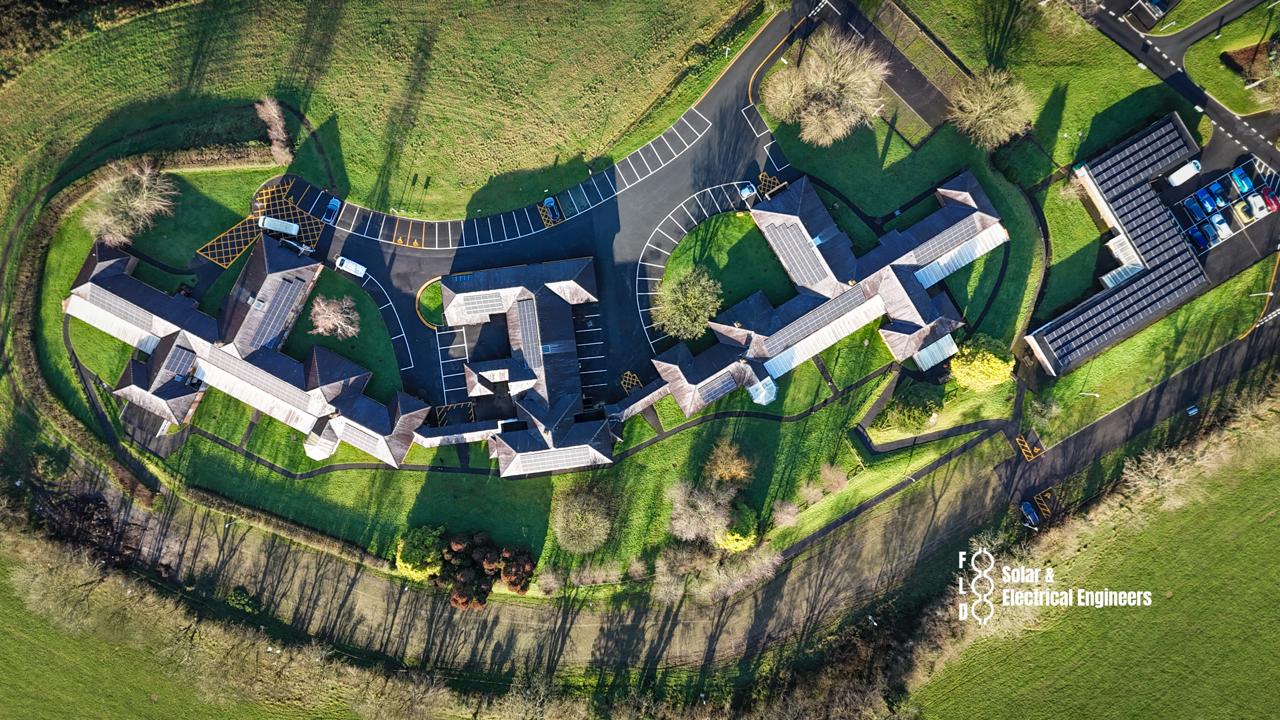
Serving Cwmbran
Cwmbran is Wales's largest designated new town, built from 1949 onward by the Cwmbran Development Corporation to rehouse workers from the South Wales coalfield and attract new manufacturing industry to Torfaen. With a population of approximately 48,000, it is the commercial and retail centre of Torfaen County Borough and carries a planned-town character that differs markedly from the organic Victorian townscapes of the older Welsh Valleys communities.
Torfaen County Borough Council administers the area. Cwmbran was designed with commercial and industrial estates integral to its plan from the outset, and the Llantarnam, Ty Coch and Springvale industrial estates carry some of the largest concentrations of commercial and light-industrial floorspace in South Wales outside Cardiff and Newport. Llantarnam Industrial Park is the primary commercial estate, hosting logistics, engineering and manufacturing operations across a substantial area of purpose-built mid-century to modern buildings.
The retail economy is anchored by the Cwmbran Shopping Centre, one of the largest covered retail centres in Wales, and the associated retail park development along the A4042 corridor. These large retail footprints carry flat-roof structures with substantial panel capacity -- a 500 kWp installation on a single retail park building is technically feasible and has been modelled by FLD for comparable South Wales retail park clients.
Cwmbran's position on the A4042 between Newport and Pontypool gives it strong logistics access, and the town has attracted significant distribution and e-fulfilment investment. Distribution warehouses with 24-hour operations -- where electricity demand is continuous and solar self-consumption rates are correspondingly high -- are among the most financially compelling commercial solar clients at any scale.
The housing stock reflects the planned-town origin: post-war semi-detached and detached properties predominate, built with consistent layout patterns across the Fairwater, Llantarnam, Pontnewydd and Thornhill neighbourhoods. The systematic orientation of these estates means a surprisingly high proportion of properties have south or south-west facing roofs -- the result of town planners considering solar access decades before solar panels existed commercially.
At 950 kWh/kWp, a 300 kWp Llantarnam Industrial Park logistics building generates 285,000 kWh annually. With 82% self-consumption on a 24-hour distribution operation at 27p/kWh, year-one saving reaches approximately £64,000 on £255,000 capex. Post-AIA payback 3.0 years.
FLD reaches Cwmbran in approximately 65 minutes via the M4 and A4042. The town is served on the same eastern corridor circuit as Newport and Pontypool.
Commercial sites and business parks
High energy intensityLlantarnam Industrial Park
NP44 3AW
Ty Coch Industrial Estate
Springvale Industrial Estate
100 kWp reference system at 950 kWh/kWp
Modelled at 27p/kWh blended import, 12p/kWh SEG export, 72% self-consumption for high energy intensity site.
Housing stock in Cwmbran
Post-war planned-town semis and detacheds, modern cul-de-sac estates, Llantarnam and Thornhill newer-build
A typical 4 kWp domestic install here generates 3,800 kWh/yr. With 40% self-consumption at 30p/kWh and 60% SEG export at 12p/kWh, first-year saving is approximately £730.
Local landmarks and context
- Cwmbran Shopping Centre
- Llantarnam Industrial Park
- Afon Llwyd valley
- Greenmeadow Golf Club
Major employers we work with
- Llantarnam Industrial Park tenants
- Cwmbran Shopping Centre operators
- Torfaen CC
Looking after solar and electrical systems in Cwmbran
Once a system is on the roof in Cwmbran, the question changes from "what will it cost" to "who looks after it".
On commercial premises in Cwmbran, an LED lighting replacement normally pays back faster than anything else on the building, and it cuts the load the solar has to cover in the first place.
Existing arrays around Cwmbran lose output quietly — soiling on the glass, a string that has dropped out, an inverter throwing a fault code nobody reads — so solar maintenance, cleaning and thermographic surveys is usually the first thing worth booking on a system that is a few years old.
Where a Cwmbran system exports more than it uses, adding battery storage is what turns that export back into self-consumption, which is worth roughly double what the export tariff pays.
workplace and home EV charging is the other upgrade that pairs with an existing array in Cwmbran — charging off your own generation rather than off the grid changes the arithmetic completely.
We are 65 minutes from Cwmbran in normal traffic, which is why we can put an engineer on a fault the same week rather than the same month.
Recent local developments
- Cwmbran Town Centre masterplan
- Llantarnam industrial park investment
- A4042 active travel corridor