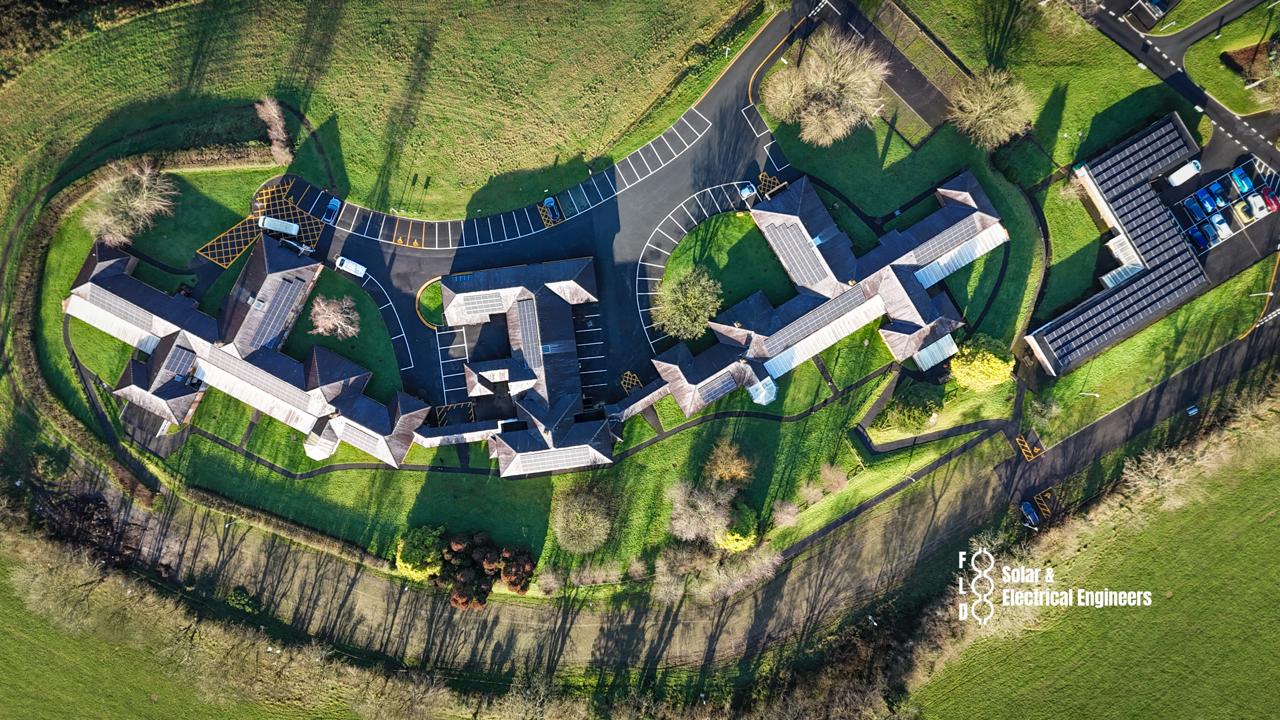
Commercial solar on multi-tenanted or let properties creates a structural tension: the landlord owns the roof and makes the capital investment, but the tenant benefits from lower electricity costs. Without a contractual framework for cost-sharing, this misalignment prevents investment-grade landlords from proceeding with solar installations that are economically compelling on an asset-level basis.
The green lease provides the solution. Green lease clauses — now standard in institutional commercial leases drafted to the Better Buildings Partnership model — create obligations on both landlord and tenant to co-operate on energy efficiency investment and to share costs and benefits proportionately. For South Wales commercial landlords approaching the 2027 MEES band C threshold, understanding the green lease mechanics is a prerequisite for solar procurement.
The structural problem with multi-let solar
On a fully-repairing and insuring (FRI) lease, the tenant typically pays electricity directly to the grid supplier via their own meter. The landlord has no direct interest in the occupier’s energy costs and no revenue mechanism to recover solar capital investment from the energy saving it generates.
A landlord investing £80,000 in a 100 kWp solar installation on a multi-let industrial park would generate a building-wide electricity saving of £21,000 to £25,000 per year — but that saving flows to tenants via lower energy bills, not to the landlord. Without a cost-recovery mechanism, the landlord bears the capital and the tenant captures the benefit.
Green lease cost-sharing models
Model 1: Service charge supplement
The landlord installs solar and includes the capital repayment as a service charge line item over a fixed term (typically 5 to 10 years). Tenants pay a service charge supplement equivalent to 50% to 70% of their individual energy saving from solar. The landlord recovers capital from the service charge; tenants retain 30% to 50% of their saving as an immediate benefit.
Example: 100 kWp industrial park, four equal tenants. Each tenant’s energy saving: £5,250 per year. Service charge supplement at 60% recovery: £3,150 per tenant per year. Tenant net benefit: £2,100 per year. Landlord payback on £80,000 capex from four tenants: approximately 6.3 years.
Model 2: Landlord-owned generation with discounted supply
The landlord installs solar and retains ownership of the system. Generated electricity is metered separately and sold to tenants at a fixed discount to grid tariff under a private wire arrangement or licence. This model requires an Ofgem supply licence exemption for installations below 5 MW and a sub-meter infrastructure for individual tenant metering.
FLD installs sub-metering infrastructure as part of commercial multi-let proposals where the landlord intends to retail solar generation to tenants. The sub-metering system reports tenant consumption from the solar array to a cloud platform accessible to both landlord and tenant for billing purposes.
Model 3: Tenant-funded installation on landlord roof
Where the tenant has a long lease term (10+ years remaining) and high energy intensity, the tenant may prefer to fund the installation directly in exchange for a roof licence from the landlord. The tenant takes the AIA tax benefit and captures all the energy saving. The landlord provides consent and a roof licence at nominal consideration.
This model suits owner-managed businesses operating from leasehold premises who have sufficient tax capacity to utilise the AIA credit.
Lease term requirements
Green lease solar arrangements require a minimum unexpired lease term to be viable. FLD’s rule of thumb:
- Service charge recovery model: minimum 5 years remaining at installation
- Tenant-funded model: minimum 10 years remaining
- Landlord-owned discounted supply model: minimum 7 years remaining
Properties with 2 to 3 years remaining on the lease should defer solar to the lease renewal negotiation, at which point the green lease obligation can be built into the new lease terms from the start.
DNO metering for multi-let sites
Multi-let sites with a single point of connection and multiple tenant meters require a generation meter at the inverter output and sub-meters at each tenant’s distribution board. The generation meter feeds the DNO’s Smart Export Guarantee reporting. Sub-meters record individual tenant consumption from the solar array for service charge or billing purposes.
FLD installs CT clamp sub-metering and data logger infrastructure on all multi-let proposals, providing landlord and tenant with real-time consumption data via the SolarEdge monitoring portal or a compatible third-party platform.
BBP Green Lease Toolkit
The Better Buildings Partnership Green Lease Toolkit provides model lease clauses for energy efficiency cost-sharing. FLD recommends landlords instruct a solicitor experienced in commercial energy leases to incorporate BBP-compliant clauses into lease renewals and new tenancy agreements before committing to solar capital expenditure.
FLD can provide a draft cost-sharing proposal in the format required for solicitor review at no cost to qualifying landlords.
Getting a green lease solar assessment
FLD provides green lease solar feasibility assessments for South Wales commercial landlords covering EPC improvement, cost-sharing model analysis, DNO metering specification and Ynni Cymru grant eligibility.
Call Paul on 07913 117746 or use the contact page to discuss a green lease solar arrangement for your commercial property portfolio.