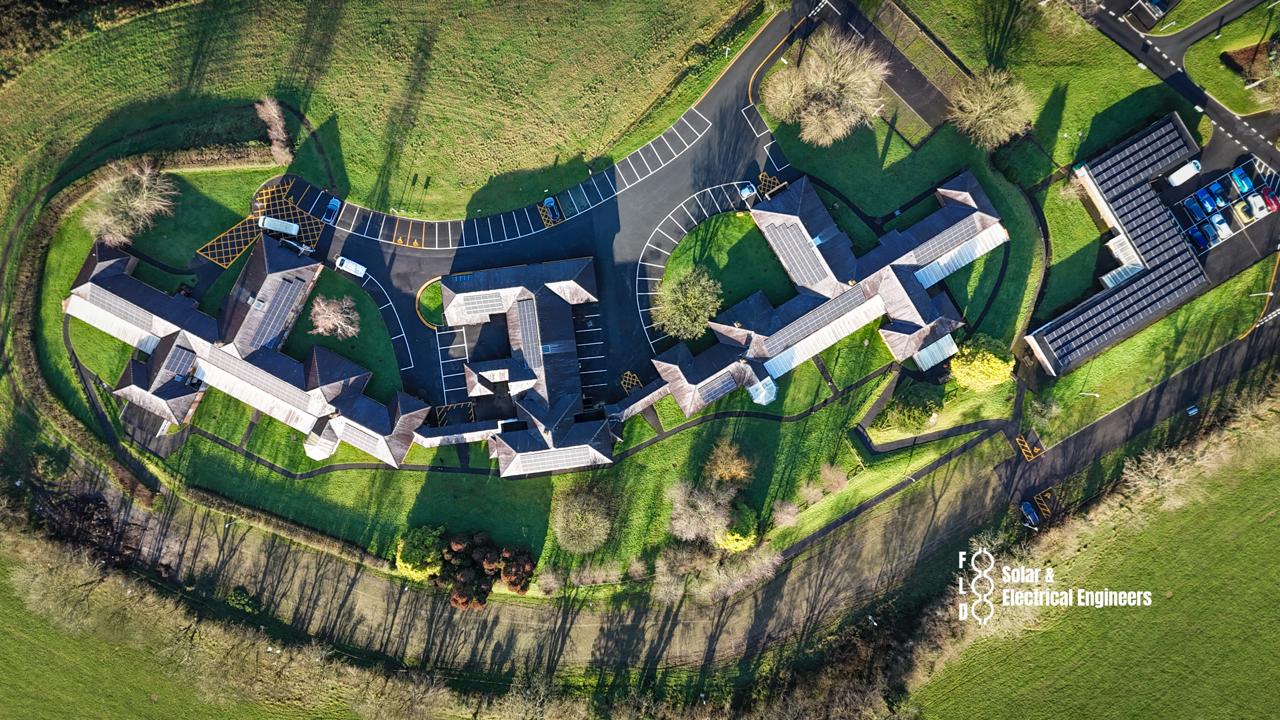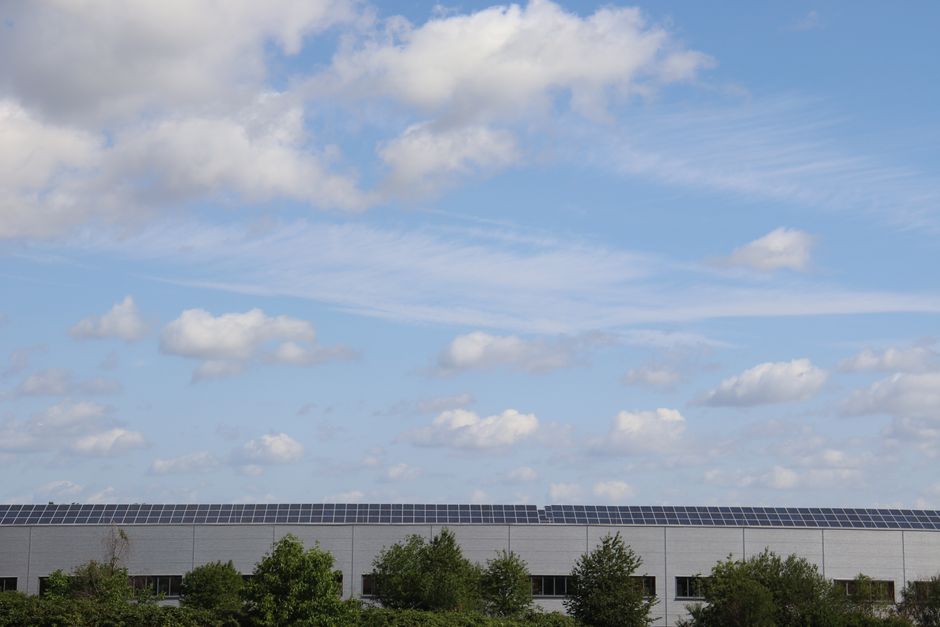
The Vale of Glamorgan stretches from the Bristol Channel coast at Barry Island in the south to the Blaenau Llynfi escarpment in the north, and the solar opportunity across this geography is unusually varied: former coal-port industrial estates at Barry Docks, a conservation area market town at Cowbridge, and a scatter of mixed agricultural and residential holdings in between.
Barry: the former world’s busiest coal port
Barry Dock opened in 1889 and by 1913 was shipping more coal than Cardiff, handling over 11 million tons in its record year. That industrial history left a legacy of dock infrastructure, warehousing and industrial floorspace that, after redevelopment, now houses the Vale of Glamorgan Business Park — one of the largest commercial estates in the Vale.
The Business Park’s buildings date from the 1980s to 2000s. Portal-frame, steel-clad and flat-roof construction predominates. These are ideal commercial solar form factors: large unobstructed roof planes, no heritage constraints (the commercial estate is wholly post-war), and consistent daytime energy demand from logistics, light manufacturing and distribution tenants.
At 960 kWh/kWp, a 200 kWp Vale of Glamorgan Business Park installation generates 192,000 kWh annually. With 75% self-consumption on a distribution operation at 27p/kWh, year-one saving: approximately £43,000 on £172,000 capex. Post-AIA payback: 3.5 years.
NGED South Wales manages the grid connection for CF62 and CF63. G99 Type A applications for the Barry area have been running at 12 to 16 weeks in 2025 to 2026. FLD submits G99 from the design stage so the DNO approval runs concurrently with procurement.
Barry Island: seasonal hospitality solar
Barry Island’s pleasure beach, beach-front cafes and summer arcades carry a Bristol Channel-facing orientation and the same 960 kWh/kWp yield as the rest of the Vale. The hospitality demand here is strongly seasonal — June to September carries 70% of annual footfall. Solar self-consumption during this peak period is high.
A 30 kWp installation on a Barry Island seafront cafe or restaurant generates 28,800 kWh annually. With 80% summer-peaked self-consumption and 20% export, year-one benefit reaches approximately £6,500 on £27,000 capex. Post-AIA payback: 3.0 years.
Cowbridge: conservation area domestic solar
Cowbridge’s High Street conservation area covers the medieval walled town centre. For the Victorian and Georgian townhouses on the principal streets, front-elevation solar requires a planning application with conservation officer assessment.
The practical approach for Cowbridge domestic solar is rear-slope installation on the south-facing gardens running behind the High Street properties. Most of these rear pitches face directly south or south-west and are invisible from the public street — permitted development applies without conservation area consent. A 4 to 6 kWp installation on a Cowbridge Victorian detached or townhouse rear pitch generates 3,840 to 5,760 kWh at 960 kWh/kWp.
For the modern detached estates on the western approach to Cowbridge (Rhoose Road, Llansannor area), no conservation constraints apply. These properties have a mix of orientations but a significant proportion of south-facing rear pitches suited to standard on-roof solar.
Llandovery: the Tywi northern gateway
Llandovery in SA20 anchors the northern end of the Tywi valley solar circuit, combining Llandeilo and Ammanford into a single Carmarthenshire day. Llandovery College — the independent boarding school founded in 1847 — is the town’s largest institutional energy consumer and a Salix Wales school-funding candidate. Agricultural holdings on the Tywi headwater slopes above the town represent the Farming Connect farm solar base.
At 955 kWh/kWp, Llandovery sits just below the Pembrokeshire coastal yield but well above the north Powys average. The combination of Farming Connect grant and Tywi valley productive farm economics produces strong payback for agricultural installations.
Getting a Vale of Glamorgan or Carmarthenshire solar survey
FLD covers CF62, CF63, CF71 (Barry and Cowbridge) and SA20 (Llandovery) on regular circuits from Swansea. Drive time is 52 to 65 minutes for the Vale of Glamorgan locations. Call Paul on 07913 117746 to discuss a commercial or domestic solar assessment.