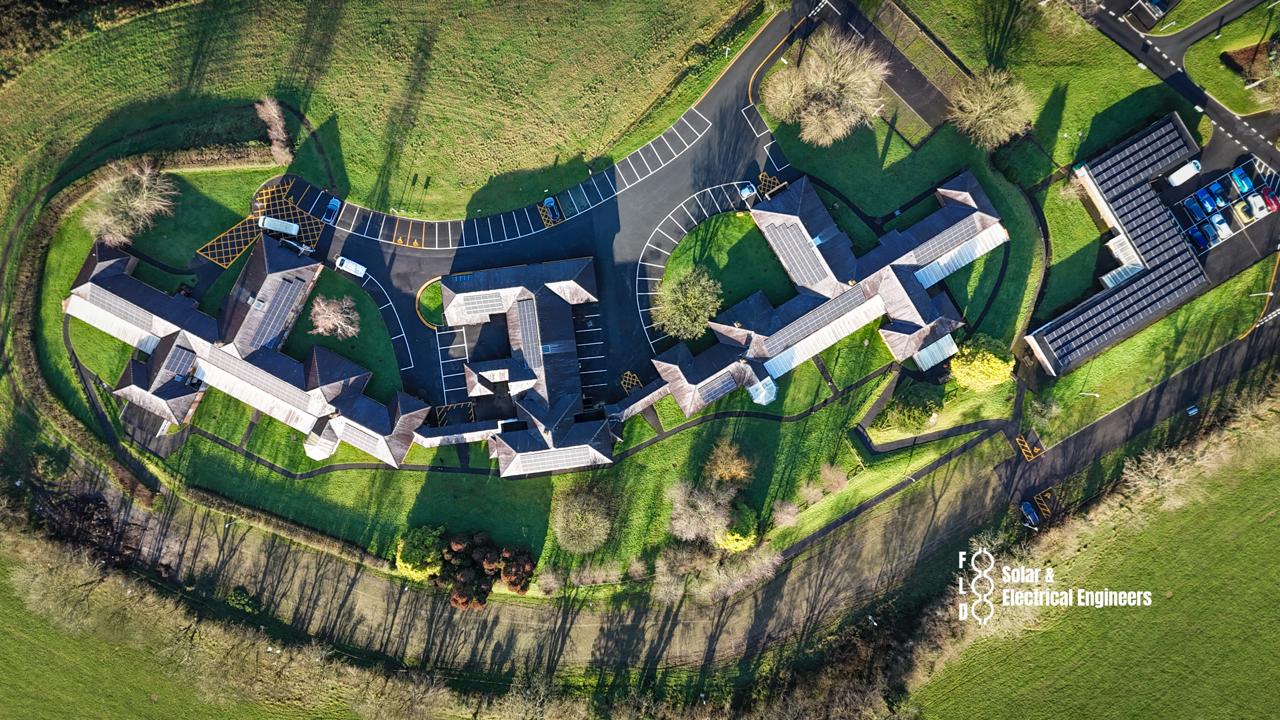
Serving Llandovery
Llandovery -- Llanymddyfri in Welsh, meaning the church among the waters -- is a drovers' town at the northern gateway to Carmarthenshire, population approximately 2,200, sitting where the A40 crosses the River Bran at the foot of the Cambrian Mountains. The town has been the assembly point for the cattle drovers' trade between Wales and London since the medieval period, and that historical identity as a node connecting Welsh agriculture to English markets remains economically relevant today in the form of the Llandovery livestock market and the agricultural service businesses that cluster along the A40.
Carmarthenshire County Council administers the area. Llandovery College -- a prestigious independent boarding school founded in 1847, known as the Eton of Wales -- is the town's largest single employer and its most architecturally significant institution. The college grounds extend across the hillside above the town centre, and the Victorian and later buildings carry potential for the kind of Salix-adjacent institutional solar that FLD has developed for school and college clients elsewhere in Wales.
The Bannau Brycheiniog (Brecon Beacons) National Park boundary approaches closely from the north-east -- the Park edge runs along the ridge line approximately 3 to 4 miles from the town centre. Farm holdings north of Llandovery on the Tywi headwater slopes fall within the Park and require BBNPA pre-application consultation for solar. Holdings south and west of the town -- the more accessible and productive valley-floor farms -- are outside the Park and proceed under standard permitted development.
Llandovery's drovers' heritage is embodied in the Llandovery Heritage Centre and the statue of Llanymddyfri's most famous droving-era figure, Twm Siôn Cati, on the town square. The historic streetscape along Kings Road and Stone Street carries conservation area designation covering the principal Georgian and Victorian buildings.
The agricultural solar base here is the Tywi headwater farming community: upland sheep and beef holdings on the slopes, more productive mixed operations on the valley floor near Cilycwm and Rhandirmwyn. Farming Connect is the primary grant route for SA20 agricultural clients, and FLD covers SA20 on the same Tywi valley circuit as Llandeilo.
At 955 kWh/kWp, a 40 kWp Llandovery agricultural supply building generates 38,200 kWh annually. With 68% self-consumption at 27p/kWh, year-one saving reaches approximately £8,500 on £37,000 capex. Post-AIA payback 3.2 years.
FLD reaches Llandovery in approximately 58 minutes via the A40. The town is the northern anchor of the Tywi valley circuit combining with Llandeilo and Ammanford.
Commercial sites and business parks
Medium energy intensityLlandovery Business Park
100 kWp reference system at 955 kWh/kWp
Modelled at 27p/kWh blended import, 12p/kWh SEG export, 65% self-consumption for medium energy intensity site.
Housing stock in Llandovery
Georgian and Victorian drovers'-town centre, conservation area streets, Tywi valley farmhouses
A typical 4 kWp domestic install here generates 3,820 kWh/yr. With 40% self-consumption at 30p/kWh and 60% SEG export at 12p/kWh, first-year saving is approximately £733.
Local landmarks and context
- Llandovery Castle ruins
- Llandovery College (founded 1847)
- Twm Siôn Cati statue
- Bannau Brycheiniog National Park northern approach
Major employers we work with
- Llandovery College
- Carmarthenshire CC services
- Agricultural supply SMEs
Looking after solar and electrical systems in Llandovery
A lot of our Llandovery work is not new installations at all — it is looking after equipment somebody else put in.
Where a Llandovery system exports more than it uses, commercial and domestic battery storage is what turns that export back into self-consumption, which is worth roughly double what the export tariff pays.
EV charger installation with load management is the other upgrade that pairs with an existing array in Llandovery — charging off your own generation rather than off the grid changes the arithmetic completely.
On commercial premises in Llandovery, LED lighting upgrades normally pays back faster than anything else on the building, and it cuts the load the solar has to cover in the first place.
Existing arrays around Llandovery lose output quietly — soiling on the glass, a string that has dropped out, an inverter throwing a fault code nobody reads — so planned solar maintenance and cleaning is usually the first thing worth booking on a system that is a few years old.
We are 58 minutes from Llandovery in normal traffic, which is why we can put an engineer on a fault the same week rather than the same month.
Recent local developments
- Llandovery Heritage Centre refurbishment
- Farming Connect SA20 uptake
- Tywi headwater nature recovery