Mumbles and the Gower Peninsula sit at the south-western tip of SA3, where Swansea Bay meets the Atlantic fetch. The solar yield advantage here is real: the peninsula’s south-facing exposure and lower cloud persistence compared with the valley catchments inland gives SA3 a PVGIS baseline of 955 to 970 kWh/kWp, among the highest in the FLD coverage area. For domestic installations, that yield advantage compounds across a 25-year system life.
Coastal yield versus coastal challenge
The Atlantic exposure that increases generation also brings marine aerosol — salt-laden particles that accelerate corrosion of unprotected metals and degrade electrical connectors if not specified correctly. Frame-mounted solar installations within 500 metres of the coast require marine-grade stainless steel fixings, marine-specification cable connectors rated for continuous salt-air exposure, and inverter enclosures with IP66 or higher ingress protection.
FLD specifies coastal-grade components as standard for all Mumbles and Gower Peninsula installations without a price premium. The incremental component cost is small relative to the 25-year system life; the cost of corrosion-related faults after 8 to 10 years in an under-specified coastal installation substantially exceeds it.
Conservation area and listed building considerations
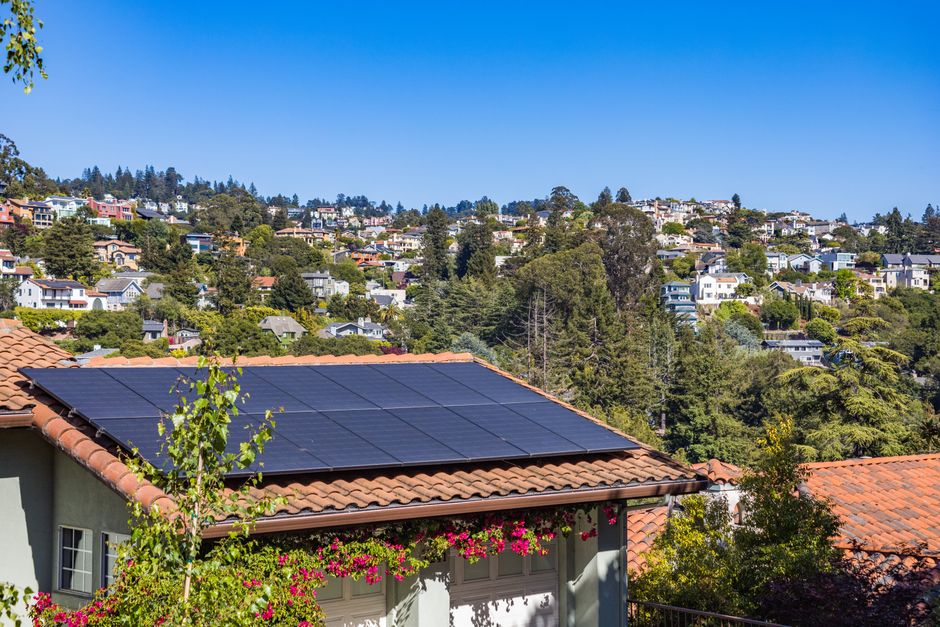
The Mumbles village centre and sections of the seafront approach are within a designated conservation area. Bridgend County Borough Council conservation officers apply a visual-impact test for roof-mounted solar on properties visible from the promenade and Mumbles Head. In-roof integrated solar — where panels replace rather than overlay the roof covering — is the correct specification for conservation-adjacent Mumbles properties. Cadw consent is required for listed buildings; pre-application consultation with the conservation officer is strongly recommended.
Domestic payback: Langland detached
A 5 kWp installation on a south-facing Langland detached at 965 kWh/kWp generates 4,825 kWh annually. At 45% self-consumption for a household with occupants during the day, year-one benefit is approximately £605 in electricity savings plus £345 in SEG export — totalling £950. On an installed cost of £8,500, simple payback is 8.9 years.
Adding a 10 kWh battery raises self-consumption to approximately 72%, year-one benefit to approximately £1,220, and combined payback on £15,900 to 13.0 years.
Holiday let economics
Gower Peninsula has one of the highest concentrations of short-term holiday lets in Wales. A Gower holiday let with 38-week occupancy achieves self-consumption rates of 65% to 75% — much better than a year-round low-occupancy permanent residence — because high summer footfall aligns with peak solar generation. EPC ratings affect lettable value: properties below EPC band C face increasing regulatory pressure, and solar with battery storage is the most reliable single measure to move a Gower cottage from C to B.
Getting a Mumbles or Gower solar quote
FLD is 20 minutes from Mumbles by road. Call Paul on 07913 117746 or use the contact page.