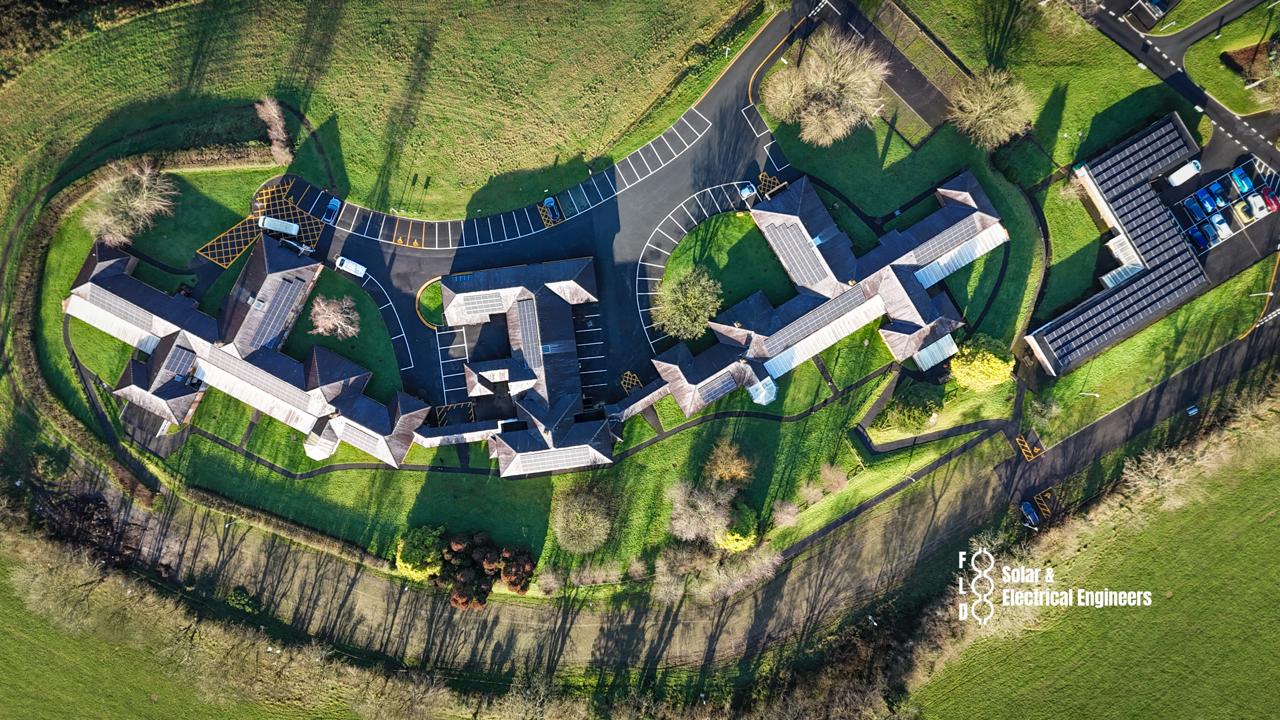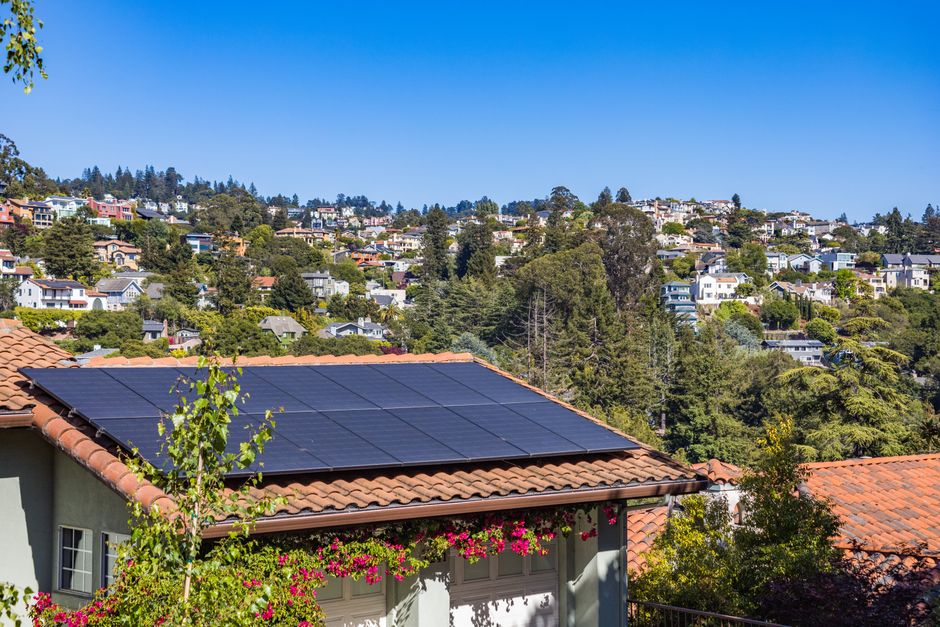
The Meirionnydd coastline — Barmouth, Harlech, Tywyn — has the highest concentration of holiday-let and seasonal guesthouse properties in FLD’s coverage area, and the best solar yield figure north of Pembrokeshire. At 965 to 970 kWh/kWp, these locations generate more electricity per kWp than most of England. The seasonal demand profile of holiday accommodation — concentrated in June, July and August — aligns almost exactly with peak solar generation. For a holiday-let operator on the Cardigan Bay coast, solar is not a marginal investment. It is one of the clearest financial cases in the sector.
The summer demand alignment
A fully occupied Barmouth holiday let in July consumes electricity continuously: electric shower, cooking, appliances, perhaps a hot tub or EV charger. Solar generation peaks between 10:00 and 15:00. The overlap between peak generation and peak guest demand (daytime leisure, cooking, laundry between changeovers) produces self-consumption rates of 70 to 85% in July and August.
In contrast, a January week in the same property may be empty, generating full export at SEG rates (7 to 8p/kWh) for every kWh produced. The year-round financial model for a Barmouth holiday let looks like this:
- Summer (June-August): 35% of annual generation, 80% self-consumption at 27p/kWh = high cash value
- Spring/Autumn (March-May, September-November): 45% of annual generation, 50% self-consumption = medium value
- Winter (December-February): 20% of annual generation, 15% self-consumption, 85% export at 7.5p = low value
For a 10 kWp system at 970 kWh/kWp generating 9,700 kWh annually, combined year-one benefit using this seasonal mix: approximately £2,400. Installed cost on a Barmouth holiday-let property with ENPA pre-application but no full consent: approximately £11,500 including dark-panel specification. Simple payback: approximately 4.8 years; post-AIA: approximately 3.6 years.
Barmouth: inside Eryri, rear-slope first
Barmouth sits within the Eryri National Park. For holiday-let properties on the hillside above the promenade, the solar-suitable south-west-facing pitch is typically the rear slope, invisible from the A496 coastal road and the beach. These rear-slope installations proceed under permitted development without ENPA planning consent.
For properties where the south-facing pitch fronts the road — less common given Barmouth’s hillside geometry — ENPA pre-application consultation is required. FLD confirms elevation position at initial survey before any specification is prepared.
Harlech: the UNESCO layer
Harlech holiday lets and guesthouses face an additional planning consideration beyond standard ENPA guidance: the Harlech Castle UNESCO World Heritage Buffer Zone. Properties within the Buffer Zone require consultation with both ENPA and Cadw, and the in-roof integrated dark-panel specification is effectively mandatory for any visible elevation.
For most holiday-let properties in Harlech north of the castle on the residential streets, the Buffer Zone boundary does not apply. FLD checks each property’s position at enquiry stage.
Tywyn: the straightforward case
Tywyn (LL36) sits outside the Eryri National Park boundary. Standard permitted development applies. The same coastal yield of 970 kWh/kWp that applies at Barmouth and Harlech is available here, but without the ENPA planning overlay.
A Tywyn holiday-let operator installing a 10 kWp system can expect a 4 to 6 week programme from survey to commissioning. The equivalent Barmouth installation requiring pre-application consultation takes 10 to 14 weeks. For operators looking to have solar operational before the summer peak season, Tywyn’s outside-the-Park position is a genuine scheduling advantage.
Battery storage for holiday lets
Battery storage adds meaningful value for holiday-let properties for two reasons. First, it increases self-consumption by storing mid-afternoon surplus generation for evening use when guests return from activities. Second, on properties with Octopus or similar time-of-use tariffs, the battery charges from cheap overnight grid power (7 to 12p/kWh) and offsets expensive evening-peak grid import (30 to 45p/kWh).
For a Barmouth or Tywyn holiday let where the property manager wants to offer guests a low-electricity-cost amenity (EV charging, heated pool), the solar-plus-battery combination is the standard FLD recommendation. A 10 kWh GivEnergy battery adds approximately £3,500 to the installation cost and increases year-one benefit by approximately £400 to £600 depending on occupancy and tariff.
Getting a Meirionnydd holiday-let solar survey
FLD covers LL36, LL42 and LL46 on a Meirionnydd coastal circuit. Drive time from Swansea is 120 to 145 minutes. We schedule multiple survey visits on a single coastal trip to manage the travel time. Call Paul on 07913 117746 to discuss a holiday-let solar assessment in Barmouth, Harlech or Tywyn.