Why solar works in Port Talbot
Port Talbot is the most consequential industrial location in Wales and one of the most significant in the whole United Kingdom. The 2021 census records a town population of 31,550, clustered around the Tata Steel Port Talbot Steelworks. The last blast furnace at Tata closed in October 2024, with approximately 2,000 staff remaining through the transition to an electric arc furnace route. A £1.25 bn UK Government and Welsh Government Transition Board package is underwriting that industrial change.
PVGIS modelling for SA12 returns typical annual yields of around 955 kWh per kWp installed for a well-oriented rooftop array at 30 to 35 degrees pitch. In practice that means a 4 kWp domestic array generates roughly 3,820 kWh per year, and a 50 kWp commercial rooftop around 47,750 kWh.
Commercial solar in Port Talbot
Transition Board supply-chain Scope 3 pressure drives rapid commercial solar adoption. For commercial operators, the combination of a predictable 955 kWh/kWp yield, current commercial electricity prices at 28 to 32p per kWh, and the Annual Investment Allowance tax treatment means simple payback on a well-sized Port Talbot commercial array typically lands between 3.5 and 6 years.
Worked example: 100 kWp commercial installation
- Installed cost: approximately £85,000 to £95,000
- Year-one generation: 95,500 kWh
- Typical self-consumption rate against HH data: 65 to 80 percent
- Simple payback at prevailing electricity pricing: 3.6 to 4.5 years
- Post-tax payback with Annual Investment Allowance: 2.6 to 3.2 years
Typical Port Talbot commercial rooftops
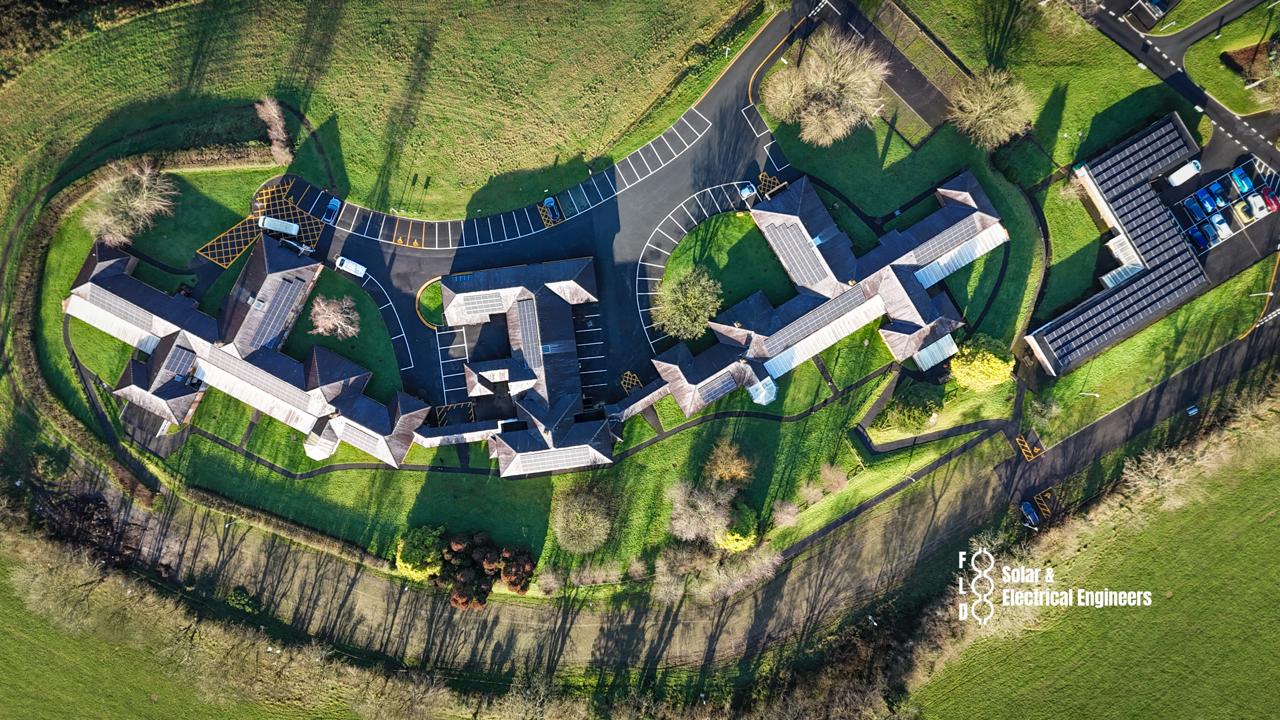
We have installed commercial solar across Baglan Energy Park, Water Street Business Park, Central Way in Port Talbot. Typical system sizes range from 30 kWp on smaller trade units to 500 kWp-plus on larger warehouse and factory roofs.
Domestic solar in Port Talbot
For Port Talbot homeowners, a typical domestic installation is a 4 to 5 kWp array paired with a 5 to 10 kWh battery. At 955 kWh/kWp, a 4 kWp system generates around 3,820 kWh in year one, which covers a meaningful share of a three or four-bedroom household's annual consumption once battery storage smooths the time-of-use mismatch. Payback typically lands at 7 to 10 years at current pricing and Smart Export Guarantee tariffs.
Planning and grid connection
The planning authority for Port Talbot is Neath Port Talbot CBC. Rooftop solar PV on commercial buildings almost always falls within permitted development under the Town and Country Planning (General Permitted Development) (Wales) Order, subject to the usual 200 mm projection limit and non-listed, non-scheduled-monument conditions. Properties inside a conservation area will typically require full planning permission; we handle the application end-to-end.
For grid connection, systems above 3.68 kW per phase require a G99 application to the DNO. Typical approval timelines are 6 to 8 weeks for Type A (up to 1 MW), which we lodge concurrently with design and procurement so they do not sit on the critical path.
Why FLD for your Port Talbot installation
- NICEIC Approved Contractor under a single sign-off for both solar and electrical works
- MCS certified for both PV and battery, which is essential for Smart Export Guarantee eligibility
- Swansea-based, directly employed engineers, not subcontractors, on every site
- Insurance-backed NICEIC warranty plus 25 to 30-year panel performance warranty from tier-1 manufacturers
- Remote monitoring included as standard so generation and performance are visible from day one
Start the conversation
If you own a commercial rooftop or a domestic property in Port Talbot (SA12, SA13) and want a realistic assessment against your actual consumption data, call Paul direct on 01792 680611 or visit our Port Talbot location page for full local detail.