Port Talbot’s commercial solar market has been reshaped by the Tata Steel transition. The announcement of the electric arc furnace programme and the displacement of the integrated steelworks has not reduced the solar opportunity in SA12 and SA13 — it has changed its nature. The several hundred tier-2 and tier-3 supply chain businesses in the Aberavon, Sandfields and Baglan catchment now face a combined commercial and compliance argument for rooftop solar that did not exist three years ago.
The Scope 3 cascade from Tata
Tata Steel’s published net-zero pathway requires its supply chain to report and reduce Scope 3 emissions — the indirect emissions in the value chain above and below the reporting organisation. For component suppliers, maintenance contractors and engineering businesses operating from industrial premises in SA12 and SA13, demonstrating a solar installation on the factory roof is increasingly a condition of continued preferred-supplier status.
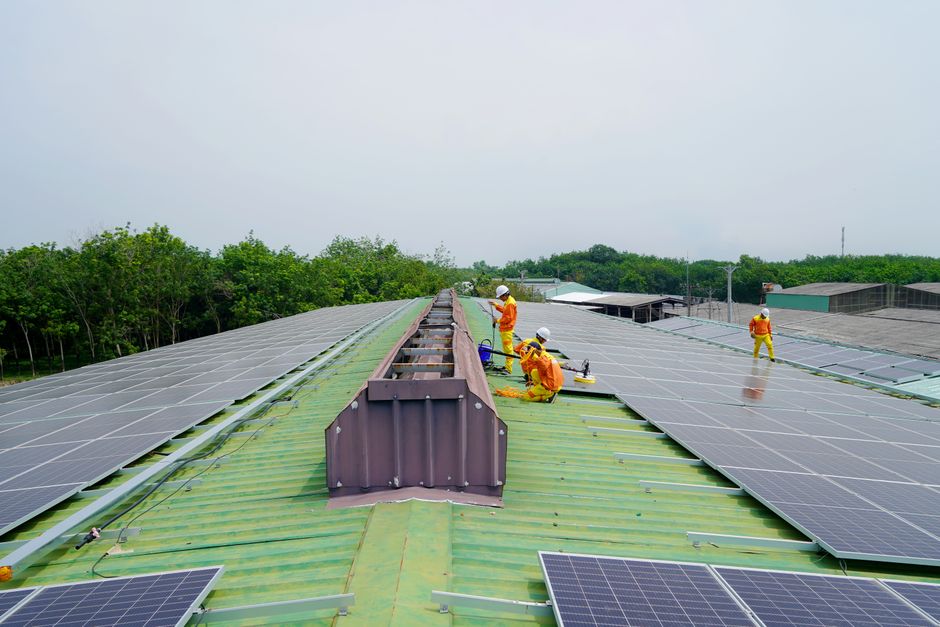
The commercial case — typically a 3.0 to 4.0 year simple payback on a factory-scale installation — is now secondary to the supply-chain retention argument for many Port Talbot manufacturers. The cost of losing Tata preferred-supplier status dwarfs the solar capital investment in every case FLD has modelled.
Celtic Freeport: the capital allowance overlay
Port Talbot is one of two anchor locations for the Celtic Freeport, alongside Milford Haven. Businesses operating within the Freeport tax site benefit from enhanced capital allowances on qualifying plant and machinery, including solar PV systems. The enhanced regime allows 100% first-year allowance on qualifying expenditure over and above standard AIA — relevant for large-scale installations at Celtic Freeport-registered entities.
For a 500 kWp installation at £420,000, the combined AIA and Freeport enhanced allowance produces a first-year tax credit of approximately £105,000 at 25% Corporation Tax, reducing effective capex to approximately £315,000 and pulling simple payback from 3.7 years to approximately 2.7 years.
Baglan Energy Park: the industrial cluster case
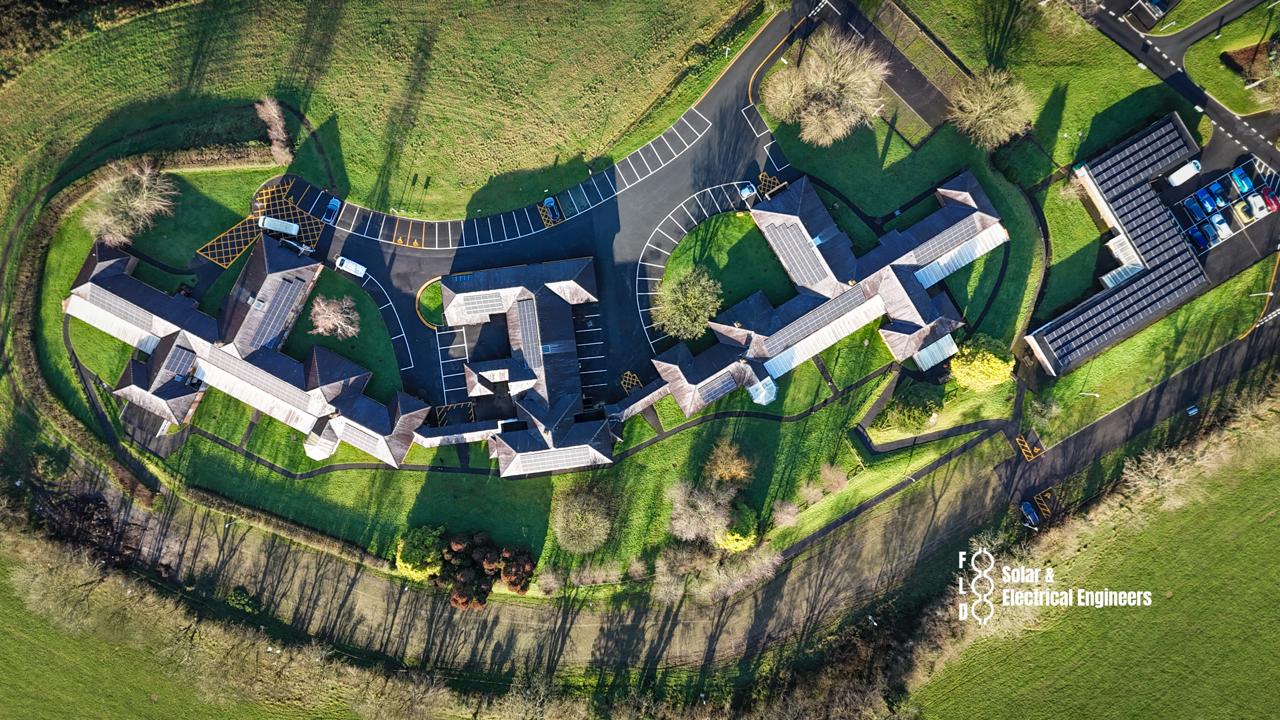
Baglan Energy Park SA12 houses a cluster of chemical, energy services and engineering businesses on the former BP site. The park’s large, modern industrial buildings carry significant south-facing roof area. FLD has surveyed multiple Baglan Energy Park units and confirmed that typical park buildings are structurally suitable for 200 kWp to 500 kWp arrays without structural reinforcement.
SP Manweb (not NGED) serves the Baglan area. Businesses considering solar at Baglan should allow 14 to 20 weeks for G99 Type A DNO approval from SP Manweb in their project programme.
Payback model: 300 kWp SA12 manufacturer
| Metric | Value |
|---|---|
| Annual generation | 285,000 kWh |
| Self-consumed (76%) | 216,600 kWh |
| Electricity cost saving (31p/kWh) | £67,146 |
| SEG export income (24%) | £8,208 |
| Year-one benefit | £75,354 |
| Installed cost | £258,000 |
| Simple payback | 3.4 years |
| AIA post-tax payback | 2.6 years |
ESOS Phase 4 for Port Talbot manufacturers
Port Talbot businesses qualifying under ESOS Phase 4 (250+ staff or £44m+ turnover, deadline 5 December 2027) face a board-level energy decision if solar has not been assessed. FLD provides feasibility reports formatted for inclusion in ESOS Phase 4 submissions at no cost to qualifying SA12 and SA13 businesses.
Ynni Cymru for Welsh-registered businesses
Port Talbot businesses registered in Wales can apply for Ynni Cymru capital grants of £25,000 to £1,000,000. For a 300 kWp system at £258,000, a grant of £30,000 to £60,000 is within published programme eligibility ranges. FLD assists with pre-application feasibility documentation.
Getting a Port Talbot survey
FLD has surveyed and installed at manufacturing businesses across SA12, SA13 and the Baglan Energy Park cluster. Call Paul on 07913 117746 or use the contact page for a no-cost feasibility assessment.