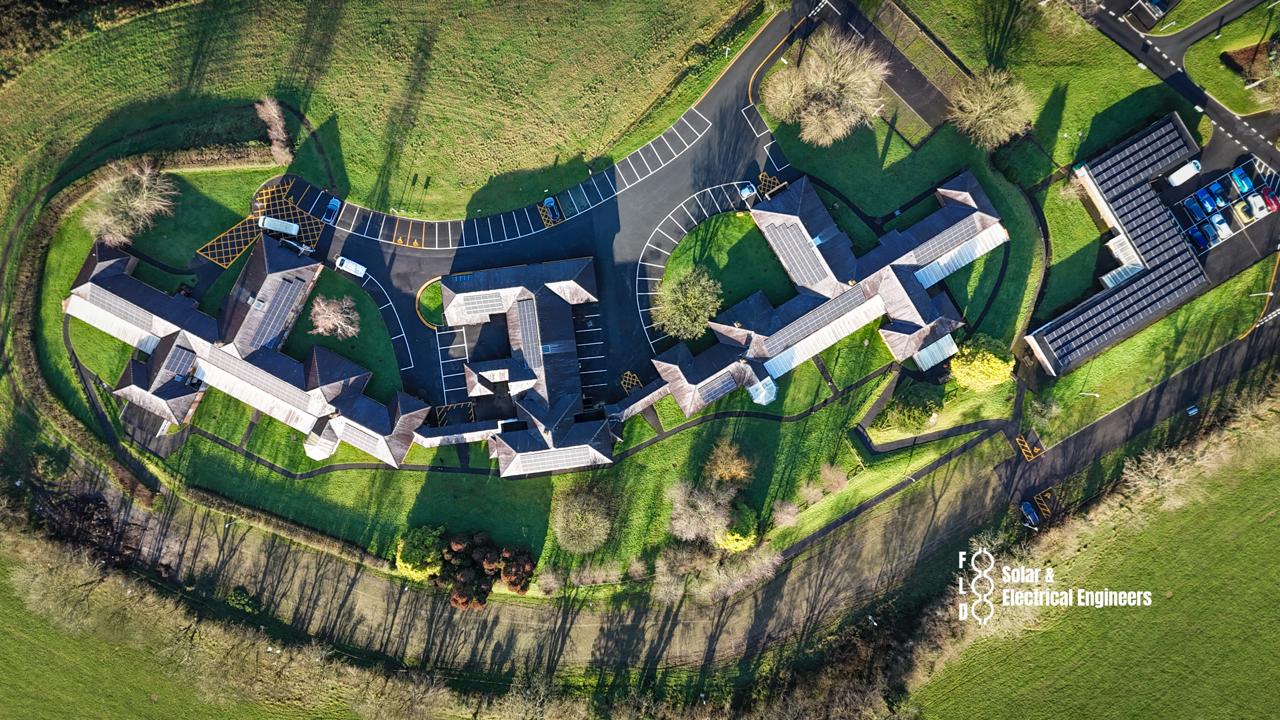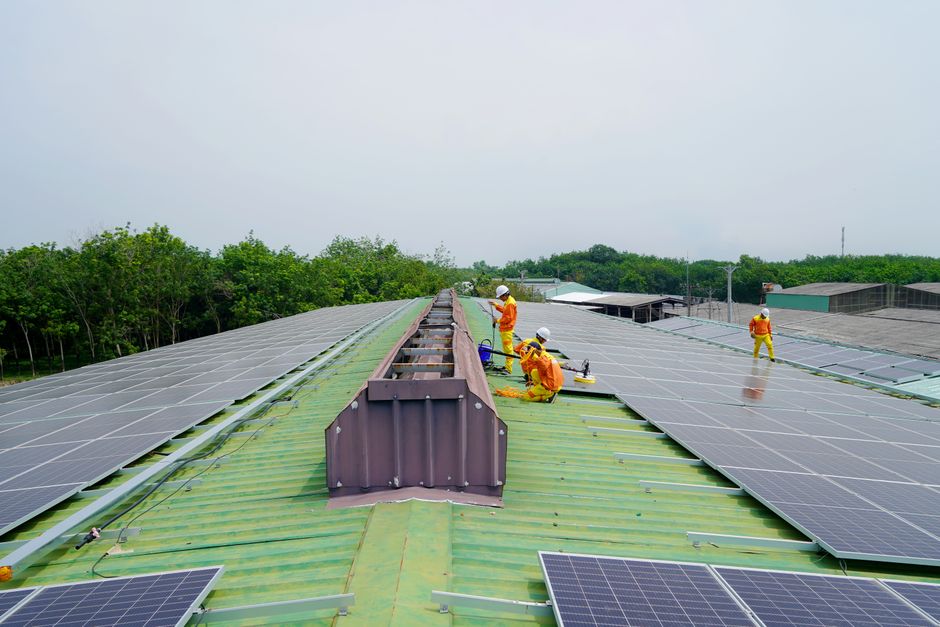
St Davids sits at the far western tip of the Pembrokeshire Peninsula and records 995 kWh/kWp of annual solar yield according to PVGIS irradiation data. That is the highest figure FLD records for any operational postcode in our entire coverage area — and it is not an anomaly. The peninsula faces south-west across St Brides Bay with open Atlantic exposure, no inland horizon obstruction, and more annual sunshine hours than any county in Wales outside Anglesey.
For a hospitality or commercial operator in SA62, solar is not a marginal investment. It is the highest-returning renewable energy option available in the UK outside Cornwall.
What 995 kWh/kWp means in practice
The PVGIS yield figure is the energy a 1 kWp system produces in an average year. At 995 kWh/kWp, a 50 kWp commercial installation on a St Davids hotel rooftop generates 49,750 kWh per year. At 95 kWh/kWp, the same installation in inland England would generate less than half that.
To put it differently: a hotel in St Davids with a 50 kWp rooftop solar installation achieves the same generation output as a 100 kWp installation would in much of the English Midlands. The capital cost per unit of electricity generated is lower in St Davids than almost anywhere else in Britain.
Self-consumption for coastal hospitality in St Davids peaks above 85% in July and August, when guest occupancy and solar generation align almost exactly. Air conditioning, kitchen extraction, refrigeration, and swimming pool plant all draw heavily during the summer generation window. The self-consumption rate here routinely outperforms FLD’s inland commercial averages by 10 to 15 percentage points.
In-roof integrated solar: the National Park standard
St Davids sits entirely within the Pembrokeshire Coast National Park. The National Park Authority applies design guidance to solar installations that generally requires:
- In-roof integrated panels (flush with the roof plane) rather than on-roof rail-mounted systems on any elevation visible from public routes
- Siting assessment against the coastal landscape character
- Pre-application consultation for listed buildings and for any installation on a prominent elevated site
FLD specifies in-roof integrated solar as the default for SA62 commercial and domestic installations. The integrated systems sit flush within the roof covering, replacing a section of the existing tile or slate with purpose-built solar tiles or framed in-roof panels. The cost premium over equivalent on-roof capacity is approximately 30 to 50%, but it is the only specification that routinely clears PNPA consent without objection.
For most hotel and guesthouse rooftops in the town, the in-roof system is specified on the principal and side elevations. Rear-roof and plant-room roof installations on non-public-facing surfaces typically proceed as standard on-roof systems where the visibility test is satisfied.
Payback examples for St Davids hospitality
40 kWp hotel, in-roof integrated (visible elevation):
- Annual generation: 39,800 kWh at 995 kWh/kWp
- Self-consumption: 82% summer peak profile
- Year-one benefit: approximately £11,500 at 28p/kWh blended
- Installed cost with in-roof integration: approximately £44,000
- Simple payback: 3.8 years; post-AIA payback: 2.8 years
50 kWp rear-roof, on-roof mounting (non-visible elevation):
- Annual generation: 49,750 kWh
- Year-one benefit: approximately £14,000
- Installed cost: approximately £47,000
- Simple payback: 3.4 years; post-AIA payback: 2.5 years
Both scenarios clear payback inside 4 years — the most favourable commercial solar payback FLD models for any location in its coverage area.
Getting a St Davids solar survey
FLD covers SA62 via Haverfordwest and Fishguard on a north Pembrokeshire day. The drive from Swansea is approximately 120 minutes. We schedule St Davids visits alongside Fishguard, Haverfordwest and Pembroke Dock to consolidate travel time. Call Paul on 07913 117746 to discuss your St Davids hospitality or domestic solar assessment.