Porthcawl’s commercial solar market is dominated by tourism and hospitality. The CF36 coastal strip from Rest Bay to Sandy Bay carries one of the highest concentrations of holiday parks, caravan sites, hotels and guest houses in South Wales — all with large roof areas and summer electricity demand aligned almost exactly with the solar generation peak.
The Atlantic exposure that makes Porthcawl’s beaches popular also gives the town a solar yield advantage over inland South Wales locations. PVGIS data for CF36 returns 980 to 990 kWh/kWp — competitive with Pembrokeshire coastal figures and significantly above the Swansea or Cardiff inland baselines.
Holiday parks: the CF36 commercial case
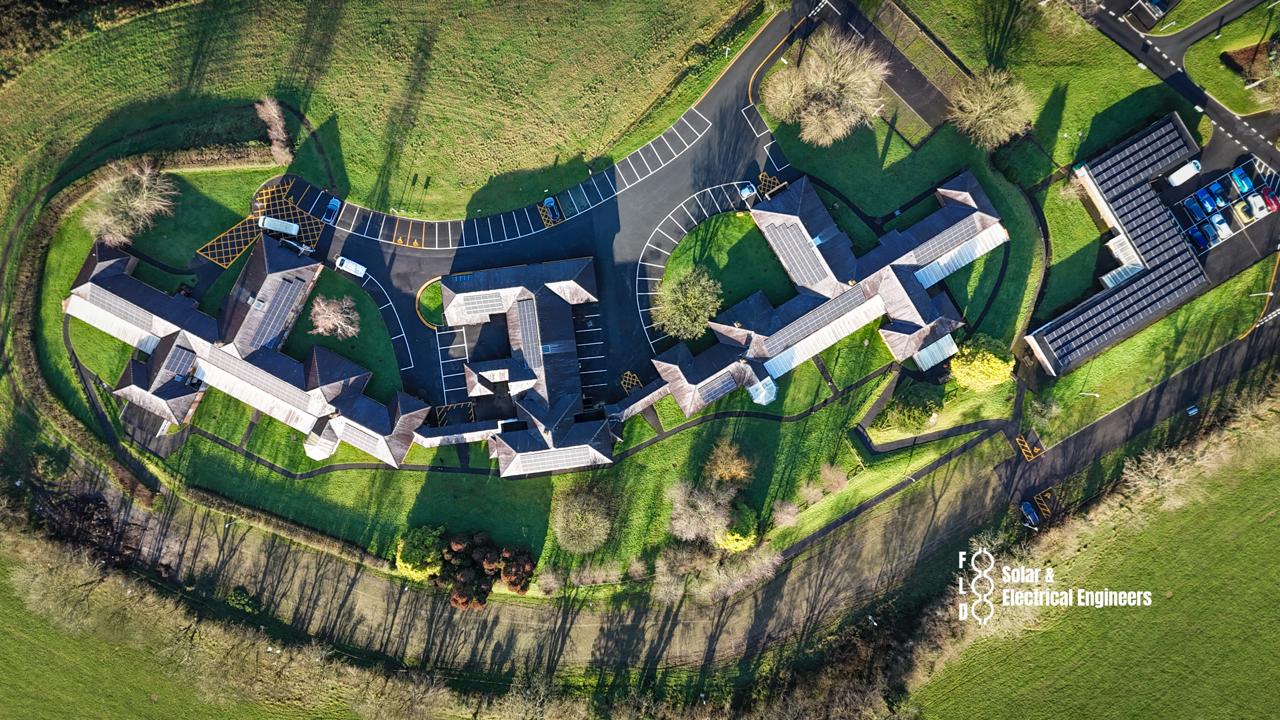
Sandy Bay, Trecco Bay and the Coney Beach leisure complex together represent one of the largest concentrations of holiday park rooftop area in Wales. Large amenity buildings, reception blocks, indoor leisure and entertainment facilities carry flat or low-pitch roofs suited to dense panel arrays of 100 kWp to 500 kWp per building complex.
Holiday park electricity loads are high and heavily front-loaded into the summer season — exactly when solar generation peaks. Self-consumption rates at CF36 holiday parks run at 78% to 86% across the season, producing the strongest self-consumption economics of any hospitality type in FLD’s coverage area.
EPC compliance adds a further argument: holiday parks with buildings below EPC band C face MEES exposure as commercial properties. Solar PV is frequently the most cost-effective MEES remediation measure for older amenity buildings.
Payback model: 200 kWp CF36 holiday park amenity building
| Metric | Value |
|---|---|
| Annual generation | 198,000 kWh |
| Self-consumed (80%) | 158,400 kWh |
| Electricity cost saving (29p/kWh) | £45,936 |
| SEG export income (20%) | £4,752 |
| Year-one benefit | £50,688 |
| Installed cost | £172,000 |
| Simple payback | 3.4 years |
| AIA post-tax payback | 2.5 years |
Hotels and guest houses on the CF36 seafront
Beyond the holiday parks, the CF36 seafront carries a run of hotels, guest houses and B&Bs from Porthcawl to Newton. These smaller operations typically carry 30 kWp to 80 kWp of accessible roof area. Self-consumption at a guest house trading at 30 to 35 week occupancy runs at 65% to 72% annualised — lower than the holiday park case but still commercially strong at current tariff rates.
FLD specifies integrated monitoring at all CF36 hospitality solar installations — SolarEdge monitoring dashboards in reception areas demonstrate the property’s sustainability credentials to guests, a marketing benefit increasingly valued by accommodation operators.
NGED connections for CF36
Porthcawl is NGED territory. G99 Type A approval timelines run at 10 to 14 weeks. The CF36 resort infrastructure carries commercial-grade grid connections from the holiday park era that typically offer reasonable export headroom for commercial solar up to 200 kWp.
For larger holiday park proposals above 300 kWp, FLD runs NGED pre-application enquiries to confirm export headroom and assess whether export limiting or battery storage management is required.
Ynni Cymru for CF36 tourism businesses
Porthcawl tourism and hospitality businesses registered in Wales qualify for Ynni Cymru capital grants of £25,000 to £1,000,000. FLD assists with pre-application feasibility documentation for qualifying CF36 commercial clients.
Getting a Porthcawl survey
FLD covers CF36 on regular Vale of Glamorgan and Bridgend coast survey days. Call Paul on 07913 117746 for a no-cost feasibility assessment.