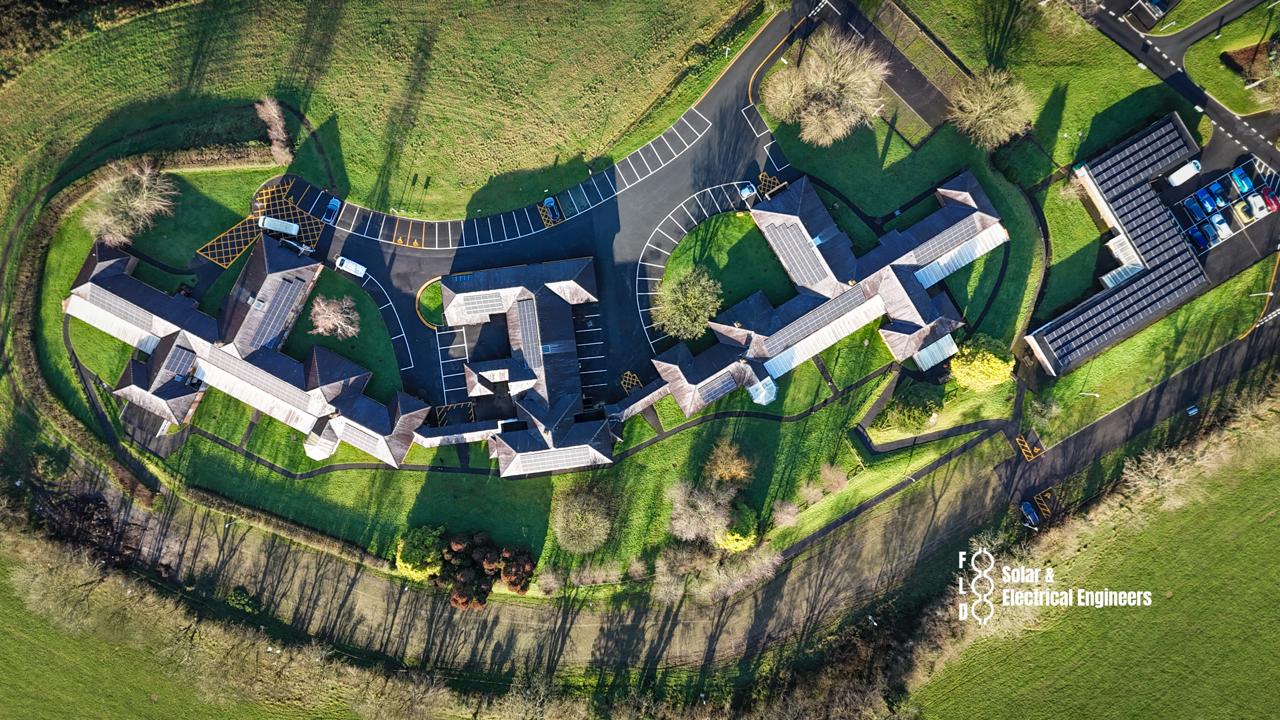
Porthcawl is one of the most concentrated coastal hospitality markets in Wales. Trecco Bay Holiday Park — operated by Parkdean Resorts and one of the largest static caravan and lodge parks in Europe by pitch count — anchors a tourism economy that also includes the Grand Pavilion, a seafront hotel strip, and a year-round surf and leisure visitor trade. The summer energy demand at Trecco Bay alone is substantial.
The CF36 postcode sits at 960 kWh/kWp annual irradiation on PVGIS, slightly above the Bridgend town average, reflecting the peninsula position and Atlantic exposure. The combination of high yield and summer-peaked hospitality demand creates a self-consumption profile that is unusually favourable.
Trecco Bay: the scale of the opportunity
Parkdean Resorts operates Trecco Bay at a scale that puts its infrastructure requirements well above those of a typical hospitality site. Reception buildings, leisure centres, indoor pools, restaurants, amusement facilities and site services all draw electrical load across the entire holiday season. A caravan and lodge park of this scale running through May to September concentrates demand precisely when the solar generation curve is at its peak.
A 250 kWp to 400 kWp roof or ground-mounted system on park ancillary buildings and service areas would deliver 240,000 to 384,000 kWh per year at CF36 yield. With a summer-season self-consumption profile above 85% — driven by continuous leisure centre HVAC, pool heating support, and catering equipment — the year-one financial case is materially stronger than for a standard commercial building with year-round flat demand.
Large leisure parks can also use battery storage to shift morning and evening peaks outside peak solar hours, improving the already-strong self-consumption figure. We assess battery integration as standard for sites with seasonal demand above 300 kWp system scale.
Seafront hotel and guesthouse stock
Porthcawl seafront carries a mix of hotels, guesthouses, and serviced accommodation that represents a separate and more accessible commercial solar market from the large park operators. Buildings along Esplanade and Seafront Road typically offer 20 kWp to 80 kWp of viable rooftop capacity.
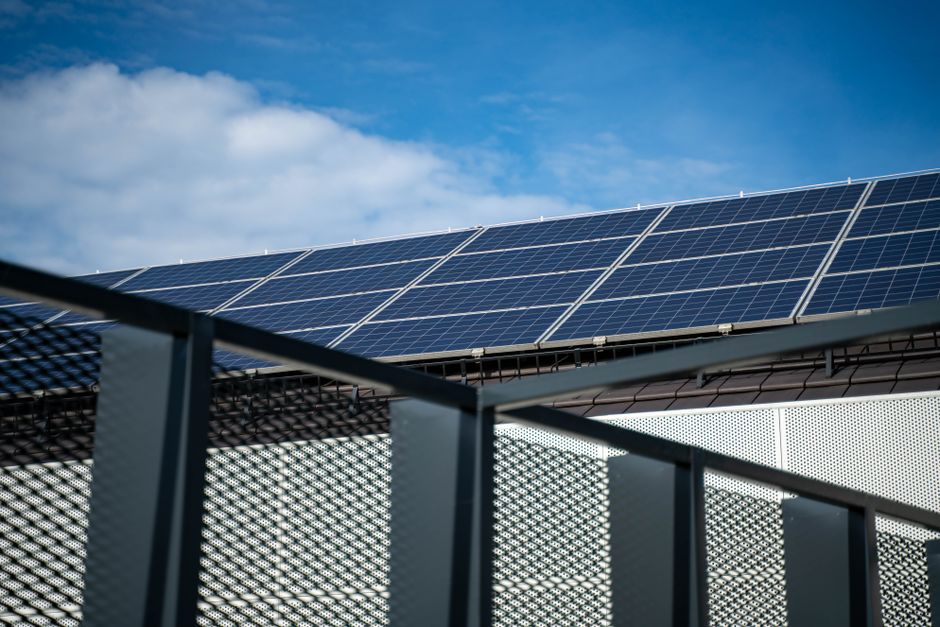
For properties in the Porthcawl conservation area or adjacent to the seafront, planning officers within Bridgend County Borough Council apply a visual-impact test for roof-mounted solar. In-roof integrated solar — where the panels replace rather than overlay the roof covering — is the standard specification for conservation-adjacent properties in Porthcawl. In-roof systems are visually indistinguishable from standard roofing tiles in most circumstances and are specifically designed to satisfy planning officers who object to frame-mounted panels on prominent elevations.
Worked example: 80 kWp seafront hotel
- Installed cost including in-roof integration: approximately £78,000
- Annual generation at 960 kWh/kWp: 76,800 kWh
- Self-consumption at 82% at 27p/kWh blended: £17,021
- Export at 18% at 12p SEG: £1,659
- Year-one benefit: £18,680
- Simple payback: 4.2 years
- Post-tax payback with Annual Investment Allowance: 3.1 years
The in-roof specification adds 10 to 15% to capital cost compared with frame-mounted, but the planning certainty it provides removes the risk of refusal and appeal cost. For most Porthcawl seafront operators, the conservative approach is simply the correct commercial choice.
Grand Pavilion and the regeneration context
The Grand Pavilion renovation and the broader Porthcawl town centre regeneration programme create a context where public-sector and anchor institutional buildings are in active capital expenditure. A renovated Grand Pavilion with modern M&E specification is a natural candidate for rooftop solar during the works. We have provided pre-application technical input for similar civic building projects elsewhere in the region and can support the regeneration team if solar is within the project brief.
Summer-peak demand and the self-consumption advantage
The self-consumption argument for hospitality solar is particularly strong in coastal locations. A Porthcawl hotel trading at 90% occupancy in July and August draws significantly more electricity for air conditioning, laundry, catering and outdoor lighting than the same building running at 40% occupancy in November. That summer consumption spike aligns almost precisely with the July and August solar generation peak, which together account for around 30% of annual system output.
The practical result: hospitality operators in Porthcawl can expect self-consumption rates of 78 to 88% in summer months. At a blended electricity rate of 27p/kWh, every kilowatt-hour consumed on-site rather than exported to grid at 12p SEG is worth 2.25 times as much financially. Operators who export large fractions of their generation are under-realising the system value.
Battery storage resolves this for operations with morning and evening demand spikes outside solar hours. We model battery integration from the outset on any Porthcawl hospitality system above 50 kWp where morning setup load or evening service demand is significant.
CF36 to CF33: the Bridgend coastal strip
The CF36 postcode covers Porthcawl town and its immediate hinterland. The coastal strip south of the M4 between Porthcawl and Bridgend also includes the Rest Bay and Newton areas, where surf schools, caravan parks and seasonal hospitality businesses operate. The solar yield across this strip is consistent at 955 to 965 kWh/kWp.
For commercial clients in CF33 (Kenfig Hill, Sarn, Cefn Cribwr) on the northern edge of this corridor, the industrial and retail profile is closer to Bridgend town commercial. See our separate Bridgend CF31 commercial solar guide for that analysis.
Getting a Porthcawl solar quote
Porthcawl is 40 minutes from our Swansea base by the M4 Junction 37. We survey Porthcawl regularly, with particular focus on the hospitality sector in the May to September season when owners are planning capital investments for the following year. For Trecco Bay or other large park operator enquiries, we allow additional time for site walkround and demand data review. Call Paul on 07913 117746 or use the contact page.