For the overwhelming majority of South Wales solar installations, planning permission is not required. The Town and Country Planning (General Permitted Development) (Amendment) (Wales) Order covers most domestic and commercial rooftop PV under permitted development rights, provided certain conditions are met.
Domestic solar: permitted development
On a typical Welsh house, rooftop solar is permitted development if the panels do not protrude more than 200 mm from the roof plane, do not sit above the ridge line, and do not extend beyond the outermost edges of the roof. Ground-mount systems are permitted up to 9 square metres in area at less than 4 metres high.
Where planning is required
Planning permission, or listed building consent, is required for:
- Grade I and Grade II listed buildings: always consult the local authority
- Conservation areas: installations on front elevations visible from a highway require planning
- Gower AONB: stricter restrictions apply to visible installations, and in-roof integrated panels are normally required
- Bannau Brycheiniog National Park: installations within the park boundary require careful consultation, particularly on the Breconshire escarpment
- Flat roofs: panels more than 1 metre above the roof plane require permission
Commercial solar
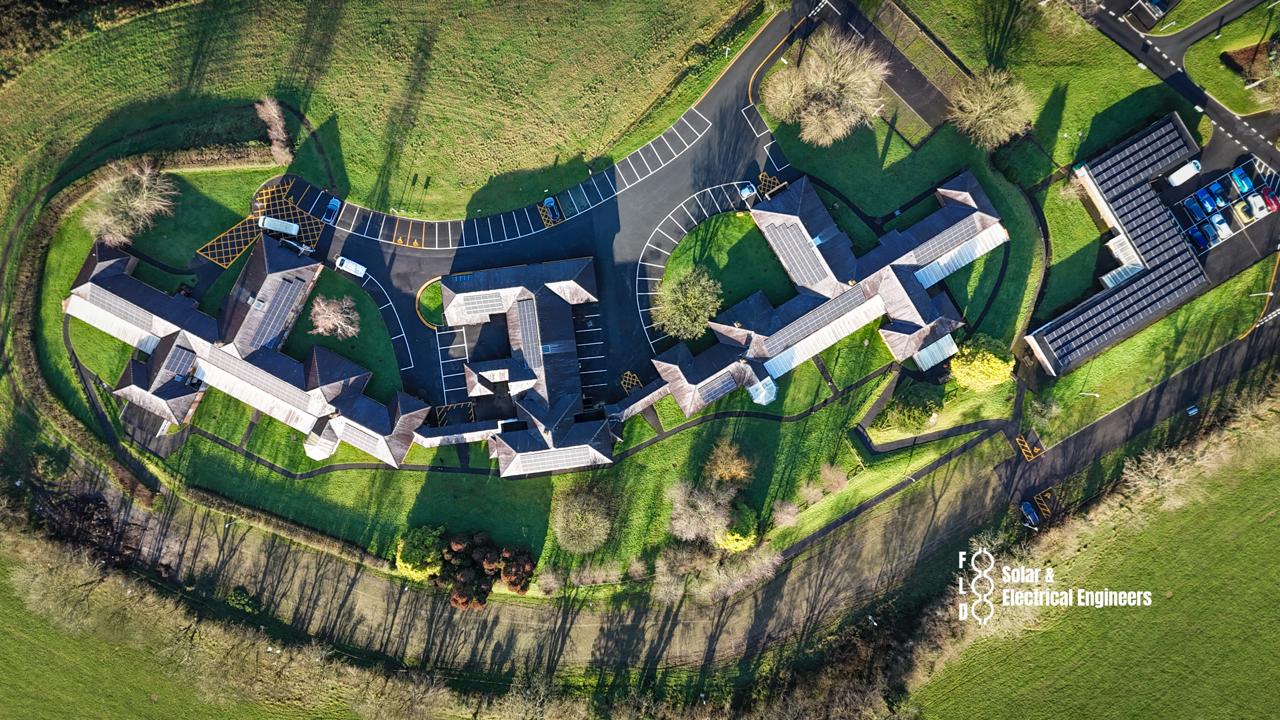
Commercial rooftop PV under 1 MW on existing industrial buildings is permitted development in most of Wales, provided the installation is more than 10 metres from the edge of the building. Ground-mount commercial solar of any scale requires full planning permission.
DNO application is separate
Regardless of whether planning is required, every commercial solar installation over 3.68 kWp per phase needs a G99 Type A application to NGED, and every domestic installation needs a G98 notification. FLD handles both on every project.
Planning nuances matter most on agricultural and rural sites. FLD covers the Tywi Valley farm catchment - see our solar panel installers Carmarthen page for local, bilingual support across Carmarthenshire.