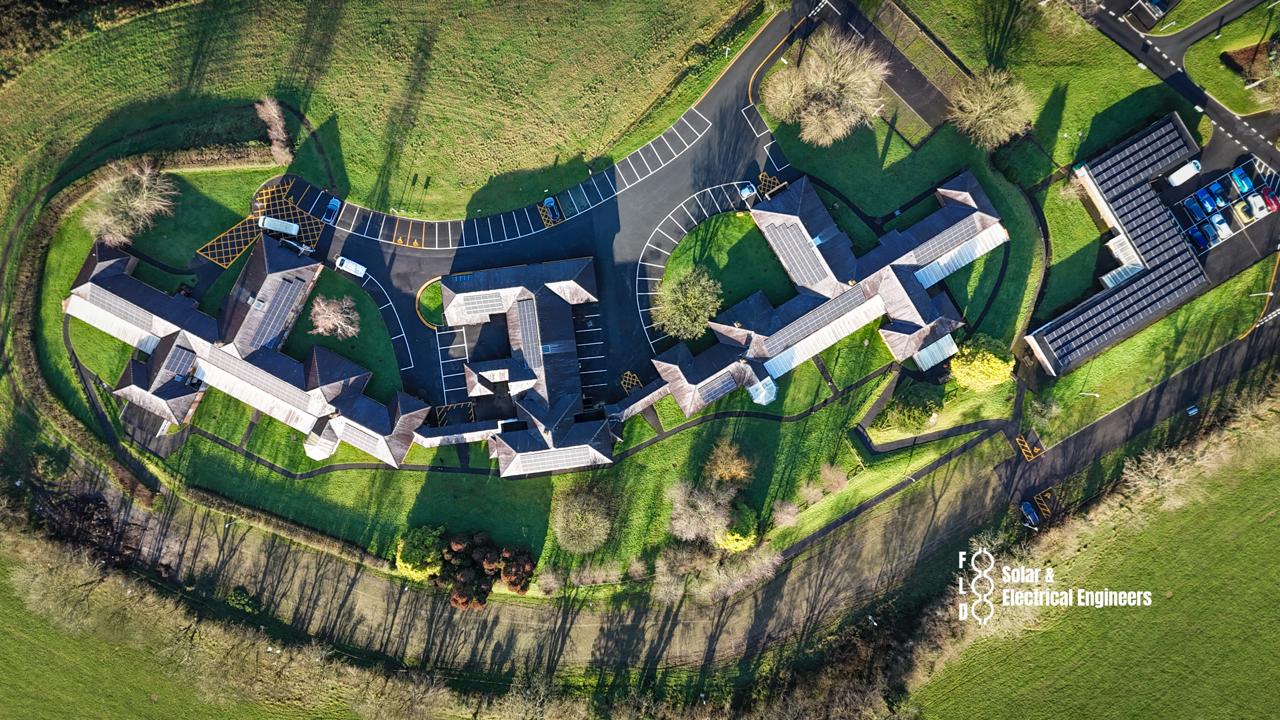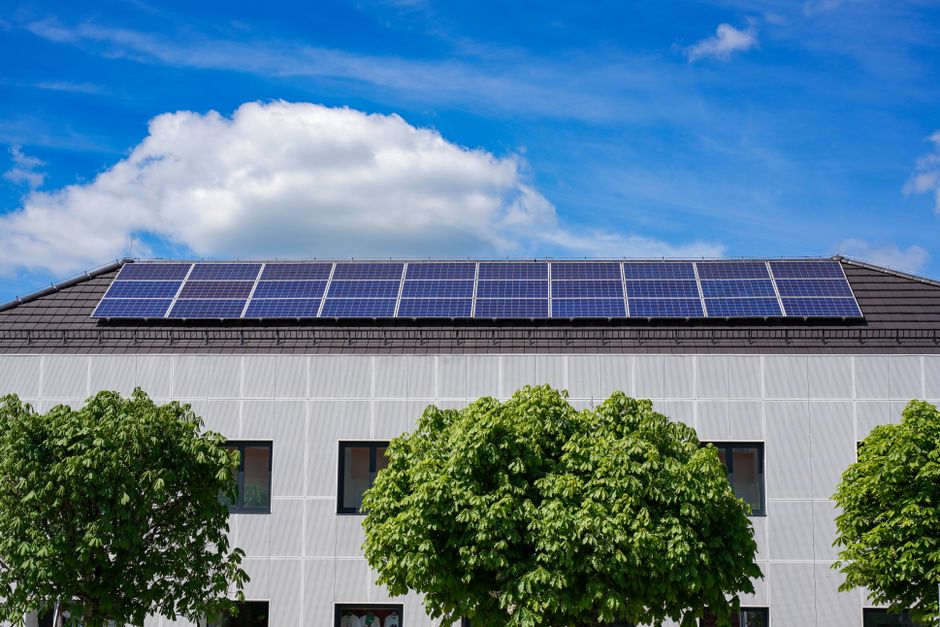
Brecon is the gateway town of the Bannau Brycheiniog National Park — the park that was known as the Brecon Beacons until its April 2023 rebrand to the Welsh-language name. That rebrand reflects a wider repositioning of the Park’s identity toward sustainability, Dark Skies designation and a net-zero management mandate that directly affects how commercial solar is received within and adjacent to its boundary.
The Bannau Brycheiniog net-zero planning context
The Bannau Brycheiniog National Park Authority published an updated management plan aligned with its net-zero objectives. The plan explicitly supports renewable energy generation on appropriate sites within the Park. For commercial rooftop solar on non-listed agricultural buildings, commercial premises and leisure facilities inside the Park boundary, the planning position is supportive rather than restrictive.
This is materially different from the public perception. Many landowners and farm operators within the Park assume that the designation automatically blocks solar installations. The reality is that the Park authority welcomes rooftop solar on farm buildings, holiday cottages and leisure facilities that do not introduce significant visual impact from key viewpoints.
Visible front-elevation solar on listed farmhouses or prominent rooflines facing sensitive panoramas does face planning scrutiny. In-roof integrated systems are the compliant specification in those cases. For barn rooftops, rear-facing pitches and low-visibility commercial buildings, standard frame-mounted solar typically proceeds without objection.
FLD has experience with Bannau Brycheiniog pre-application advice. We initiate the pre-application consultation process as part of scope for any Park-boundary project, with the typical response period of 4 to 6 weeks from the Park authority built into the programme.
Infantry Battle School Brecon and MOD supply chain
The Infantry Battle School at MOD Dering Lines is one of the largest Army training establishments in Wales. It employs several hundred permanent staff and processes thousands of trainees annually. The UK Government net-zero commitment across central government departments includes MOD estates, and the MOD Net Zero Strategy (2021) sets specific targets for estate carbon reduction.
MOD supply-chain businesses — catering contractors, logistics operators, specialist training equipment suppliers — face the same Scope 3 assessment cascade as defence-industry supply chains elsewhere. For these businesses, on-site generation is one of the fastest-payback carbon-reduction measures available.
MOD-adjacent commercial solar is procured through ConstructionLine-accredited frameworks and requires security protocol compliance for site visits. FLD holds ConstructionLine accreditation and is experienced in the pre-survey security coordination that MOD-adjacent sites require.
Farm solar in the LD3 catchment
The agricultural land around Brecon carries a mix of upland sheep and cattle farming, lower-valley dairy, and arable holdings in the better-quality land along the Usk. Many holdings are eligible for Farming Connect capital grants for energy investment.
At 945 kWh/kWp (the LD3 standard upland yield), a 50 kWp farm rooftop near Brecon generates 47,250 kWh annually. For a mixed dairy and grain-drying operation with 75% self-consumption at 28p/kWh, year-one benefit is approximately £11,000 on £45,000 capex. With Farming Connect grant contribution at 25 to 40% of capex, effective net cost falls to £27,000 to £34,000. Simple payback with grant: 2.5 to 3.1 years.
Ground-mount solar on marginal upland land adjacent to farm buildings is technically viable at LD3 yields, particularly where the land is unsuitable for intensive cropping. We assess ground-mount feasibility on a case-by-case basis, incorporating both PVGIS data and structural requirements for exposed upland installation conditions.
Hospitality and tourism solar
The Bannau Brycheiniog tourism economy is substantial. Hotels, bunkhouses, holiday cottages, activity centres and campsites across the Park generate a consistent solar demand from a combination of visitor-related heating, lighting and catering loads. For smaller accommodation businesses (6 to 15 kWp), the planning sensitivity in the Park means in-roof integrated systems are common. The premium specification is worth the additional cost where conservation-area restrictions apply, and payback at LD3 yield with summer-peak hospitality self-consumption is typically inside 4.5 years.
Warren Road and Aberhonddu Business Park
Warren Road Industrial Estate and Aberhonddu Business Park carry the modest commercial estate of a market town of Brecon’s scale. Systems in the 20 kWp to 80 kWp range are appropriate here. At 945 kWh/kWp, a 40 kWp Brecon commercial rooftop generates 37,800 kWh annually. With 72% self-consumption at 27p/kWh, year-one benefit is approximately £8,500 on £36,000 capex. Simple payback 4.2 years, post-tax payback 3.1 years under AIA.
Getting a Brecon solar quote
FLD is 75 minutes from Brecon via the A470. We schedule Brecon visits to combine with Merthyr Tydfil and Ystradgynlais where the survey programme permits. For Park-boundary projects, we allow additional programme lead time for pre-application consultation. Call Paul on 07913 117746 or use the contact page.