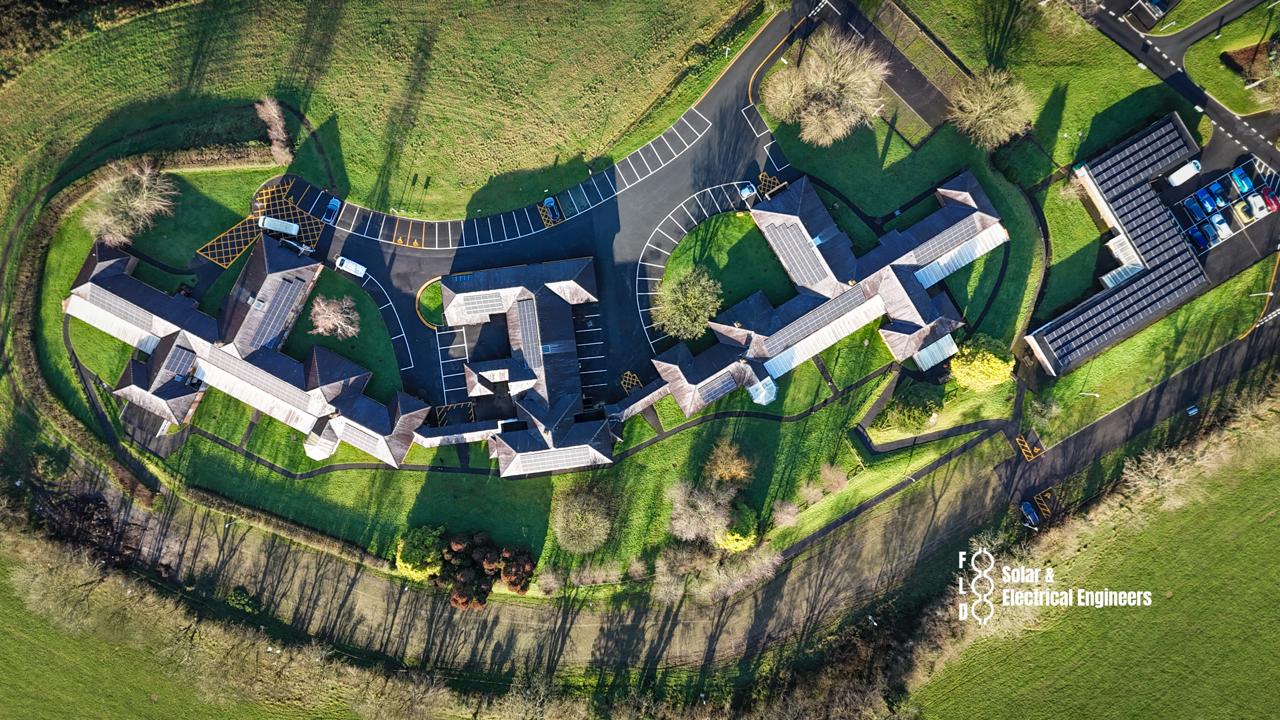
No city in Wales concentrates more public sector estate within a smaller geographic area than Cardiff. The Senedd, Welsh Government headquarters at Cathays Park, Public Health Wales offices, Cardiff and Vale University Health Board, Cardiff Council and dozens of NHS Wales bodies all operate from buildings within CF10, CF14, CF24 and the surrounding postcodes. That concentration is significant for solar, because public sector organisations are both substantial electricity consumers and increasingly bound by statutory net-zero commitments — and they have access to a financing route unavailable to most private businesses.
Cardiff’s public sector estate: scale and solar opportunity
Cardiff Council alone manages over 400 buildings, including schools, leisure centres, libraries and civic offices. Cardiff and Vale UHB operates a hospital estate running to hundreds of thousands of square metres of roof space. Welsh Government leases large floor plates across Cathays Park and the Bay. Public Health Wales and NHS Wales Shared Services are concentrated in CF14.
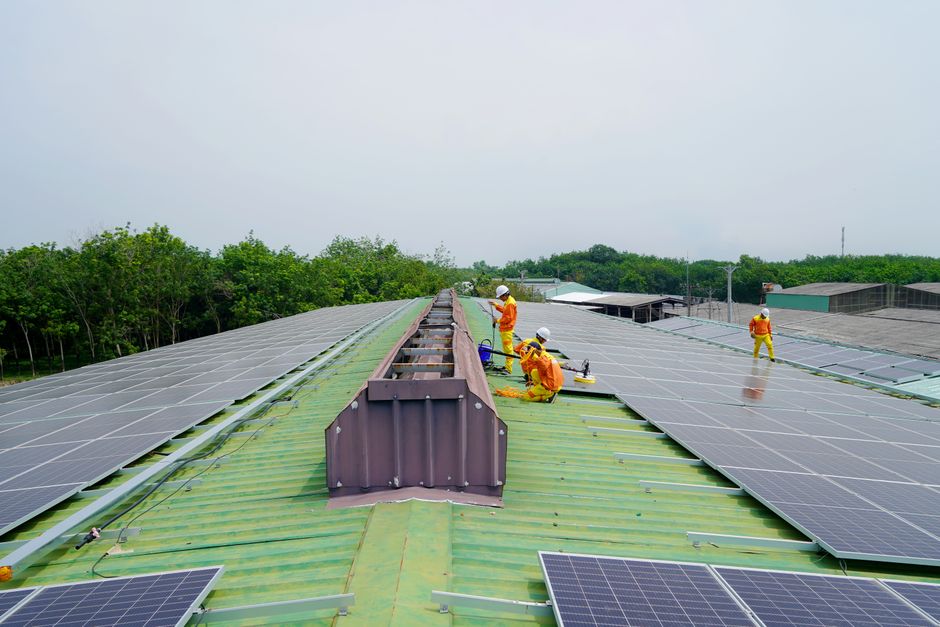
The 1990s and 2000s-era buildings that dominate much of this estate share a common feature: large, flat or low-pitch roofs, often constructed with built-up felt or single-ply membranes, that are well suited to ballasted solar mounting systems. Unlike older Victorian civic buildings, these structures typically have sufficient structural headroom for a solar array without costly engineering surveys or load calculations.
A typical mid-1990s secondary school in CF24 might have 2,000 — 3,000 square metres of usable south-facing roof, capable of hosting 120kWp to 180kWp of solar panels. At current commercial electricity prices of 22—28p per kWh, and with school electricity consumption heavily weighted towards daytime hours during term time, self-consumption rates of 75—85% are readily achievable.
Salix Wales: interest-free finance for public bodies
Private businesses access solar finance through commercial loans, leases or power purchase agreements. Public sector bodies in Wales have an additional option: Salix Finance, operating in Wales through its Salix Wales programme, provides interest-free loans to eligible public sector organisations specifically for energy efficiency and renewable energy projects.
Salix loans are repaid from the energy savings the project generates — meaning a well-designed solar installation on a Cardiff Council school or NHS Wales building can be self-financing from day one. There is no interest cost, no net impact on revenue budget, and the capital asset (the solar array) belongs to the organisation from the outset.
Eligible organisations include local authorities, NHS bodies, higher and further education institutions, emergency services, and central Welsh Government. The minimum loan size is typically £5,000, and Salix requires a straightforward application demonstrating projected energy and carbon savings. FLD Solar & Electrical prepares the technical documentation required for Salix applications as part of our public sector project process.
Cardiff Council’s net-zero estate programme
Cardiff Council has committed to a net-zero council estate by 2030, one of the more ambitious targets set by a Welsh local authority. Solar PV on schools, leisure centres and civic buildings forms a central plank of the programme. The council has already installed arrays on a number of its primary and secondary schools, and the programme is expanding.
For contractors and specialist installers, this represents a consistent pipeline of work, procured partly through frameworks such as the National Procurement Service (NPS) and partly through direct tender. FLD Solar & Electrical works across both routes and is experienced in the documentation, method statement and compliance requirements that public sector procurement demands.
G99 and NGED timelines for Cardiff CF postcodes
Cardiff’s grid infrastructure is managed by National Grid Electricity Distribution (NGED). For solar installations above 16A per phase (typically 11kWp and above for three-phase connections), a G99 application to NGED is required before the system can be energised.
NGED’s current assessment timelines for CF postcodes are running at eight to fourteen weeks for G99 applications. Some locations in CF10 and CF24, where substation capacity is more constrained due to urban density, have seen longer assessment periods or requirements for export limitation. We factor these timelines into every public sector project programme and engage NGED early in the project development phase to avoid delays.
Ynni Cymru for private Cardiff businesses
For private businesses in Cardiff — hospitality, retail, professional services, manufacturing — the Welsh Government’s Ynni Cymru grant programme offers capital grants of up to 50% of eligible project costs for solar PV and battery storage installations. Ynni Cymru is administered through the Development Bank of Wales and targets small and medium-sized enterprises.
A private business installing 50kWp of solar on a CF24 warehouse at a cost of £45,000 could receive up to £22,500 through Ynni Cymru, bringing the net cost to £22,500 and reducing simple payback from around 5—6 years to 2.5—3 years. Grant availability varies by funding round, and we advise clients to check current availability at point of enquiry.
Payback model: 150kWp on a Cardiff civic building
The following model is based on a representative 1990s civic building in CF10, with a south-facing flat roof, three-phase supply, and typical local authority weekday occupancy pattern.
| Item | Value |
|---|---|
| System size | 150 kWp |
| Estimated annual generation | 135,000 kWh |
| Self-consumption rate (daytime weekday profile) | 80% |
| Self-consumed units per year | 108,000 kWh |
| Avoided electricity cost at 24p/kWh | £25,920 |
| Export income (SEG, 20,000 kWh surplus) | £1,100 |
| Total annual benefit | £27,020 |
| Installed system cost | £108,000 |
| Less Salix Wales interest-free loan | -£108,000 |
| Net upfront capital required | £0 |
| Annual Salix repayment (10-year term) | £10,800 |
| Annual net cash surplus from year one | £16,220 |
After the Salix loan is repaid at year ten, the full £27,020 annual benefit flows directly to the organisation’s energy budget. The array will continue generating for 25 years or more.
Speak to FLD Solar & Electrical
FLD Solar & Electrical installs commercial and public sector solar PV systems across Cardiff and South Wales. Our team understands the procurement, compliance and financing routes specific to Welsh public bodies, and we work with Cardiff Council, NHS Wales and Welsh Government supply chains.
Call us on 07913 117746 or submit an online enquiry. We offer a free feasibility assessment for public sector estates, covering roof survey, self-consumption modelling, Salix eligibility review and a draft energy-saving report suitable for internal approval submissions.