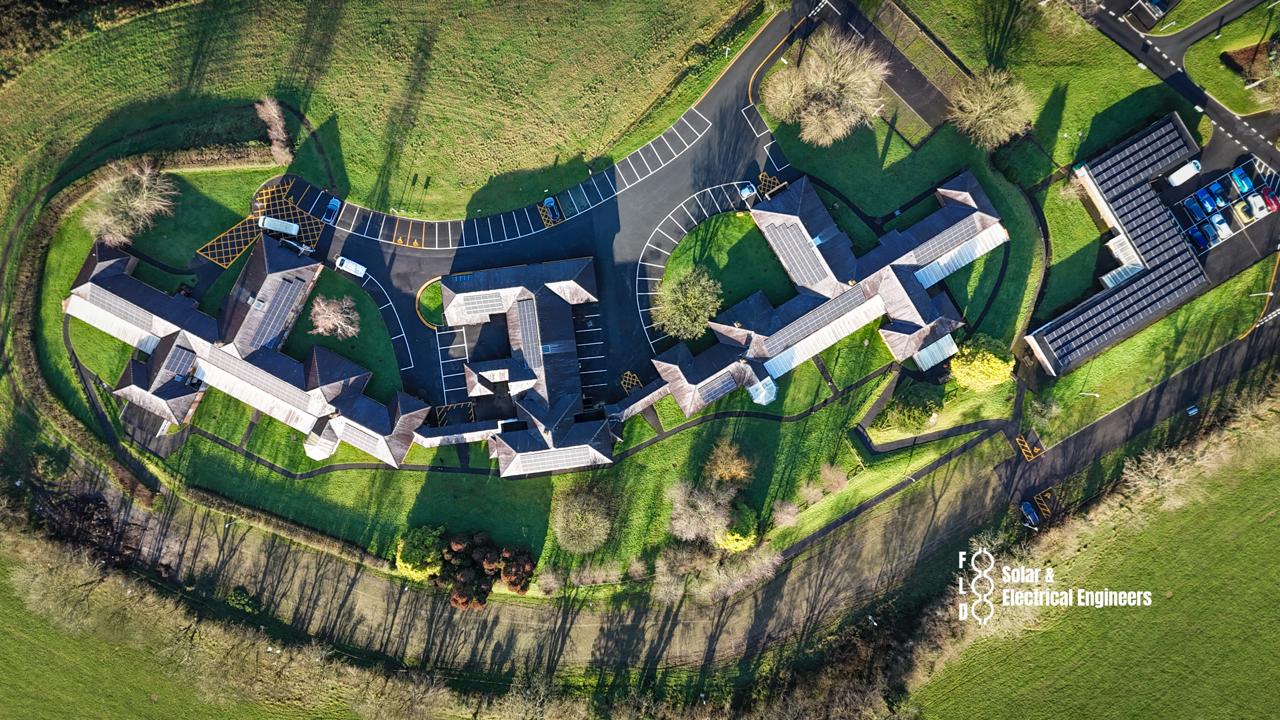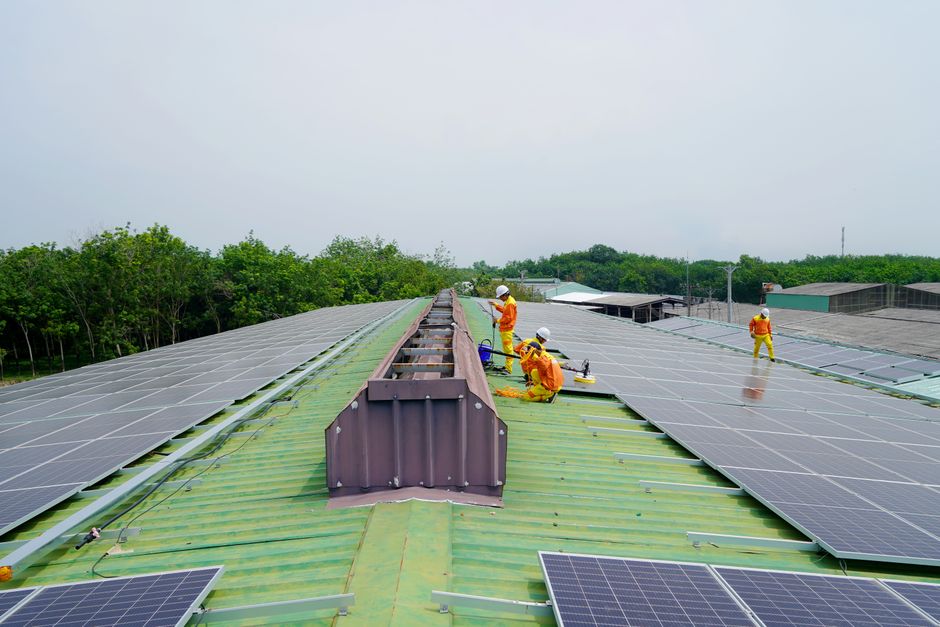
Pembroke’s commercial solar market divides sharply between two postcodes with very different characteristics. SA71 (Pembroke town and Pembroke Dock) combines a walled castle town with a significant industrial and port heritage at Pembroke Dock — producing both conservation planning complexity for the historic town core and large-scale industrial opportunity at the dock estate.
Pembroke Dock: the industrial and port opportunity
Pembroke Dock’s waterfront carries the former Pembrokeshire Ferry Terminal, Cleddau Enterprise Zone and a cluster of marine engineering, offshore wind supply chain and industrial buildings with significant roof areas. The Celtic Freeport designation encompasses Milford Haven, but Pembroke Dock’s deepwater port facilities and proximity to the Haven waterway place it within the offshore wind supply chain supply catchment.
Marine engineering businesses, ferry terminal support operations and offshore wind component manufacturers at Pembroke Dock typically operate multiple shifts with continuous electricity demand — producing self-consumption rates of 74% to 82% on well-sited arrays. FLD has surveyed commercial premises at Pembroke Dock for clients in the marine and port services sector.
Payback model: 100 kWp Pembroke Dock marine engineering building
| Metric | Value |
|---|---|
| Annual generation | 100,000 kWh |
| Self-consumed (76%) | 76,000 kWh |
| Electricity cost saving (31p/kWh) | £23,560 |
| SEG export income (24%) | £2,880 |
| Year-one benefit | £26,440 |
| Installed cost | £86,000 |
| Simple payback | 3.3 years |
| AIA post-tax payback | 2.4 years |
Pembroke town: conservation and hospitality
The walled town of Pembroke is a conservation area and contains numerous listed buildings. Commercial properties in the town centre — hotels, restaurants, independent retail and professional services — face the same conservation planning constraints as domestic properties in the walled town. FLD applies the same pre-application consultation approach for all Pembroke town commercial proposals: in-roof integrated solar on south-facing rooflines visible from the street, written confirmation of planning position before survey commitment.
Tourism and hospitality businesses in SA71 benefit from the Pembrokeshire yield premium (995 to 1,005 kWh/kWp at the most exposed coastal locations). A 50 kWp installation on a Pembroke guest house with 60-week tourism and leisure occupancy achieves self-consumption rates of 74% to 80% during the summer trading season — the solar generation peak aligning closely with the occupancy peak. Simple payback on a well-sited Pembroke guest house solar installation typically runs at 3.8 to 4.5 years, with post-tax payback below 3.5 years.
Ynni Cymru for SA71 businesses
Pembroke and Pembroke Dock businesses registered in Wales qualify for Ynni Cymru capital grants of £25,000 to £1,000,000. Tourism, hospitality, marine engineering and port services businesses are all eligible under the programme. FLD assists with pre-application feasibility documentation, including Welsh-medium applications.
SP Manweb and SA71 grid
SA71 is SP Manweb territory. G99 Type A approval timelines run at 14 to 20 weeks. Port-adjacent substations at Pembroke Dock carry industrial-grade connection capacity. Town-centre Pembroke substations serving the older residential and commercial stock may have lower export headroom — FLD runs pre-application checks for all SA71 commercial proposals above 50 kWp.
Farming Connect for SA71 rural agricultural buildings
The SA71 rural hinterland around Pembroke town includes substantial agricultural land with farm buildings eligible for Farming Connect capital grants of up to 40%. Dairy and arable farms in the flat Pembrokeshire landscape achieve excellent solar yields with minimal shading. FLD provides Farming Connect-formatted feasibility assessments for qualifying SA71 agricultural clients.
Getting a Pembroke survey
FLD covers SA71 on regular Pembrokeshire survey days. Call Paul on 07913 117746 for a no-cost feasibility assessment.