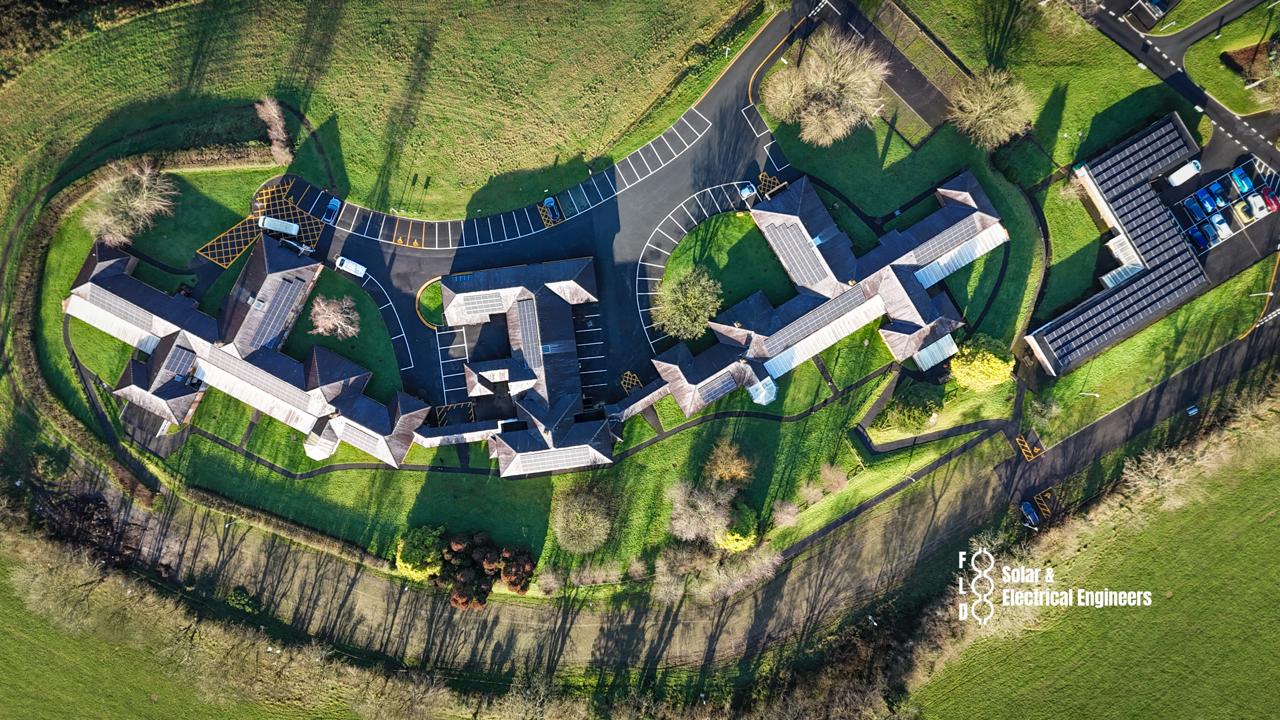
Cowbridge, or Y Bont-faen, is the Vale of Glamorgan’s market town. CF71 covers the historic walled core, Llanblethian, Llansannor and a generous rural hinterland out towards Ystradowen and Pentre Meyrick. For commercial solar, the single biggest local variable is the Cowbridge Conservation Area, which covers most of the High Street commercial frontage and constrains what is permitted on visible elevations. For businesses outside the conservation area boundary, or on rear/industrial aspects, the economics are strong and the process is routine.
CF71 solar yield
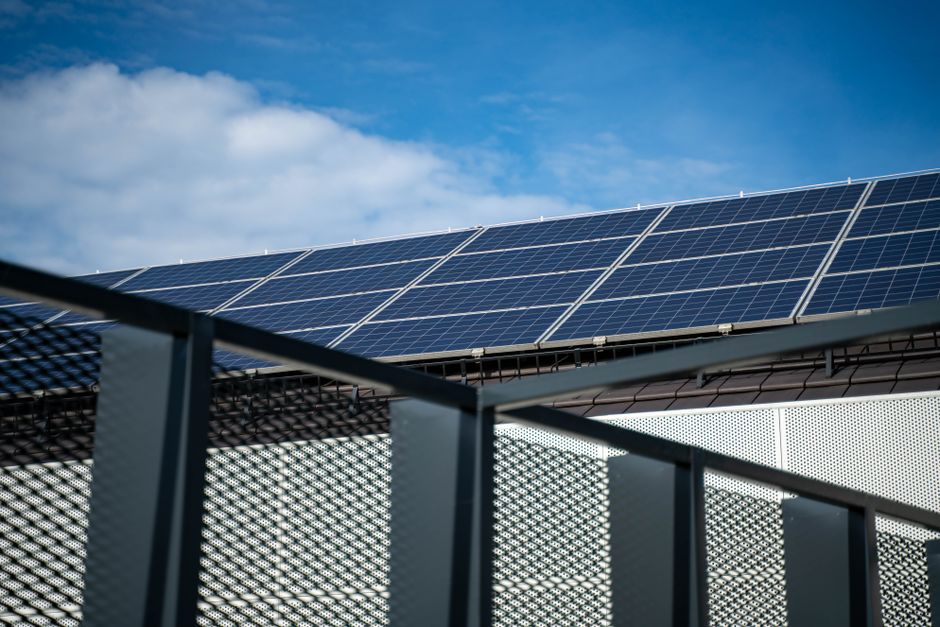
PVGIS modelling for CF71 returns typical annual yields of 945 to 970 kWh per kWp for a well-oriented commercial rooftop at 30 to 35 degrees pitch. That is fractionally above the Cardiff average because the inland position picks up slightly more direct beam irradiance than the coastal strip. Expect a 50 kWp south-facing array to deliver 47,000 to 48,500 kWh in year one.
Where the opportunities sit in Cowbridge
Cowbridge’s commercial base splits cleanly:
- Hospitality and independent retail along High Street, Eastgate and Westgate. These sites sit inside the conservation area and will typically need full planning permission for any visible array, with a realistic expectation that south-front elevations facing the public realm will not be approved. Rear, single-storey ancillary and flat-roof extensions are often the cleanest route.
- Light industrial and trade at Cowbridge Business Park (Aberthin Road) and the smaller units along Llanblethian. These are outside the conservation area, have generous rooftops with clean aspects, and almost all fall under permitted development.
- Agricultural and equestrian across the CF71 rural belt. Large single-aspect barn roofs regularly support 50 to 200 kWp arrays with strong self-consumption from bulk tank cooling, ventilation and processing loads.
Vale of Glamorgan planning
The Council’s approach to rooftop PV on commercial buildings is pragmatic and consistent with the Welsh Government’s Planning Policy Wales Net Zero emphasis. Key points:
- Outside the conservation area - commercial rooftop PV almost always falls within permitted development thresholds in the Town and Country Planning (General Permitted Development) (Wales) Order, provided panels do not project more than 200 mm above the roof plane and the building is not listed.
- Inside the conservation area - full planning permission is required. Officers will assess visual impact from key public viewpoints. A design that sets panels back from the eaves, uses all-black modules to reduce contrast with slate, and keeps the array on a rear or concealed pitch will typically achieve consent.
- Listed buildings - listed building consent is required in addition to planning. In our experience Cadw is willing to engage constructively where the array is reversible and non-visible from principal elevations.
Grid connection
CF71 sits within NGED’s licence area. For commercial arrays:
- Up to 3.68 kW per phase: G98 notification, typically same-week
- Above 3.68 kW per phase and up to the supply capacity: G99 Type A, 6 to 8 weeks
- Above the supply capacity: full connection application, timelines vary
For a typical 50 to 150 kWp Cowbridge commercial install, budget 6 to 8 weeks for grid approval running concurrently with design and procurement.
What we typically see on a Cowbridge install
For a recent light-industrial client in the Aberthin Road corridor, we completed a 75 kWp array with a 30 kWh battery for out-of-hours reserve. Year-one generation tracked PVGIS within 2 percent, self-consumption was 82 percent against measured HH data, and the DNO G99 approval came through at 7 weeks from submission.
Starting the conversation
If you own or manage a CF71 commercial property and want an assessment that accounts for conservation area boundary, actual HH consumption, and realistic grid connection timing, call Paul direct on 07913 117746 for a no-obligation site visit.