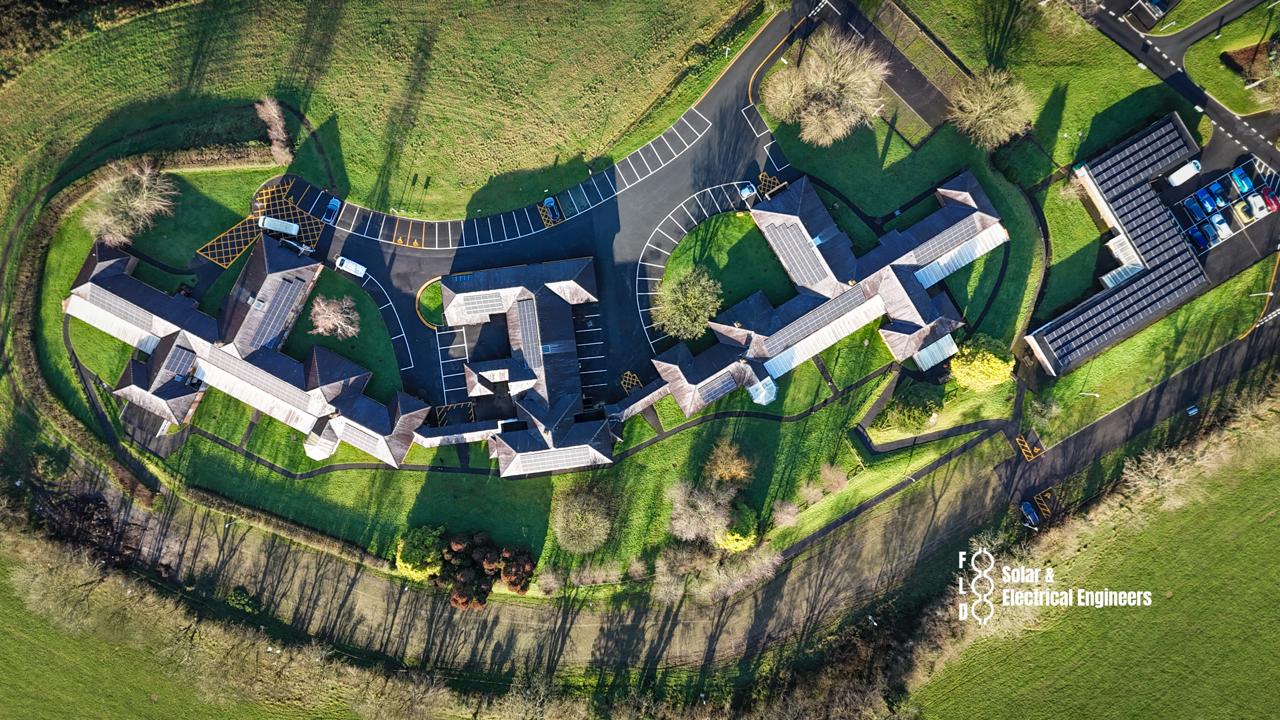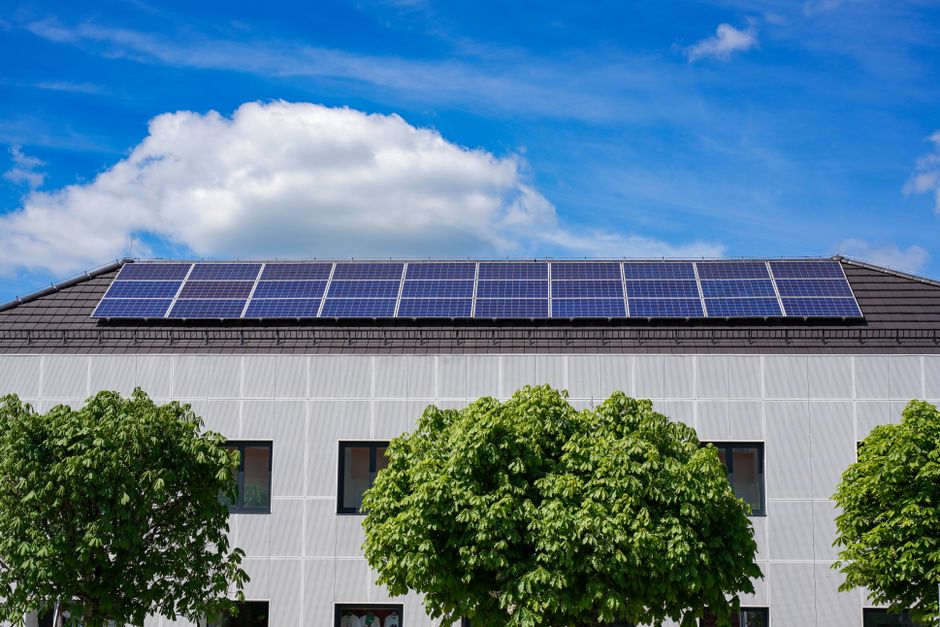
Clydach’s commercial solar market is defined by its industrial heritage. The Vale of Clydach carries the Mond nickel refinery — one of the most energy-intensive industrial operations in Wales — alongside a cluster of precision engineering, chemical services and surface treatment businesses that form the refinery’s immediate supply chain. For industrial solar in SA6, Clydach is the reference location: high-energy continuous processes, large building footprints, and electricity costs at the upper end of the commercial scale.
The Mond nickel supply chain context
The Clydach refinery itself (now operated by a Vale-owned entity) and its downstream customer base in precision engineering and electroplating create an industrial community where energy cost management is a board-level concern. Supply chain businesses in the SA6 catchment face similar Scope 3 reporting pressure to Port Talbot’s Tata supply chain — large industrial customers requiring their suppliers to demonstrate progress on decarbonisation.
Rooftop solar on supply chain industrial buildings in SA6 serves as both a financial investment and a supplier qualification signal. FLD has surveyed and installed at Mond supply chain businesses across the Clydach catchment.
Industrial scale solar at SA6
The Clydach industrial cluster carries buildings well-suited to large-scale solar. Electroplating and precision engineering operations require consistent electricity for process plant, extraction systems and temperature-controlled environments — producing self-consumption rates of 75% to 85% that make the economics compelling.
A 400 kWp installation on a Clydach precision engineering building at 955 kWh/kWp generates 382,000 kWh annually. At 80% self-consumption, year-one benefit: approximately £103,000 including SEG export income. On £340,000 installed cost, simple payback: 3.3 years. AIA post-tax payback: 2.5 years.
Payback model: 250 kWp SA6 precision engineering building
| Metric | Value |
|---|---|
| Annual generation | 238,750 kWh |
| Self-consumed (78%) | 186,225 kWh |
| Electricity cost saving (30p/kWh) | £55,868 |
| SEG export income (22%) | £6,293 |
| Year-one benefit | £62,161 |
| Installed cost | £215,000 |
| Simple payback | 3.5 years |
| AIA post-tax payback | 2.6 years |
NGED in the Clydach valley
The Clydach valley industrial cluster is served by NGED. G99 Type A approval timelines run at 10 to 14 weeks. The SA6 network serves both the Swansea Enterprise Park complex (southwest) and the Clydach valley cluster (northeast). FLD runs pre-application export headroom checks for all Clydach commercial proposals above 100 kWp before confirming installation programmes.
For industrial buildings above 1 MWp — the refinery-scale category — FLD provides G99 Type B application management, including single-line diagram preparation and protection relay coordination with NGED’s protection engineering team.
Battery integration for continuous-process SA6 sites
Clydach electroplating and chemical processing operations run 24 hours with continuous electricity demand. For these sites, battery storage provides a different benefit profile than for single-shift operations: the primary value is demand peak shaving on half-hourly metered tariffs rather than evening self-consumption. A correctly sized battery system can reduce peak demand charges by £15,000 to £30,000 annually for a large continuous-process SA6 site.
FLD assesses battery demand management opportunity using 12 months of half-hourly consumption data for all Clydach continuous-process proposals.
Ynni Cymru for Clydach businesses
SA6 businesses registered in Wales qualify for Ynni Cymru capital grants of £25,000 to £1,000,000. FLD assists with pre-application feasibility documentation for qualifying Clydach businesses.
Getting a Clydach survey
FLD covers SA6 Clydach on regular Swansea Valley survey days. Call Paul on 07913 117746 for an industrial solar feasibility assessment.